Nvidia is tightening restrictions on how its cloud partners operate in China, a move that underscores how quickly the world’s most valuable chipmaker is being pulled deeper into the US-China technology fight and how much more fragile its China-linked revenue stream has become.
Nvidia tightens China cloud partner restrictions

The shift matters because Nvidia’s growth story has depended on cloud providers, data center operators and AI infrastructure customers buying its chips at scale. Any added limits on those partners’ Chinese activities raise the risk of slower sales, more compliance costs and a tougher path to monetizing AI demand in a market that Washington has repeatedly sought to wall off from advanced semiconductors.
Sentiment Indicators

The backdrop is already hostile. U.S. authorities have been scrutinizing Nvidia’s exposure to Chinese entities, including Megaspeed, which they suspect may have helped China sidestep export controls on advanced chips. China, meanwhile, has denied allegations that it spied on Nvidia chief executive Jensen Huang, calling the claims “baseless speculation” as tensions over technology and espionage intensify.
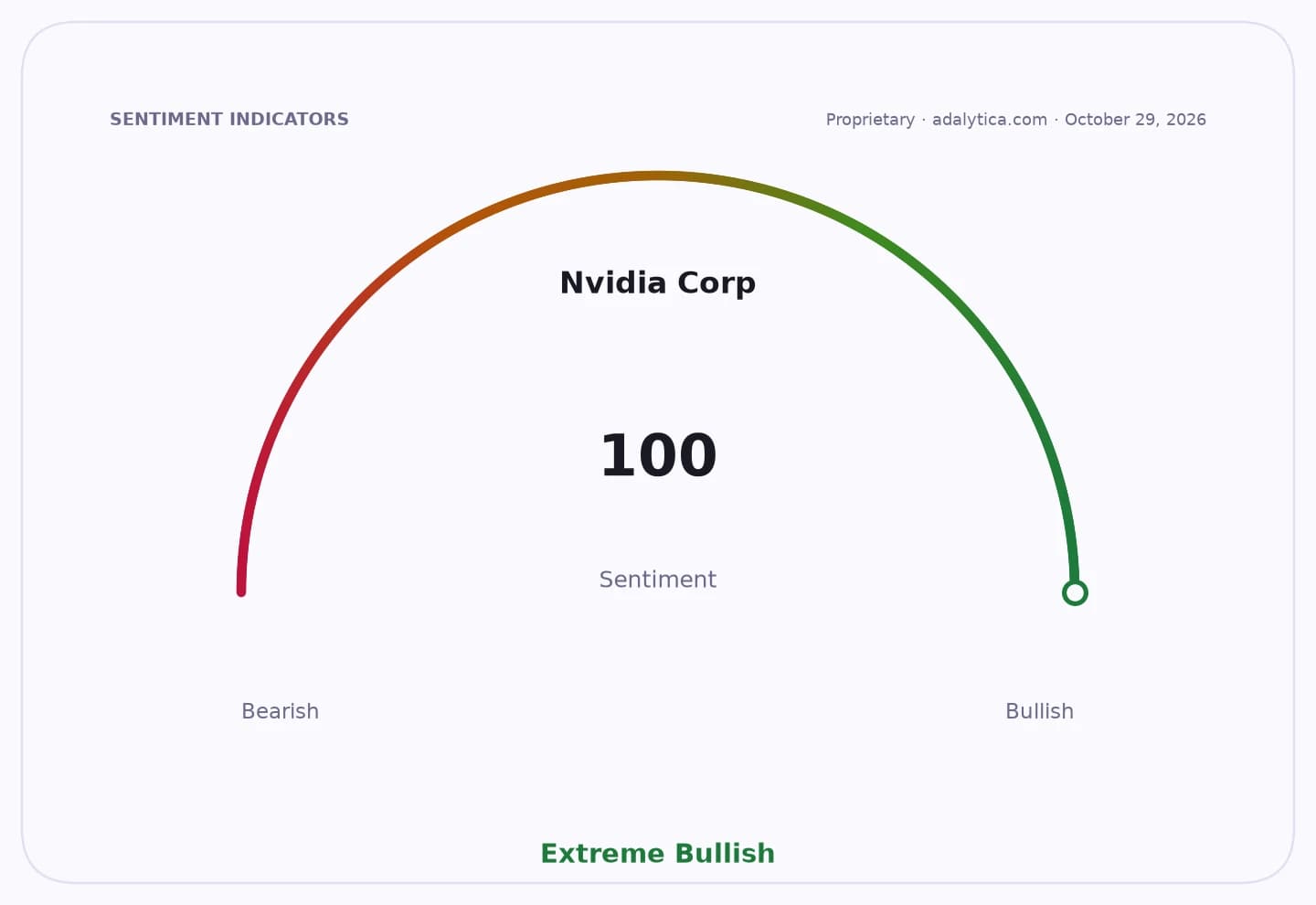
For investors, the issue is not just geopolitics but margins and multiple compression. Nvidia shares have fallen to $206.69 from a recent peak above $227, and the stock is now trading below its 50-day moving average of about $221, while its 14-day RSI at 36.7 shows momentum has cooled sharply from earlier in the year. The stock’s drop has also come alongside elevated caution around earnings, with Adalytica’s Nvidia earnings sentiment sitting at 4 out of 100, labeled “Extreme Fear.”
Nvidia Corp — 30-day sentimentadalytica.com
Explore this data interactively — full history, time series and cross-market comparisons.
Nvidia Corp
The broader market is also signalling caution rather than panic. The ICE BofA high-yield spread is around 3.43 percentage points, suggesting credit stress is contained for now, while the 10-year Treasury yield is forecast near 4.893%, keeping financing conditions relatively tight for capital-intensive AI infrastructure spending.
The narrative connecting all of this is straightforward: Nvidia is still the centerpiece of the AI trade, but its China exposure is being progressively constrained by regulators, partners and geopolitics. That leaves the company leaning more heavily on U.S. hyperscalers and non-China demand while the risk of further export restrictions, investigations or partner fallout remains a live overhang.
Investors will be watching for any new detail on cloud partner compliance, additional U.S. restrictions and Nvidia’s next earnings commentary on China-related revenue, because the next catalyst is likely to come from policy rather than product.
| Entity | Gains | Losses |
|---|---|---|
| Nvidia | ▲clearer compliance footing | ▼China revenue flexibility |
| U.S. regulators | ▲tighter export enforcement | ▼faster AI chip diffusion |
| Cloud partners | ▲reduced legal risk | ▼lower China monetization |
| Chinese AI buyers | ▲domestic chip substitution | ▼access to Nvidia hardware |