Nvidia is warning Washington that curbing open and open-weight AI models would do more than complicate China policy — it could slow the next wave of U.S. AI innovation, widen the gap between incumbents and startups, and risk handing strategic advantage to less restricted rivals.
Nvidia Warns on Open AI Model Restrictions
The warning matters because open models are becoming a core layer of the AI economy. They let universities, smaller companies and developers build without paying for proprietary access, while also giving researchers a way to audit, test and improve systems. If policymakers block or discourage those models, capital and talent could concentrate even further in a handful of closed platforms, raising barriers to entry just as AI is moving from chatbots to real enterprise workflows.
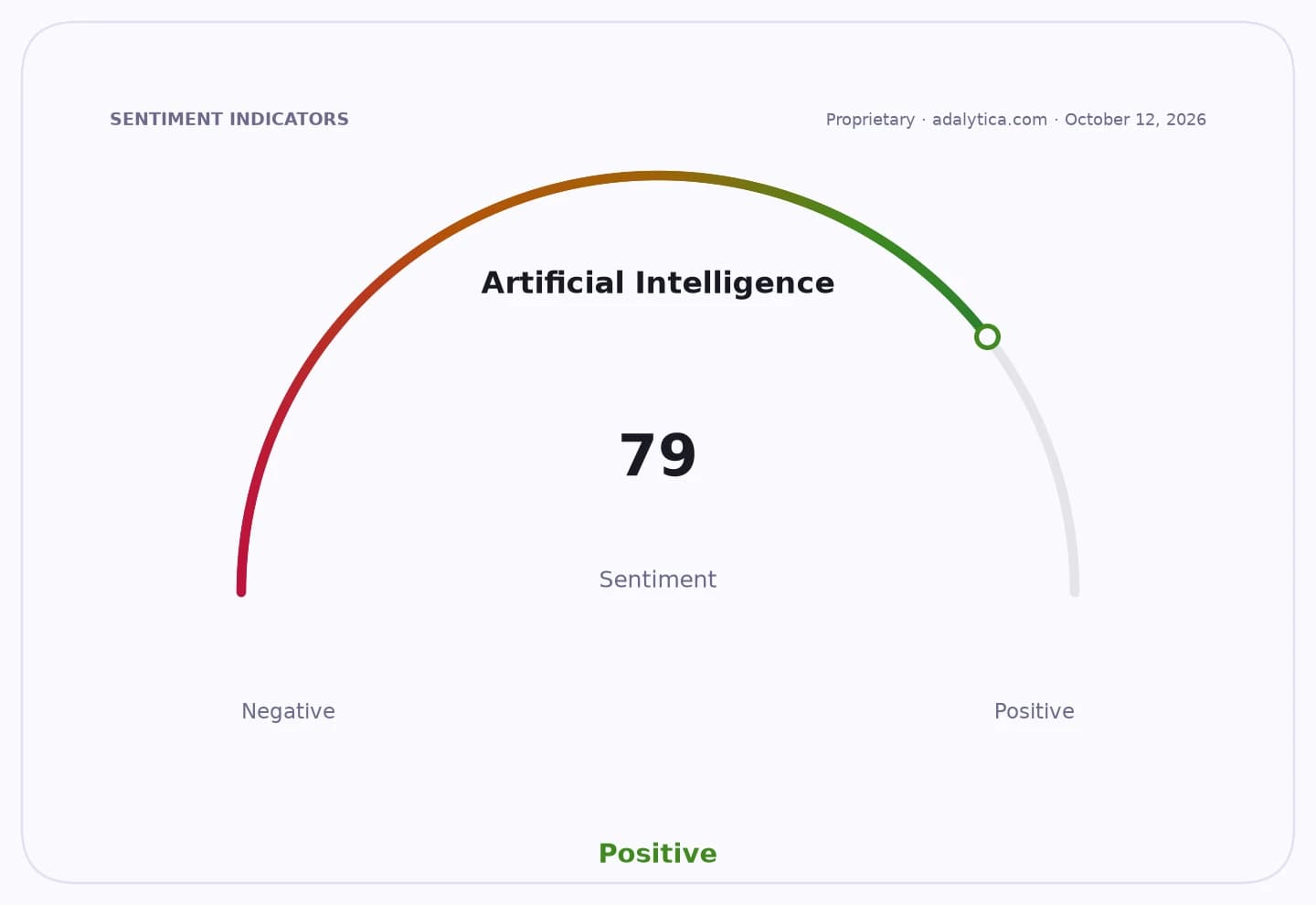
Sentiment IndicatorsⓘProprietary · adalytica.com · October 12, 2026
This is a snapshot — live sentiment, awareness and momentum for 130+ markets update continuously in the dashboard.Open AlphaPulse
That is why Nvidia’s intervention is more than corporate lobbying. Jensen Huang is effectively arguing that the U.S. should not repeat the mistake of treating openness as a national-security weakness when it may be one of America’s best tools for widening adoption and accelerating compute demand. The company signed onto a letter with Microsoft, Meta, IBM, Google, OpenAI, AMD and Cisco, underscoring how broad the industry’s concern is. Open models also support a bigger addressable market for the entire AI stack — from chips and cloud to data-center networking and software distribution.
The geopolitical backdrop is obvious: Washington is weighing tighter limits on access to Chinese AI models such as Kimi K3 over security and intellectual-property concerns, even as Beijing pushes ahead with its own AI programs. The risk for investors is that regulation aimed at China ends up fragmenting the broader AI ecosystem, slowing diffusion and making global standards harder to set. That kind of policy uncertainty tends to favor the largest platforms, but it can also compress innovation at the edge, where many of the highest-growth applications are born.
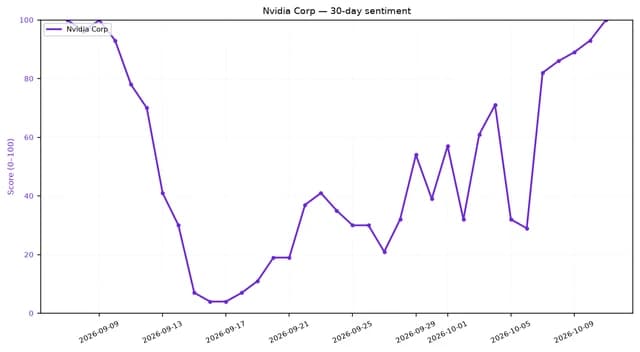
The stock tape suggests investors are still rewarding the theme even as policy risk rises. Nvidia shares have climbed back above the 200-day moving average, while Microsoft and Taiwan Semiconductor remain in strong uptrends, reflecting persistent demand for AI infrastructure despite periodic selloffs. Adalytica’s proprietary NVIDIA Earnings Sentiment gauge is flashing Extreme Greed, but the more important message is that investors continue to bet on AI capex staying elevated even as the regulatory debate intensifies.
Our thesis is that the market underestimates how much value can still accrue to the picks-and-shovels layer if open models remain broadly available. If Washington keeps the ecosystem open, adoption should broaden, inference demand should compound, and the winners will be the companies supplying chips, cloud, networking and model deployment tools. If regulators move the other way, the upside shifts toward incumbents with scale, while smaller builders and open-source ecosystems bear the brunt.
For investors, that means staying positioned in the AI infrastructure complex rather than trying to pick a single policy outcome. Nvidia, Microsoft and TSMC remain the cleanest ways to express the secular buildout, while any move to restrict open models would likely deepen the moat around the largest compute providers. This is an inflection point: the rules governing openness may end up shaping the next multi-year leg of AI capital spending.
| Entity | Gains | Losses |
|---|---|---|
| Nvidia, Microsoft, TSMC | ▲Broader AI adoption, higher compute demand | ▼Policy uncertainty if restrictions tighten |
| Open-source AI developers | ▲Easier access, faster innovation | ▼Greater compliance risk under limits |
| Closed-model incumbents | ▲Stronger moat, more customer lock-in | ▼Less ecosystem experimentation |
| U.S. policymakers | ▲Potential security control | ▼Slower innovation if over-restrictive |