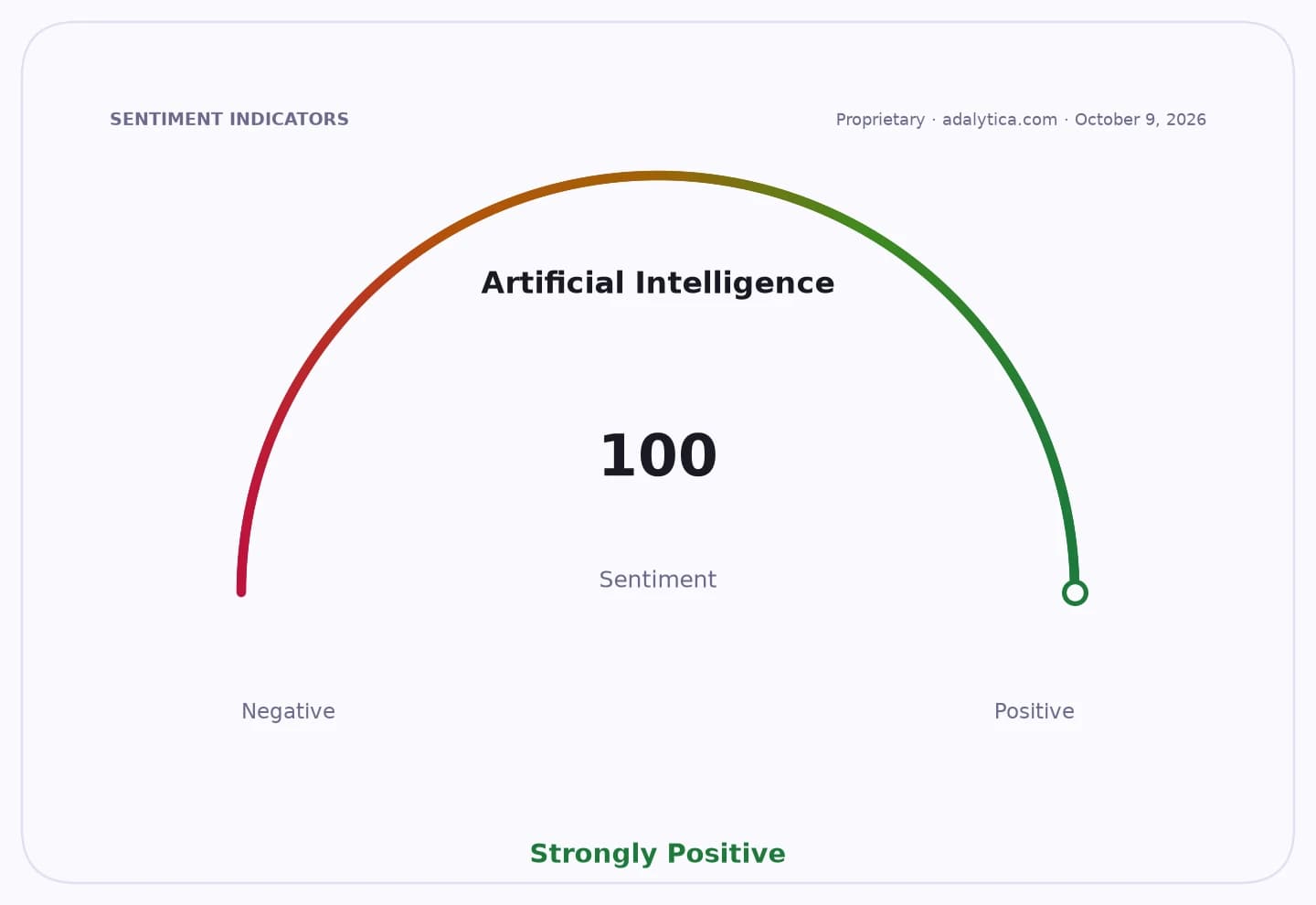
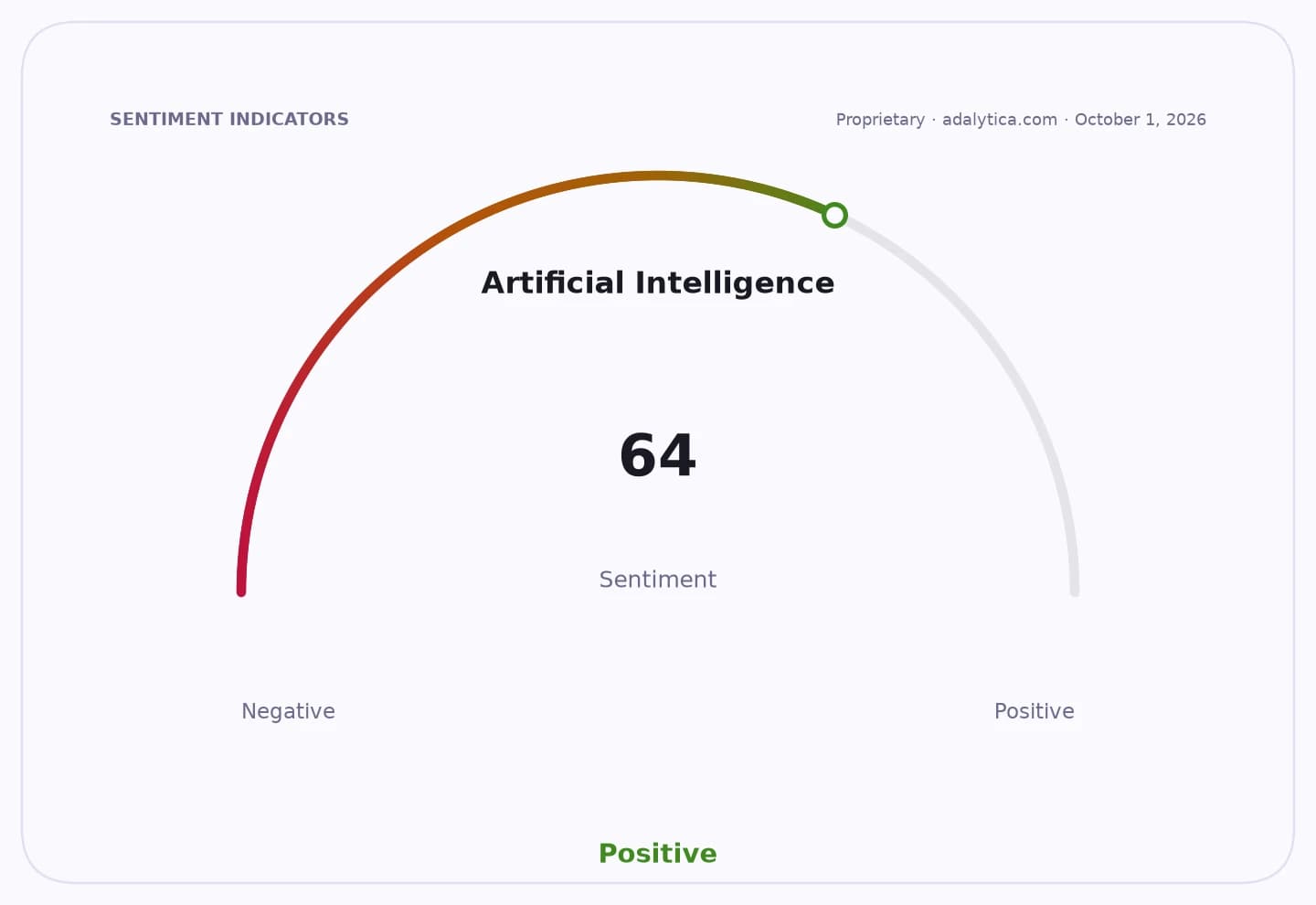
Artificial intelligence is moving from pilot projects to budget line items, and investors are rewarding the companies best positioned to sell the infrastructure and software that make that shift possible.
Nvidia and Microsoft Gain on AI Spending
The clearest market signal is in the share performance of Nvidia and Microsoft, two of the biggest beneficiaries of enterprise AI spending. Nvidia closed at $229.28 on Oct. 9, well above its 200-day moving average of $201.83, while Microsoft ended at $535.07, also above its 200-day average of $432.70. Both stocks have been supported by strong momentum indicators, with Nvidia’s RSI at 52.8 after a hotter run earlier in the week and Microsoft’s at 72.3, showing the market still expects AI demand to remain durable even after a sharp rally.
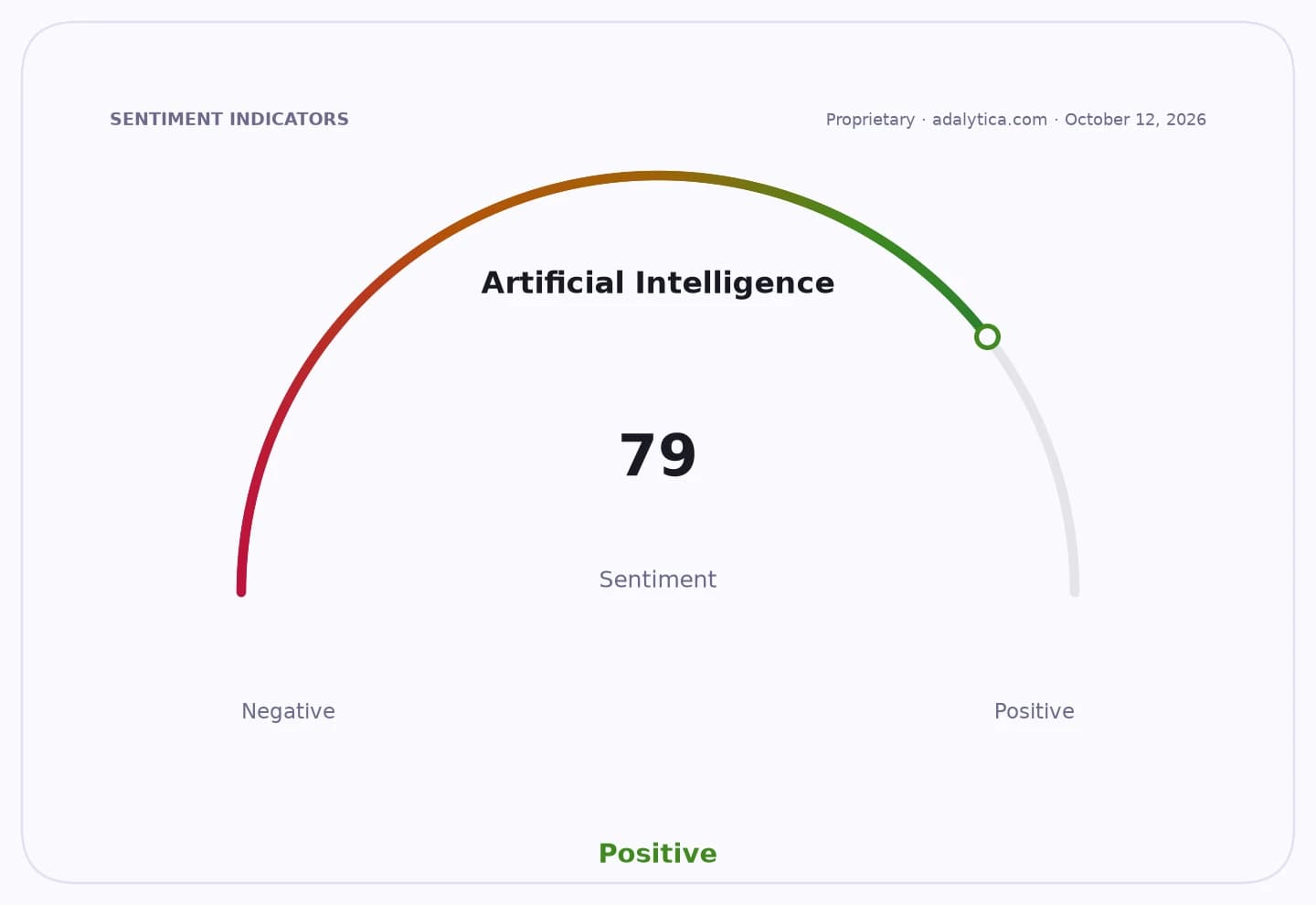
Sentiment IndicatorsⓘProprietary · adalytica.com · October 12, 2026
This is a snapshot — live sentiment, awareness and momentum for 130+ markets update continuously in the dashboard.Open AlphaPulse

That matters because the AI story is no longer just about model performance or consumer apps. It is increasingly about whether companies can translate AI into measurable productivity gains, lower operating costs and better customer service. In Australia, that debate is becoming especially important as businesses look to AI as a response to years of weak productivity growth. The country’s government is backing that push with support for domestic model development and wider industrial adoption, signaling that AI is becoming part of national competitiveness rather than a niche technology bet.
For investors, that shifts the focus from hype to monetization. Microsoft’s latest filings make clear that its cloud and AI strategy requires substantial ongoing investment and depends on customer demand, competitive dynamics and regulation. Nvidia’s disclosures point to the physical bottlenecks now shaping the AI cycle: land, power, shells and energy all need to be secured before demand can be fully met. In other words, the winners in AI are increasingly those able to finance, build and power the infrastructure layer, not just those with the best software branding.
The market has already begun to separate the AI beneficiaries from the laggards. Nvidia’s stock is up sharply from its spring lows and has traded near the upper end of its Bollinger Band range, while Microsoft has recovered from a deep midyear selloff to push back toward record territory. That resilience suggests investors still view enterprise AI adoption as a multi-year capital spending cycle, not a short-lived enthusiasm trade.
Still, the path is not linear. Some companies are backing away from early AI rollout plans as they discover the economics are harder than promised, and Microsoft itself has warned that AI products can produce unintended consequences or be used in unforeseen ways. That leaves the bull case intact but narrower: AI is proving economically relevant, yet returns will depend on deployment discipline, not just broad adoption.
The next test will be whether businesses can show that AI is lifting margins and output, not simply inflating cloud and chip bills. If they can, the 2026 winners may be defined less by who built the model and more by who made AI indispensable to the enterprise workflow.
| Entity | Gains | Losses |
|---|---|---|
| Microsoft | ▲Cloud and AI demand | ▼Margin pressure from investment |
| Nvidia | ▲AI infrastructure spending | ▼Buyers facing capacity costs |
| Australian businesses | ▲Productivity gains | ▼Firms slow to adopt AI |
| AI laggards | ▲— | ▼Competitive disadvantage |