AI is not just lifting productivity; it is reshaping how companies are built, how work is allocated and which businesses capture the gains first.
Nvidia, Microsoft, C3.ai on AI adoption gains
That is the core message from Bogdan Tudor, founder and CEO of StarTech Team, who argues that artificial intelligence is a “change of paradigm,” not an incremental upgrade like the shift from paper to computers. For investors, that distinction matters because paradigm shifts do not merely improve margins at the edge — they reorder budgets, labor demand, software spending and the competitive hierarchy across entire industries.
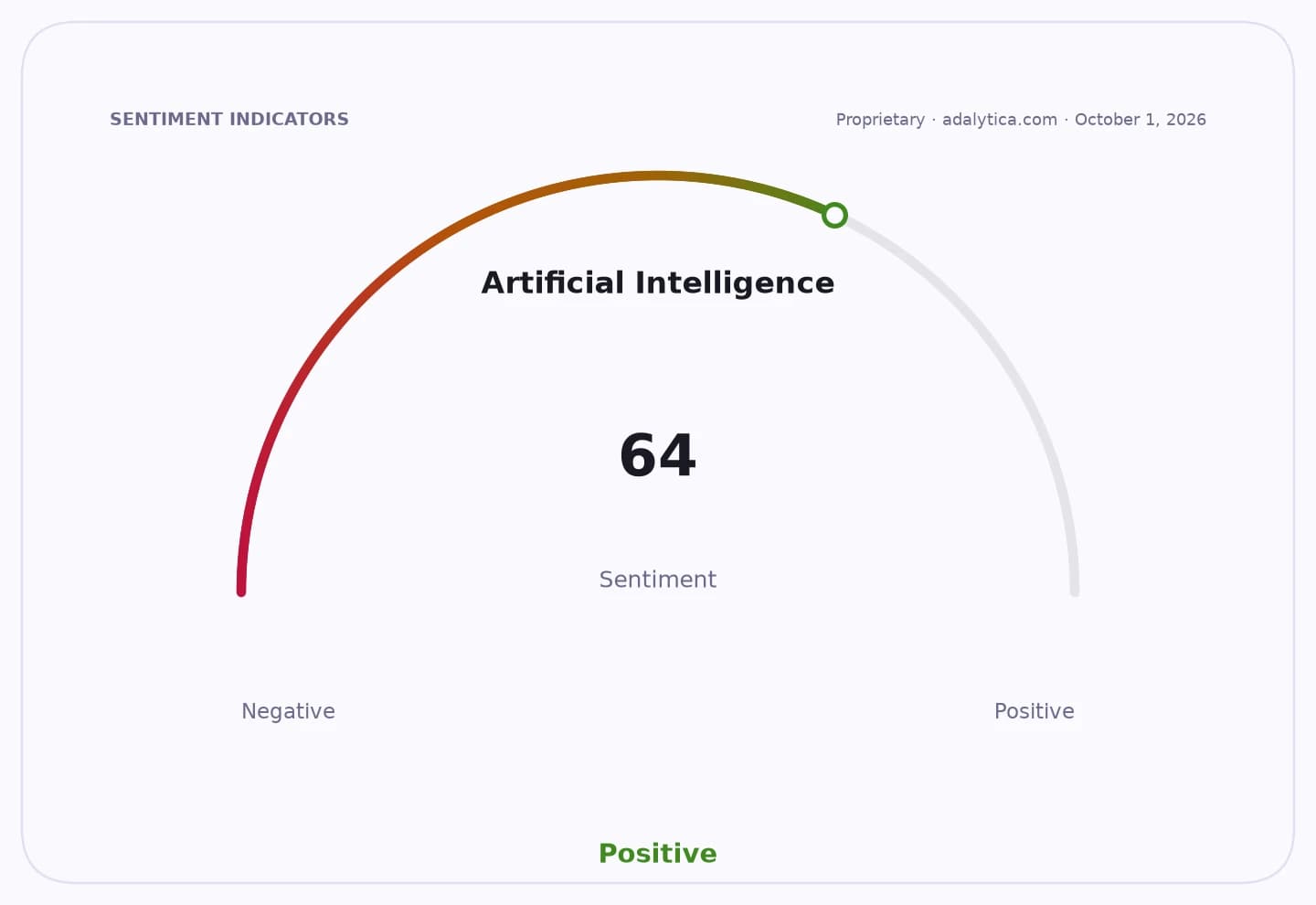
Sentiment IndicatorsⓘProprietary · adalytica.com · October 1, 2026
This is a snapshot — live sentiment, awareness and momentum for 130+ markets update continuously in the dashboard.Open AlphaPulse
The clearest near-term winners are the companies that use AI to compress back-office costs and automate routine work before their rivals do. Tudor says one insurance broker StarTech works with has fully automated HR and automated 80% of finance, and he expects that broker’s profitability to rise fourfold this year. That is the kind of operating leverage the market still underestimates: AI is not only a cost-saving tool, it is becoming a profit-multiplier for early adopters.
The economic consequence is bigger than one company. If a growing share of administrative, financial and customer-facing tasks can be automated, businesses can reprice labor, redesign workflows and expand output without proportional headcount growth. That is why the real bottleneck is no longer model quality, but adoption speed. Tudor’s point that inertia is the only thing delaying job disruption rings true across developed and emerging markets alike: companies may know AI works, but many still have not rewired processes around it.
For investors, that creates a second-order opportunity set. The obvious beneficiaries are the firms selling AI infrastructure and implementation services — chipmakers, cloud platforms, enterprise software vendors and systems integrators — but the more asymmetric trade may be in the businesses that can prove AI-driven margin expansion fastest. Markets tend to reward visible operating leverage long before the broader labor market fully adjusts.
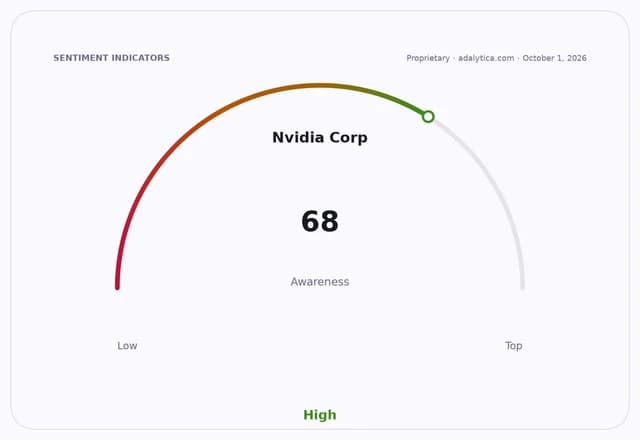
That lens keeps the focus on Nvidia and Microsoft as the dominant infrastructure and platform names, while also highlighting smaller enterprise AI specialists such as C3.ai. Nvidia remains the purest pick-and-shovel play on compute demand, while Microsoft’s enterprise distribution gives it a powerful route to monetize AI across workflows. C3.ai, meanwhile, sits in the higher-risk, higher-beta bucket where sentiment can move sharply if enterprise adoption keeps deepening. Adalytica’s earnings sentiment readings show neutral mood around Nvidia and Microsoft, and neutral but improving attention around C3.ai, which suggests investors have not fully repriced the adoption wave into the next leg of earnings.
The market’s mistake is to frame AI as a productivity story that will trickle through over years. The better thesis is that AI is already becoming a restructuring tool for companies willing to move fast, especially in back-office-heavy sectors such as insurance, finance and professional services. The scale of the upside will not come from a single app or chatbot. It will come from entire operating models being rebuilt around automation.
That is why the next phase of AI investing is not just about model breakthroughs. It is about who adopts first, who captures the margin expansion and which vendors sit closest to that change. In this market, speed is alpha. Investors should keep favoring the infrastructure layer, then look for the companies turning AI into measurable profit gains before the rest of the market catches up.
| Entity | Gains | Losses |
|---|---|---|
| AI adopters | ▲Higher margins | ▼Legacy workflows |
| Nvidia | ▲More compute demand | ▼Slower adoption fears |
| Microsoft | ▲Enterprise AI monetization | ▼Manual office software |
| C3.ai | ▲Adoption-driven rerating | ▼Delayed enterprise spending |