Microsoft’s new Playground concept for making video games without coding points to a bigger opportunity than a novelty demo: if the company can turn generative AI into a true creation platform, it could widen the moat around its gaming and cloud businesses while opening a new long-term revenue stream.
Microsoft Playground and AI game creation
That matters because game creation has historically been expensive, technical and slow. A tool that lowers the barrier to building playable worlds could expand the pool of creators, accelerate content production and make Microsoft’s ecosystem more attractive to independent developers, studios and hobbyists alike. In other words, this is not just about games — it is about who controls the tools that make digital entertainment.
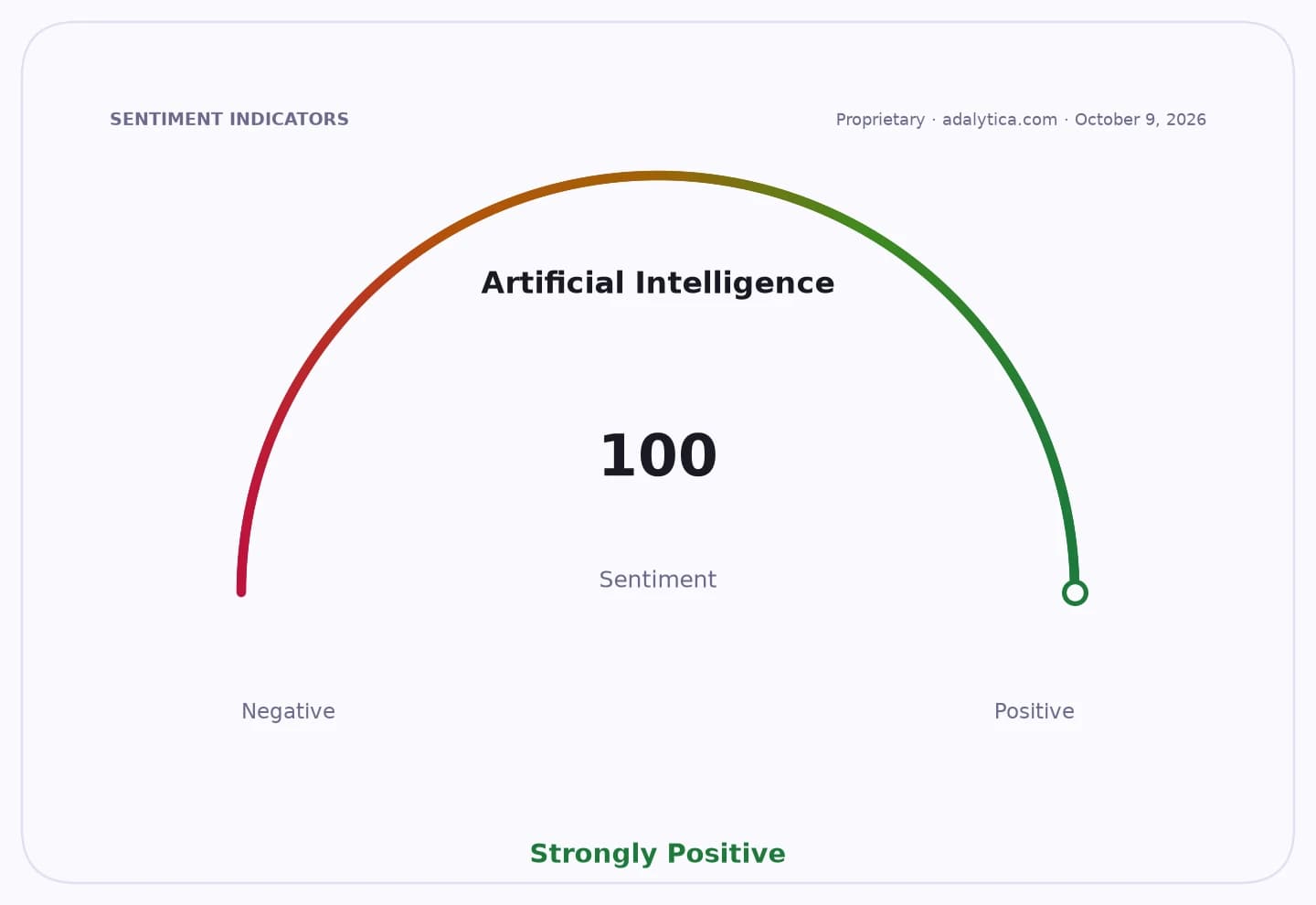
Sentiment IndicatorsⓘProprietary · adalytica.com · October 9, 2026
This is a snapshot — live sentiment, awareness and momentum for 130+ markets update continuously in the dashboard.Open AlphaPulse
Investors should care because the prize is scale. Microsoft already has the distribution, the cloud infrastructure and the AI stack to bundle such a product into its broader platform strategy. If Playground evolves beyond a proof of concept, it could feed demand for Azure compute, strengthen engagement with Xbox-related services and deepen Microsoft’s reach in a sector where user-generated content has become one of the most powerful growth engines.
The market is also paying attention to the timing. Microsoft shares recently climbed to $535.07, above both the 50-day moving average of $500.19 and the 200-day moving average of $432.70, a sign that the stock has repaired a lot of earlier weakness. But the technical picture is now extended, with the relative strength index above 70 and the shares near the upper end of the Bollinger Band range. That does not change the long-term story, but it does suggest investors are already pricing in a fair amount of AI optimism.
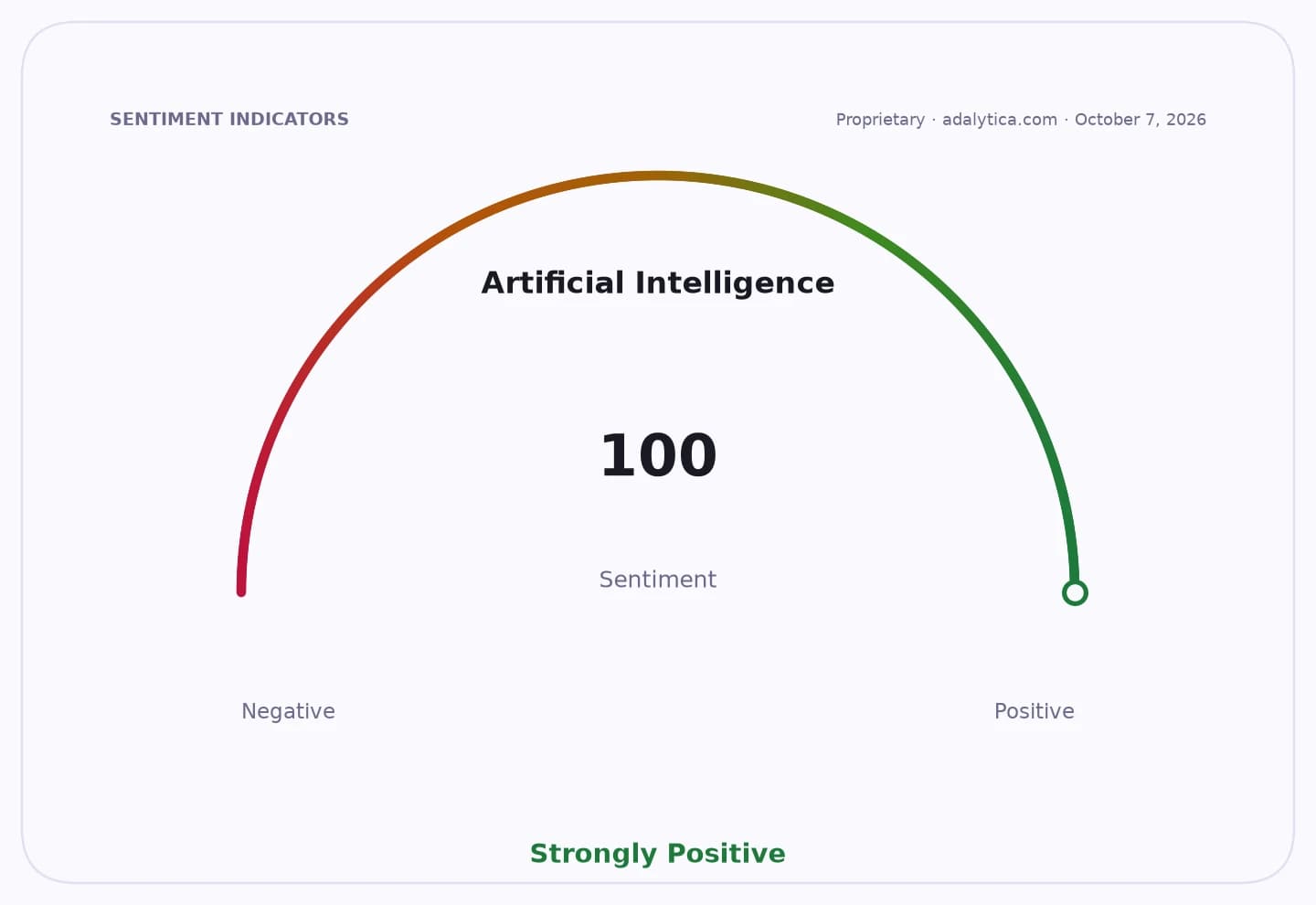
Artificial Intelligence — 30-day sentimentadalytica.com
Explore this data interactively — full history, time series and cross-market comparisons.Open AlphaPulse
There is a second reason this story matters. Microsoft’s AI sentiment reading from Adalytica.com has fallen into “Fear” even as the stock has rallied, a reminder that enthusiasm for the company’s long-term AI strategy is not always linear. For patient investors, that can be useful. Markets often struggle to value platform shifts before they show up in earnings, and creator tools tend to compound slowly as adoption builds.
Nvidia sits on the other side of the same trend. Its shares remain strong at $229.28, but they have pulled back from recent highs, underscoring that the AI hardware trade is no longer a straight line higher. If AI game creation becomes a real category, the winners will likely be the companies that sell the software layer, the cloud layer and the compute behind it — not just the chipmaker alone.
The risk, of course, is execution. Game creation tools are easy to demo and hard to productize. Microsoft will need to prove that Playground can generate useful, stable and scalable content rather than just impressive clips. But if it gets that right, the payoff could be meaningful over a 3- to 10-year horizon.
For investors, the lesson is simple: this is the kind of AI initiative worth watching closely, not trading around. Microsoft is still best owned as a long-term compounder, and anything that makes content creation faster, cheaper and more accessible only strengthens that case.
| Entity | Gains | Losses |
|---|---|---|
| Microsoft | ▲stronger creator ecosystem | ▼near-term skepticism |
| Game developers | ▲faster game building | ▼traditional coding edge |
| Nvidia | ▲more AI compute demand | ▼less exclusive AI narrative |