NVIDIA just gave investors a clearer look at where the next leg of its growth may come from: the factory floor.
NVIDIA Unveils cuPotential for Chip Design and Fabs
The chipmaker unveiled cuPotential, a new CUDA-X library for atomic and molecular simulation, while showing how major semiconductor equipment and design names are already adopting CUDA-X across chip design, manufacturing and testing. That matters because the race to build advanced chips is no longer just about faster silicon; it is about compressing years of engineering work into days, improving yields and making semiconductor plants more autonomous. For NVIDIA, that expands the addressable market for its software stack and deepens the moat around its GPUs at a time when investors are watching whether AI demand can keep compounding.

The economic case is straightforward. Advanced chipmaking is getting harder, more expensive and more data-intensive just as demand for leading-edge processors keeps rising. NVIDIA’s answer is to turn its CUDA-X libraries and Omniverse tools into the operating layer of what it calls “AI-defined fabs,” where software agents help engineers model materials, inspect production data and test process changes in digital twins before anything is run in the real world. If that workflow catches on broadly, the productivity gains could be substantial for the entire semiconductor supply chain.
The company said cuPotential can speed atomic-scale simulation by another 2-3 times on top of already GPU-optimized workflows, and it cited early results showing much larger gains in adjacent libraries. Synopsys is using cuPotential, cuEST and cuDSS; NVIDIA said early benchmarks pointed to a potential 30x speedup with cuEST and 12x with cuDSS. Cadence is applying NVIDIA’s accelerated computing tools to agentic chip design. Siemens, Lam Research, KLA, Applied Materials, Teradyne and Advantest are also among the companies adopting CUDA-X libraries in design, inspection, testing and fab operations.
That breadth matters for investors because it suggests NVIDIA’s growth story is widening beyond the headline AI server market. The more its software becomes embedded in the tools used to design, manufacture and verify chips, the harder it becomes for customers to rip it out later. In other words, CUDA-X is not just a feature set — it is another lock-in layer inside the semiconductor ecosystem.
The numbers NVIDIA is highlighting are the kind that software buyers pay attention to. Lam Research said NanoVDB could accelerate some wafer-etch modeling by up to 30x. NVIDIA said PhysicsNeMo reduced plasma-prediction time to milliseconds instead of days. KLA’s new kernel ran 50x faster than earlier CPU versions. Teradyne said one probe-maintenance inference workflow was roughly 85x faster. Applied Materials is using the stack to support fab digital twins that NVIDIA said can enable up to 35x faster chamber simulations. Those aren’t marginal efficiency tweaks; they are the kind of workflow changes that can change capital spending plans, shorten development cycles and improve yields.
The broader investing narrative here is that AI is no longer confined to model training and chatbots. It is moving into industrial engineering, and semiconductors are both the engine and the first beneficiary. If NVIDIA can become the infrastructure provider for AI-assisted chip design and AI-run fabs, it gets two advantages at once: more demand for its GPUs and a stickier software ecosystem that reinforces long-term pricing power.
There are risks, of course. Semiconductor spending is cyclical, customers can take time to adopt new workflows and competitors will keep pushing their own tools. But the strategic direction is hard to miss: NVIDIA is trying to own more of the value chain that sits between raw compute and finished chips. For long-term investors, that is exactly the kind of move that can extend a growth runway.
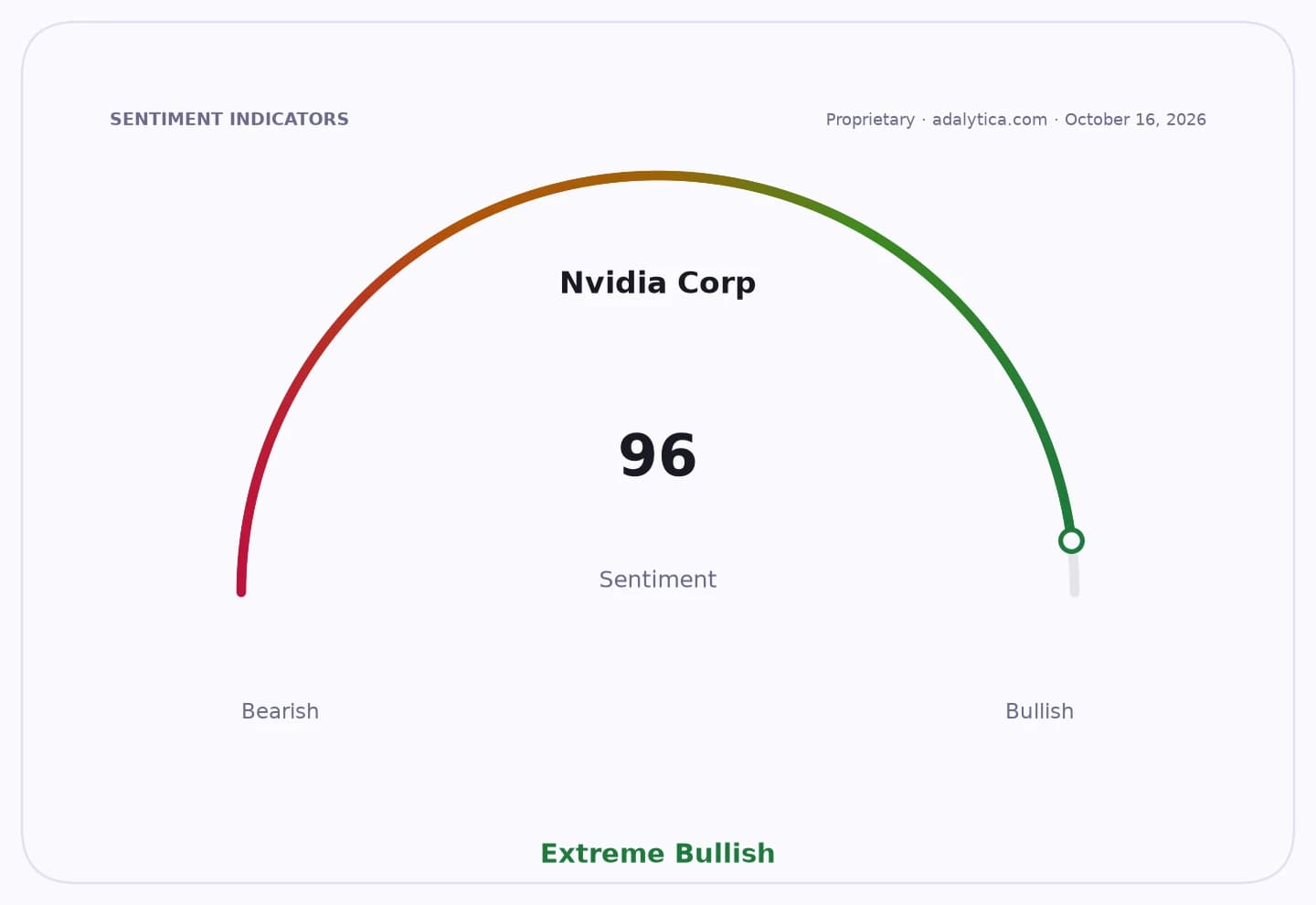
For now, the stock remains a bet on sustained AI infrastructure spending, and the new CUDA-X adoption wave gives that thesis another leg to stand on. Investors looking three to 10 years out should keep NVIDIA on the watchlist, because the company is steadily turning AI into a full-stack industrial platform.
| Entity | Gains | Losses |
|---|---|---|
| NVIDIA | ▲stickier software ecosystem | ▼rivals in AI infrastructure |
| Semiconductor tools makers | ▲faster workflows | ▼legacy CPU-based methods |
| Chip designers and fabs | ▲better yields, faster simulation | ▼slower development cycles |
| Investors in AI platforms | ▲broader monetization runway | ▼narrow hardware-only thesis |