Nvidia is widening its software lead in semiconductor design, saying a new CUDA-X library can accelerate atomic interaction calculations on GPUs by 2 to 3 times, a development that could cut the time and cost of designing the next generation of chips.
Nvidia cuPotential Speeds Chip Design Simulations
The company unveiled cuPotential at SEMICON West on Oct. 14 as part of its broader push to use GPUs for materials science and manufacturing simulation, areas that have become increasingly important as chips get smaller and more complex. Faster physics and chemistry calculations matter because they let engineers test more designs, run more iterations and reduce reliance on slow physical experiments.
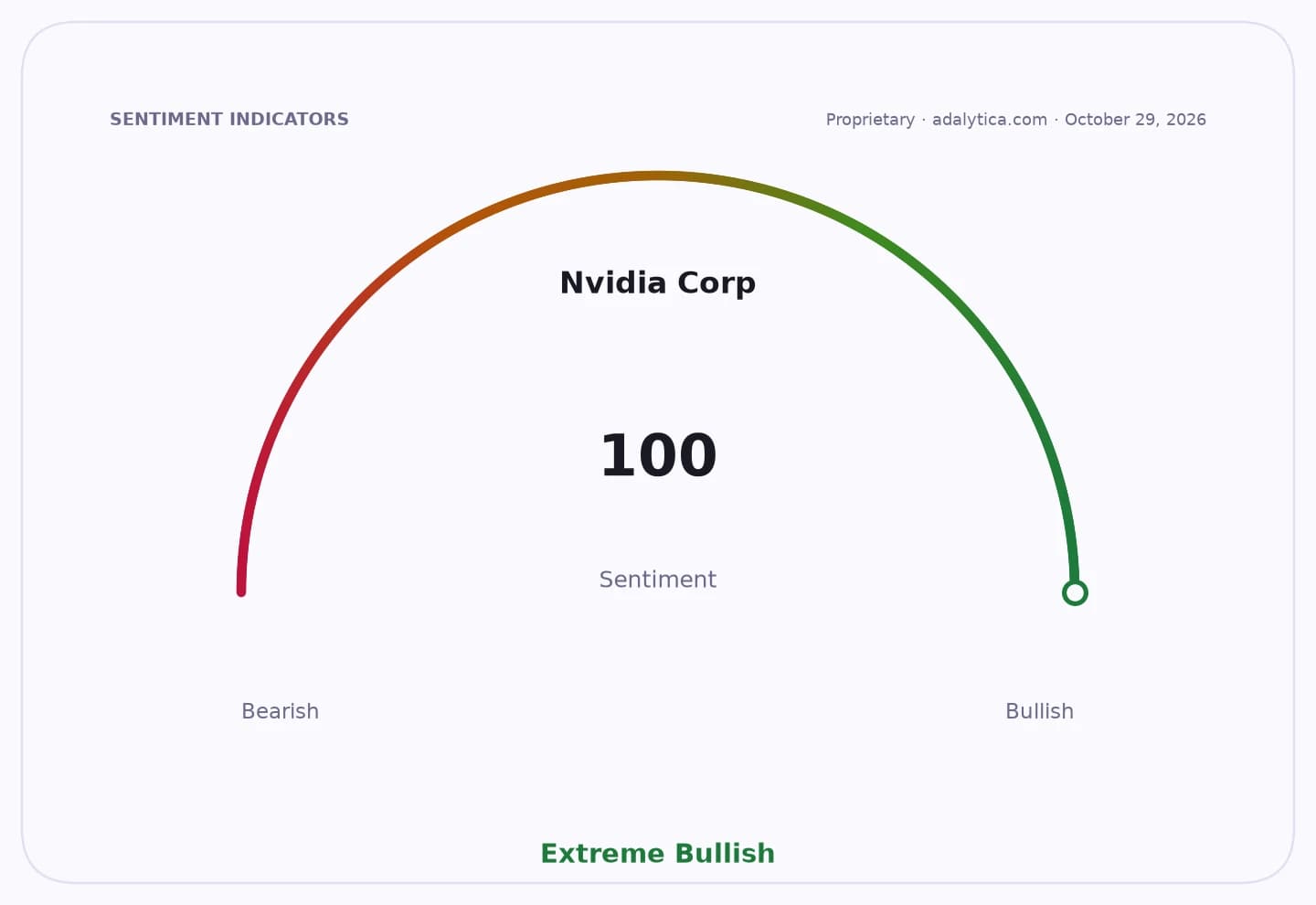
Sentiment Indicators

Nvidia said early tests showed cuPotential improving the speed of calculations versus already GPU-optimized software, though the library is still in early access and performance varies by model and method. The company also said its partners have seen larger gains in specific workflows: Lam Research said some wafer-etch simulations could run as much as 30 times faster, Synopsys reported a 12-times speedup in some S-Device calculations using Nvidia’s cuDSS library, and KLA said image processing can run up to 50 times faster than prior CPU versions.
The commercial significance is that Nvidia is pushing its GPUs deeper into the semiconductor toolchain, not just into AI training and inference. If the software stack gains traction, it could strengthen Nvidia’s position with chip designers, equipment makers and foundries that need heavy simulation workloads, while reinforcing demand for its data center and workstation accelerators.
Nvidia Corp
Investors have been watching for signs that Nvidia can turn its dominance in AI hardware into a broader platform advantage across industrial computing. That matters because semiconductor manufacturing is a capital-intensive market where small efficiency gains can translate into faster development cycles, lower engineering costs and tighter customer lock-in for Nvidia’s CUDA ecosystem.
The stock, however, remains volatile. Nvidia shares closed at $210.96 on Oct. 23, below the 50-day moving average of $222.39 and with an RSI reading of 22, a technically oversold level that reflects the recent selloff even as the long-term trend remains above the 200-day moving average of $203.36.
Nvidia also said it wants to automate more of these workflows with AI agents that can prepare simulations, run computations and analyze results. The next test is whether chipmakers and equipment vendors convert the benchmark gains into production use, with adoption, not just speed claims, likely to decide how much this software push adds to Nvidia’s long-term growth story.
| Entity | Gains | Losses |
|---|---|---|
| Nvidia | ▲Deeper CUDA lock-in | ▼Competing simulation vendors |
| Chip designers | ▲Faster workflows | ▼Physical test bottlenecks |
| Lam Research, Synopsys, KLA | ▲Better tool performance | ▼Legacy CPU-based approaches |
| CPU-centric software stacks | ▲Less relevance | ▼Share in simulation workloads |