Nvidia’s DLSS 5 debut in NBA 2K27 on Sept. 3 matters because it marks a shift from AI-assisted performance boosting to AI-generated image detail, reinforcing the company’s grip on the premium gaming GPU market just as investors look for evidence that its consumer franchise can still create value beyond data centers.
Nvidia DLSS 5 Debuts in NBA 2K27

The launch is more than a feature update. Nvidia is positioning DLSS 5, or 3D-guided neural rendering, as a new stage in the graphics pipeline that uses AI to generate lighting and material detail anchored to each rendered frame. That is important economically because it pushes more visual work onto the GPU’s Tensor Cores while allowing game developers to raise fidelity without paying the full performance penalty of traditional rendering techniques.
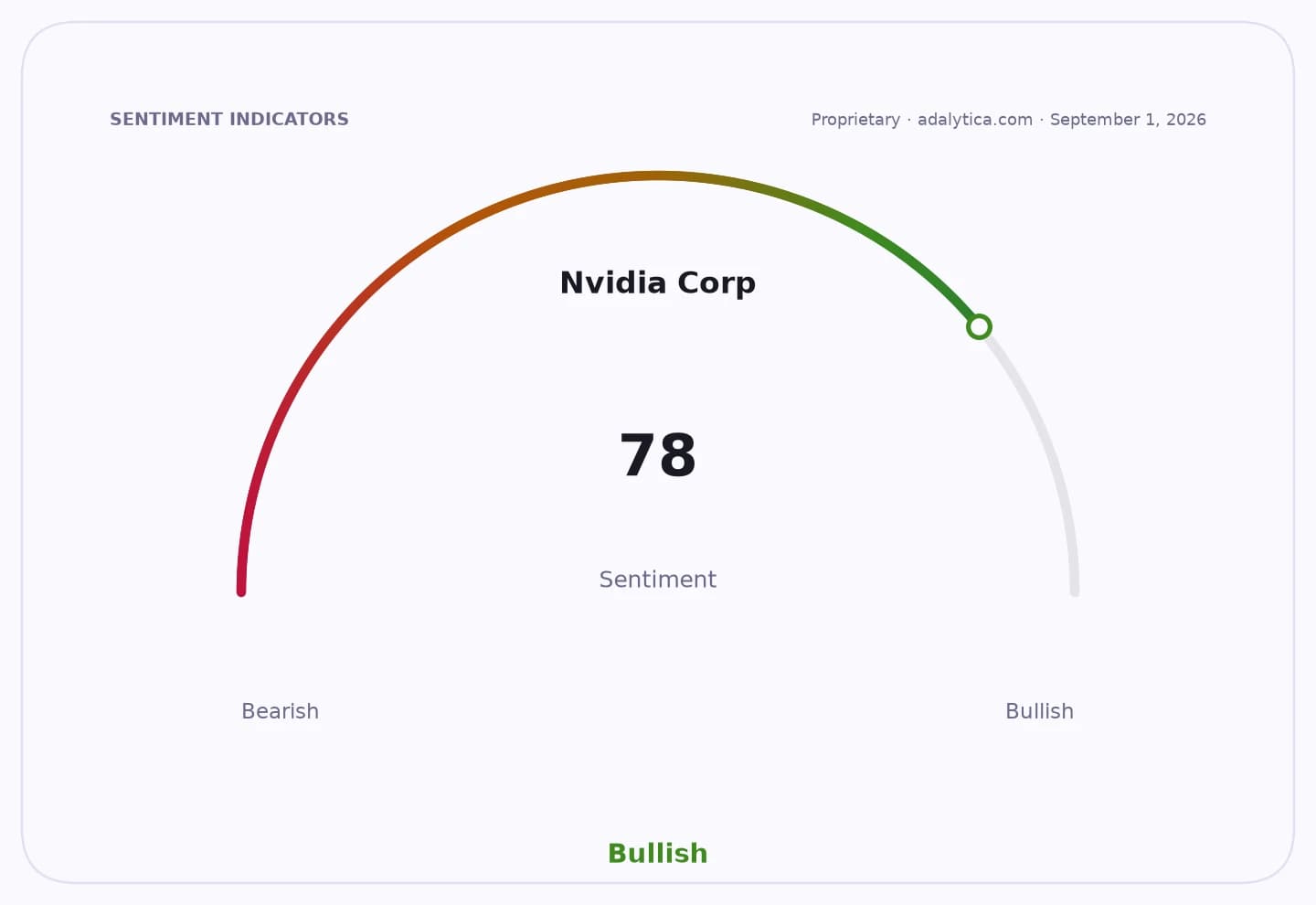
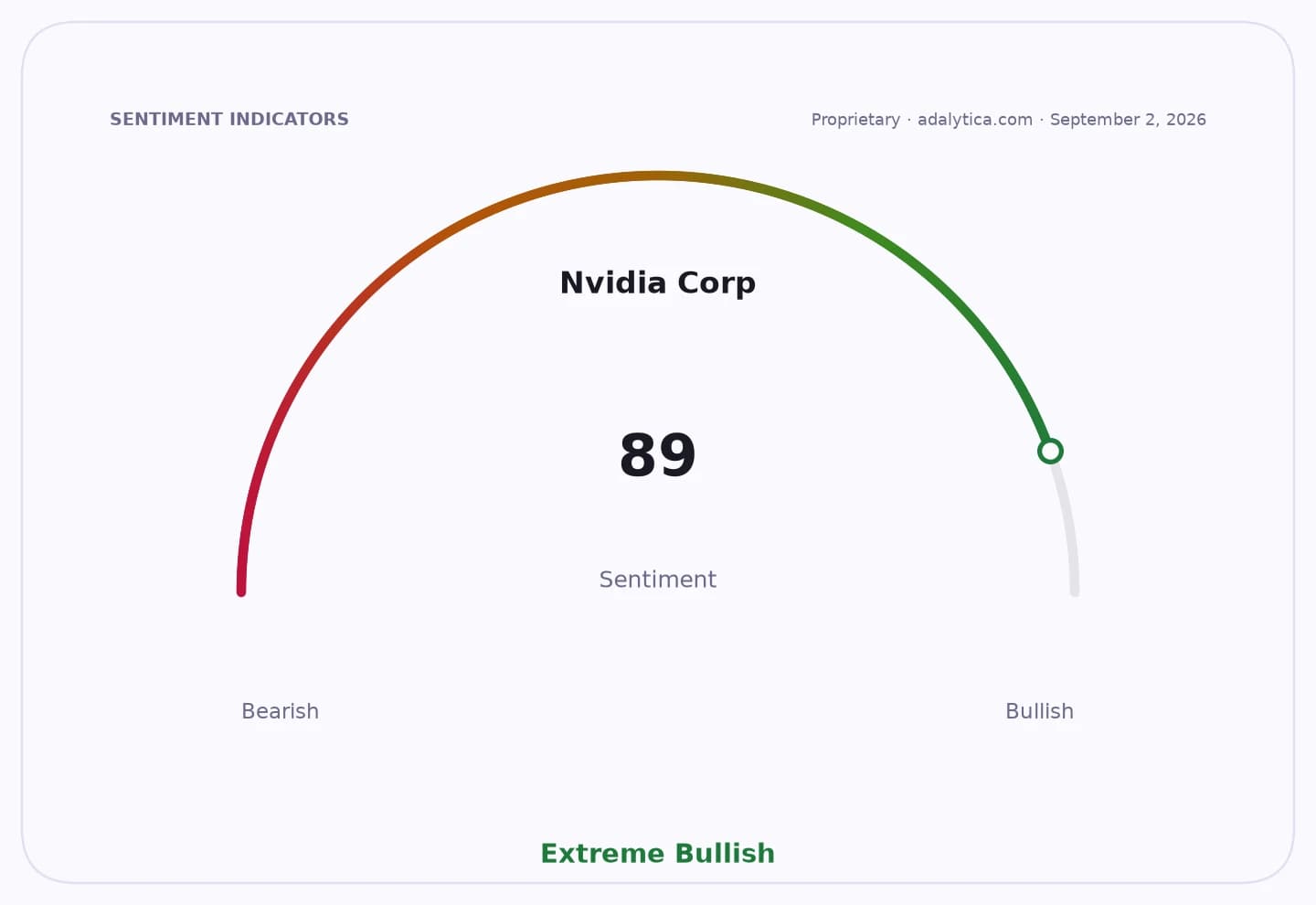
Sentiment IndicatorsⓘProprietary · adalytica.com · September 13, 2026
This is a snapshot — live sentiment, awareness and momentum for 130+ markets update continuously in the dashboard.Open AlphaPulse
For Nvidia, the timing helps defend a business line that remains strategically important even as AI infrastructure dominates the equity narrative. Gaming is not the company’s biggest revenue engine, but it remains a high-margin ecosystem that keeps GeForce hardware relevant, supports software lock-in and underpins upgrade cycles for enthusiasts. A stronger gaming feature set also helps Nvidia justify the premium pricing of its RTX 50 series cards, which are the only desktop and laptop GPUs supported at launch.
The company is also using a marquee sports title to showcase the technology’s commercial readiness. NBA 2K27 gives Nvidia a broad consumer-facing platform with fast-moving visuals, scanned athlete likenesses and lighting-heavy arena scenes that are well suited to demonstrating improvements in skin shading, contact shadows and material realism. In other words, the game is a proof point that the technology can be deployed in a mainstream franchise rather than only in tech demos.
Nvidia says DLSS 5 can run locally on a single RTX 50 series GPU at up to 4K resolution and can also be used through GeForce NOW. That matters for investors because it suggests the company is extending the practical life of its newest hardware while also widening monetization through its cloud gaming service. The tighter the feature set is tied to the latest generation of cards, the more Nvidia can sustain replacement demand and preserve pricing power.
The launch also underscores how competition in PC gaming has moved from raw rasterization performance toward AI-enabled rendering quality. Nvidia’s own claims — including frame rates as high as 370 per second on an RTX 5090 at 4K with ray tracing — are designed to make the point that the company can deliver both speed and visual fidelity. If those gains hold up in real titles, Nvidia strengthens its moat. If developers and players view the feature as too incremental or too dependent on ideal conditions, the commercial impact will be smaller.
From a market perspective, the release lands while Nvidia shares are still trading well above their 200-day moving average, with recent price action showing the stock consolidating after a strong run. That leaves the stock sensitive to product-cycle evidence: investors want to know whether the company can keep consumers inside its ecosystem even as AI spending elsewhere in the business dominates valuation.
The bigger takeaway is that Nvidia is trying to make AI rendering a platform shift, not just a visual enhancement. If DLSS 5 gains traction across more titles in the coming months, it could deepen the company’s software advantage and reinforce the case that Nvidia’s moat extends well beyond data center accelerators. If adoption remains narrow, the launch will still matter as a marketing showcase — but less as a driver of earnings power.
| Entity | Gains | Losses |
|---|---|---|
| Nvidia | ▲Stronger ecosystem lock-in | ▼Feature skepticism |
| RTX 50 buyers | ▲Better visuals, higher FPS | ▼Upgrade cost |
| Game developers | ▲Easier premium graphics | ▼Added integration complexity |
| AMD and rivals | ▲Less direct gain | ▼Harder premium differentiation |