Nvidia’s plan to provide as much as $250 billion in guarantees for a new OpenAI data center marks a striking escalation in the race to lock up the computing power behind artificial intelligence, turning the industry’s capital spending cycle into a much larger and more interconnected financial commitment.
Nvidia Deepens AI Bet With OpenAI Guarantee
The scale of the pledge matters because it suggests AI infrastructure is moving beyond a simple supplier-customer relationship and toward a closed loop in which the dominant chipmaker is helping underwrite the end market for its own products. That deepens Nvidia’s strategic grip on the AI buildout, but it also raises questions about concentration risk, financing discipline and how much future demand is being effectively pre-committed by a handful of players.
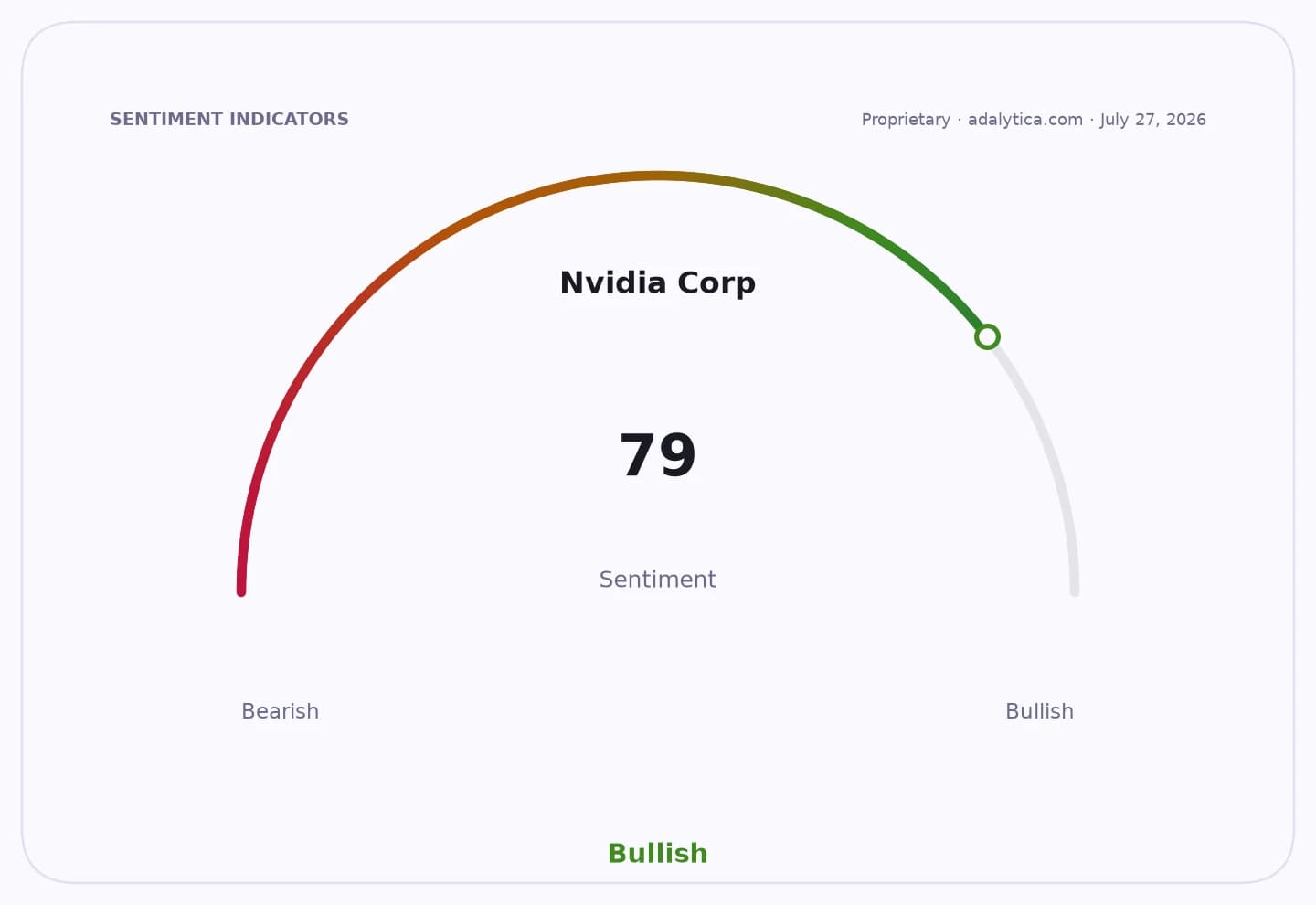
For investors, the announcement reinforces the central bull case for Nvidia: AI demand is not easing, even after months of debate over whether faster, cheaper models might reduce the need for expensive hardware. The data center boom is still intensifying, and the market has been rewarding that view. Nvidia’s shares have climbed to around $206.84, above the 50-day moving average of $209.11 and well above the 200-day average of $192.72, while RSI readings near 59.6 suggest momentum has cooled from earlier overbought levels without breaking the uptrend. Adalytica’s NVIDIA Earnings Sentiment gauge also remains elevated at 79, in “Greed” territory, though it has eased from earlier highs, reflecting both conviction and a degree of crowding.
The financing angle is equally important. Guarantees of this size, if structured as part of a broader development package, indicate that the AI buildout is becoming capital-intensive enough to require balance sheet support and long-dated commitments rather than incremental purchases of accelerators. That can accelerate deployment of new training and inference capacity for OpenAI and, by extension, keep Nvidia’s latest generation of chips and systems at the center of the market. It also gives Nvidia a way to shape the pace and architecture of the next wave of AI spending, rather than simply reacting to customer demand.
But the bull case comes with a bear argument. A $250 billion guarantee is not the same as cash spending, yet it still implies exposure to counterparties, project execution and the economics of a sector where valuations and buildout plans have already expanded rapidly. If AI monetization slows, or if financing conditions tighten, the very scale that supports Nvidia’s revenue visibility could become a source of vulnerability. Investors will be watching whether the guarantees are tightly ring-fenced and how much incremental leverage they create, directly or indirectly, around the AI ecosystem.
The broader message is that AI infrastructure is now a macro-relevant investment cycle, not just a technology theme. Microsoft, cloud providers, semiconductor vendors and power suppliers are all competing for position as the world’s largest data centers demand ever more electricity, land and capital. Nvidia’s move, if finalized, would underscore that the AI economy is increasingly being built through strategic financing as much as through product innovation — a shift that can extend the boom, but also concentrate its risks.
For equity holders, the key question is no longer whether AI spending is real. It is how much of the next phase will be funded by a small group of winners taking on larger financial obligations to preserve their lead. That could sustain Nvidia’s dominance and support the stock near term, but it also raises the hurdle for future returns if the industry’s growth curve proves less smooth than the market now assumes.
| Entity | Gains | Losses |
|---|---|---|
| Nvidia | ▲Demand visibility | ▼Balance-sheet risk |
| OpenAI | ▲Faster capacity buildout | ▼Higher financing dependence |
| Cloud rivals | ▲Validation of AI spend | ▼Pressure to match capex |
| Short sellers | ▲None | ▼Momentum and sentiment trade |