NVIDIA is turning its balance sheet into a financing tool for the AI buildout, committing up to $105 billion of support for an 8-gigawatt data-center campus in Ohio that will be leased by OpenAI.
NVIDIA backs OpenAI Ohio AI data-center campus

The deal matters because it shows how the AI infrastructure race is moving beyond chip sales into long-dated power, land and credit commitments that could lock in demand for NVIDIA’s GPUs while also exposing it to much larger counterparty and financing risk. For investors, it deepens the thesis that NVIDIA is not just selling semiconductors but underwriting the ecosystem needed to deploy them at scale — a strategy that can extend revenue visibility, but also raises questions about capital intensity and return on invested capital if the buildout slows.
Sentiment IndicatorsⓘProprietary · adalytica.com · August 17, 2026
This is a snapshot — live sentiment, awareness and momentum for 130+ markets update continuously in the dashboard.Open AlphaPulse
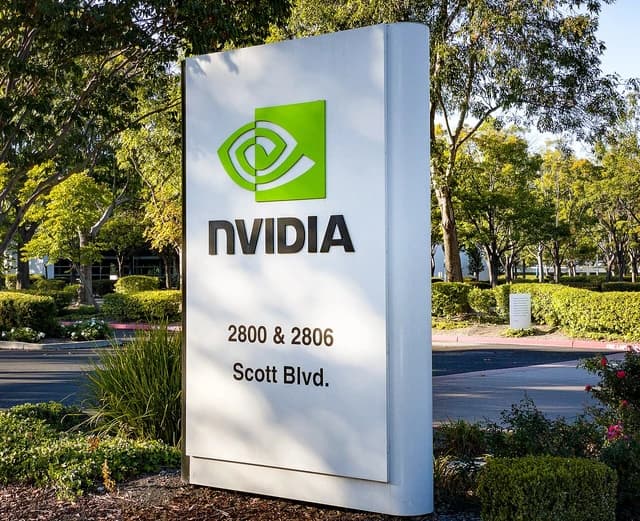
According to NVIDIA’s Aug. 17 filing, the company entered a multi-year partnership with SB Energy to develop the PORTS Technology Campus, with OpenAI as the planned tenant. NVIDIA said it can also provide credit support to secure an additional 3.8 gigawatts at the Portsmouth site, at its sole discretion, and that its aggregate payment obligation is capped at $105 billion under the initial commitment. The scale is unusual even by the standards of the AI boom: 8 gigawatts of planned capacity would rank among the largest dedicated AI campuses in the market and implies a heavy appetite for electricity, permitting, networking gear and high-end accelerators.
For the broader AI supply chain, the announcement reinforces a new investment cycle that ties together chipmakers, cloud providers, developers and utilities. If OpenAI and its partners can execute, the campus would support a major expansion in model training and inference capacity, which is supportive for NVIDIA’s GPU demand and for related infrastructure names. It also fits a pattern of increasingly circular financing in AI, where customers, suppliers and infrastructure sponsors are all being pulled deeper into each other’s capital plans.

The upside case for NVIDIA is straightforward: securing a large OpenAI-linked campus could help keep its hardware at the center of the most aggressive compute buildout in the industry, at a time when AI adoption is still expanding across enterprise software, advertising and automation. But the bear case is that the company is effectively taking on quasi-project-finance exposure to one of the most capital-hungry segments in technology, with outcomes dependent on energy availability, construction timelines, regulation and OpenAI’s long-term economics.
NVIDIA shares were little changed around the filing, while the stock has been trading near the upper end of its recent range as investors price in sustained AI spending. The market will now watch whether the Ohio project becomes a template for more vertically integrated financing across the sector — or a sign that the race for AI capacity is beginning to strain even the most cash-generative names in the market.
| Entity | Gains | Losses |
|---|---|---|
| NVIDIA | ▲Demand lock-in | ▼Balance-sheet risk |
| OpenAI | ▲Compute capacity | ▼Higher financing dependence |
| SB Energy / utilities | ▲Long-term project flow | ▼Execution and power risk |
| GPU rivals / shorts | ▲Less visibility | ▼NVIDIA share gains |