Nvidia is extending its lead over the broader market as investors continue to treat the chipmaker as the clearest trade on artificial-intelligence spending, while Nike remains stuck in a lower-growth consumer cycle.
Nvidia Outperforms Nike on AI Spending Demand
That split matters because it captures the market’s current preference for companies tied to infrastructure spending over brands exposed to discretionary demand. Nvidia’s shares closed at $225.73 on Sept. 8, up sharply from $177.85 on Jan. 20 and more than five times Nike’s $38.10 close over the same market window, underscoring how far capital has rotated toward AI beneficiaries.

The move is not just about price. Nvidia’s 50-day moving average at $211.23 remains below the latest close, while the 200-day average sits at $196.75, indicating the stock is still trading above its longer-term trend. RSI readings around 54 suggest momentum has cooled from overbought levels earlier in the summer, but not enough to break the broader uptrend. MACD remains positive, a sign that bullish trend structure is still intact even after a recent pullback from the intraday high of $233.71.
By contrast, Nike is trading well below both its 50-day moving average of $41.06 and its 200-day average of $50.29. Its last close of $38.10 also leaves it far from the levels that would suggest a durable recovery in sentiment. RSI readings near 40 point to a stock that is neither deeply oversold nor showing signs of a convincing turnaround, while the weak MACD underscores the lack of momentum.
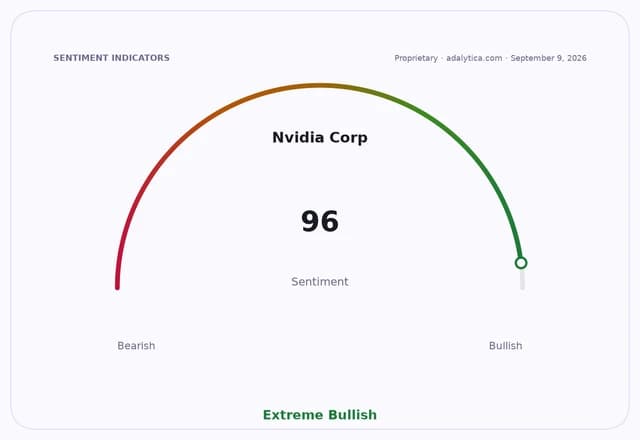
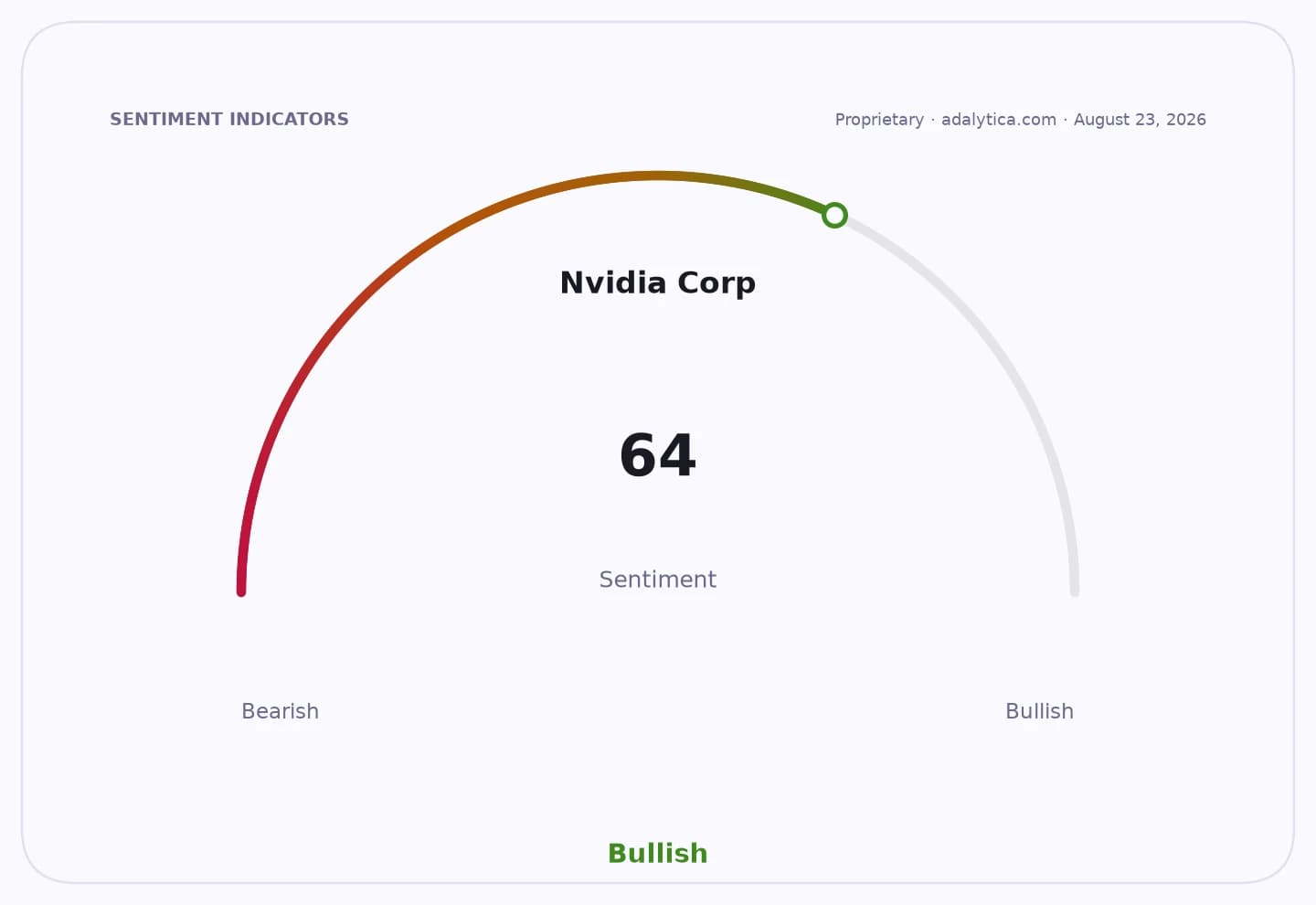
For investors, the comparison is a reminder that the market is still rewarding earnings visibility and AI-linked capital spending far more than cyclical consumer exposure. Adalytica’s NVIDIA earnings sentiment gauge sits at 96, or “Extreme Greed,” reflecting how aggressively traders are positioning around the stock’s growth narrative. The S&P 500 sentiment gauge, by contrast, is deep in “Extreme Fear,” highlighting a broad risk-off backdrop that tends to amplify the gap between market leaders and laggards.
The bull case for Nvidia remains straightforward: demand tied to data-center buildout and AI deployment is still outrunning supply, and investors are willing to pay for that scarcity. The bear case is that expectations are elevated after a powerful rally, leaving the stock vulnerable to any slowdown in order growth, margin pressure, or a broader rotation out of megacap technology.
Nike’s challenge is the opposite. It needs evidence that sales and margins can stabilize before investors will pay up for the shares again. Until then, the market is likely to keep favoring Nvidia whenever the story is growth, scarcity and AI.
| Entity | Gains | Losses |
|---|---|---|
| Nvidia shareholders | ▲AI demand premium | ▼Higher valuation risk |
| Nike shareholders | ▲— | ▼Slow-growth discount |
| AI infrastructure buyers | ▲Access to critical chips | ▼Higher capex bills |
| Index investors | ▲Exposure to market leaders | ▼Broader diversification |