Nvidia’s push into “physical AI” is moving from concept to industrial rollout as Fujitsu and several leading Japanese robotics companies commit to its technology, a sign the chipmaker is widening its reach beyond data centers into machines that operate in factories, logistics and the physical world.
Nvidia Expands Into Physical AI

That matters because robotics has long been the missing bridge between generative AI software and revenue-bearing industrial automation. If Nvidia can become the default compute layer for robots, it expands its addressable market from training and inference in servers to the far larger, more durable market for embodied AI systems — a shift that could deepen pricing power, lock in developers and create recurring demand for its chips, networking and software stack.
The move also reinforces a broader industrial thesis: companies are looking for AI that can perceive, plan and act in messy real-world environments, not just generate text or images. Japan is especially relevant because its manufacturers are among the most advanced adopters of automation, while facing labor shortages and an aging workforce that make robotics economically compelling. Partnerships with Fujitsu and established robot makers suggest the technology is moving from pilot projects toward deployment.
Investors have been watching for evidence that Nvidia’s AI franchise can extend beyond hyperscale cloud spending, where growth is increasingly tied to capital expenditure cycles and competition. Physical AI offers a second leg of demand, and one with potentially longer replacement cycles and deeper integration into industrial customers. Nvidia shares have held above their 200-day moving average and were last around 207.40, with the 50-day average near 209.68, suggesting the market is still treating the stock as a structural AI winner despite recent volatility. Technical readings show the shares have cooled from overbought levels, with RSI around 60, leaving room for further upside if the robotics narrative gains traction.
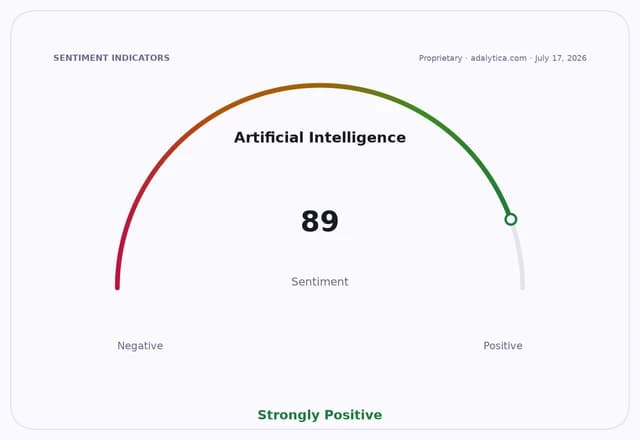
The market is also signalling that investors are not dismissing the theme. Adalytica’s NVIDIA Earnings Sentiment sits at 67, neutral but firmer than earlier readings, while broader AI sentiment remains elevated. That suggests the sector is still being rewarded for evidence of real-world monetisation rather than speculative enthusiasm alone.
For Fujitsu, the collaboration is a way to stay relevant in the next industrial computing cycle and to attach itself to the platform most closely associated with AI infrastructure. For Japanese robotics makers, Nvidia offers access to a full-stack ecosystem that could shorten development cycles and improve performance in vision, planning and control. The bear case is that robotics adoption remains slower than the hype cycle implies, with integration costs, safety requirements and fragmented standards limiting near-term revenue. Even so, the strategic direction is clear: physical AI is becoming a commercial battleground, and Nvidia is positioning itself as the operating layer.
What to watch next is whether these collaborations translate into product launches, factory deployments and eventually recurring software and compute demand. If they do, the story stops being about one more AI partnership and starts looking like the first credible industrial market for embodied intelligence.
| Entity | Gains | Losses |
|---|---|---|
| Nvidia | ▲New robotics demand | ▼Dependence on data centers |
| Fujitsu | ▲AI platform relevance | ▼Higher integration risk |
| Japanese robotics makers | ▲Faster development cycles | ▼Marginal hardware commoditization |
| Traditional automation rivals | ▲— | ▼Share in AI robotics |