Nvidia’s new multibillion-dollar AI initiative with SK Group is more than another headline-grabbing partnership: it points to a deeper build-out of the infrastructure behind artificial intelligence, with South Korea emerging as a more strategic node in the global compute supply chain.
Nvidia-SK Deal Deepens Asia AI Infrastructure Buildout
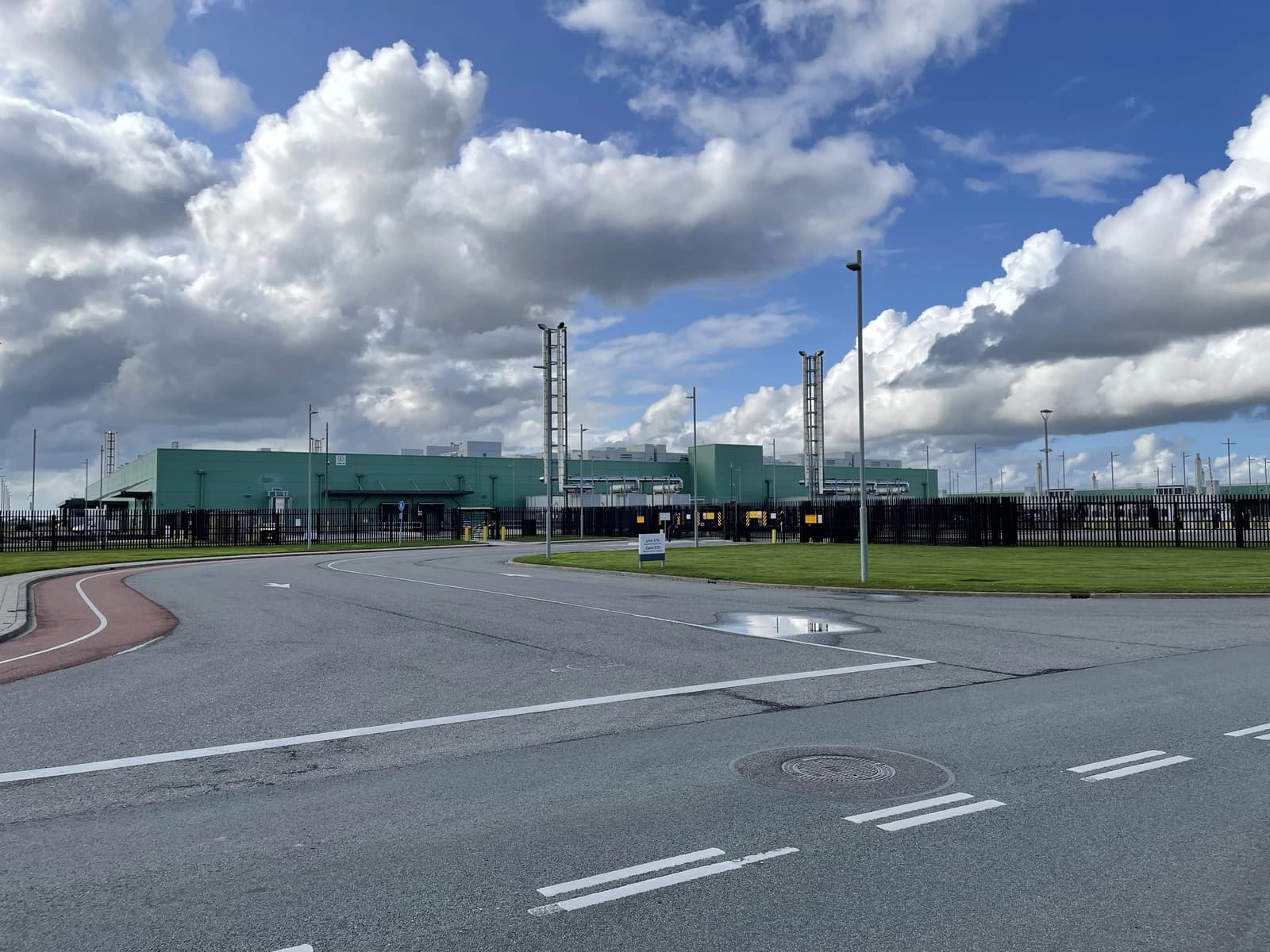
For investors, the significance is twofold. First, it reinforces that AI spending is still expanding beyond U.S. hyperscalers and into Asia, where governments and conglomerates are racing to secure access to accelerators, memory, networking and power. Second, it gives Nvidia another foothold in a market that can support sustained chip demand even if some customers pause between orders. That matters because the AI trade has increasingly been about not just model launches, but who owns the physical stack that makes them run.
The move also fits SK Group’s broader push into AI infrastructure. Recent disclosures from SK Telecom have pointed to plans aimed at strengthening its AI data center business, including the creation of a new subsidiary, SK Hyper, and capital investment to support the effort. That suggests the partnership is not a one-off commercial arrangement, but part of a longer-term industrial strategy spanning compute, data centers and related services.
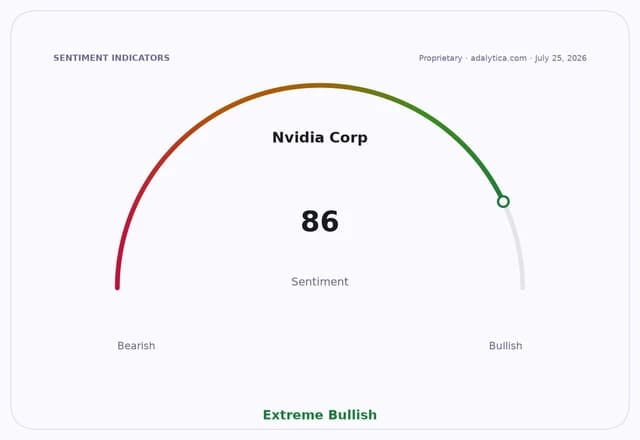
The market backdrop shows why such deals continue to command attention. Nvidia shares have been volatile in recent months, but the stock remains well above its 200-day moving average and is trading near levels that technical indicators show as still constructive despite a recent pullback. RSI readings have cooled from overbought territory, while momentum gauges such as MACD have improved from earlier weakness. Adalytica’s proprietary earnings sentiment for Nvidia remains at “Extreme Greed,” underscoring how strongly investors continue to price in AI demand, even after short-term swings.
SK Telecom’s stock has also strengthened sharply this year, reflecting investor optimism around its AI ambitions, though the move has become more stretched and more technically fragile after a recent dip from highs. The setup suggests that the market is rewarding execution in AI infrastructure, but is also alert to the capital intensity required to keep pace. For SK, the upside is greater strategic relevance in a high-growth ecosystem; the risk is that returns on data-center and AI investments arrive slower than the market expects.
The economic case for the partnership is straightforward. AI data centers require expensive graphics processors, memory, cooling and energy infrastructure, and national champions in Asia want greater control over those inputs rather than relying exclusively on offshore cloud providers. That creates a commercial opening for Nvidia, whose platform remains the default choice for many large-scale AI deployments, and for SK, which can position itself as a domestic enabler of AI capacity in a market where governments are keen to localize advanced technology.
Still, the bull case depends on the same factor that has powered the AI trade all year: sustained capital expenditure. If enterprise and sovereign AI adoption keeps broadening, Nvidia can keep monetizing its hardware and software ecosystem, while SK can leverage its telecom, data-center and semiconductor ties. The bear case is that the initiative becomes another expensive commitment in a sector where timelines are long, margins can compress, and competition from AMD, Intel and custom silicon makers remains intense.
What investors will watch next is whether the collaboration translates into tangible capacity additions, procurement orders and revenue visibility rather than broad strategic language. If it does, the deal would strengthen Nvidia’s role as the indispensable supplier of AI compute and help SK Group entrench itself in Korea’s emerging AI infrastructure layer.
| Entity | Gains | Losses |
|---|---|---|
| Nvidia | ▲More AI chip demand | ▼Execution risk if orders lag |
| SK Group | ▲Stronger AI infrastructure position | ▼Higher capital intensity |
| Korea’s AI ecosystem | ▲Localized compute build-out | ▼Greater dependence on imported accelerators |
| AMD and other rivals | ▲Potential spillover demand if supply tightens | ▼Nvidia’s ecosystem advantage |