Investors are increasingly looking past the direction of the market and toward the size of the next move, with Nvidia and broader U.S. equity benchmarks offering a setup for higher volatility after months of crowded AI positioning and a sharp retreat in risk appetite.
Nvidia, S&P 500 Face Higher Volatility Setup
That shift matters because one of the most profitable trades of the year — concentrated bets on artificial intelligence winners such as Nvidia — has become less one-sided. After the collapse of a leveraged hedge fund prompted some investors to pull back from clustered AI exposure, portfolio managers have been trimming oversized positions, taking profits and rotating into broader index exposure. At the same time, the Cboe Volatility Index is hovering around 15, well below its long-term average near 19, suggesting the options market is not yet fully pricing the macro and company-specific catalysts ahead.
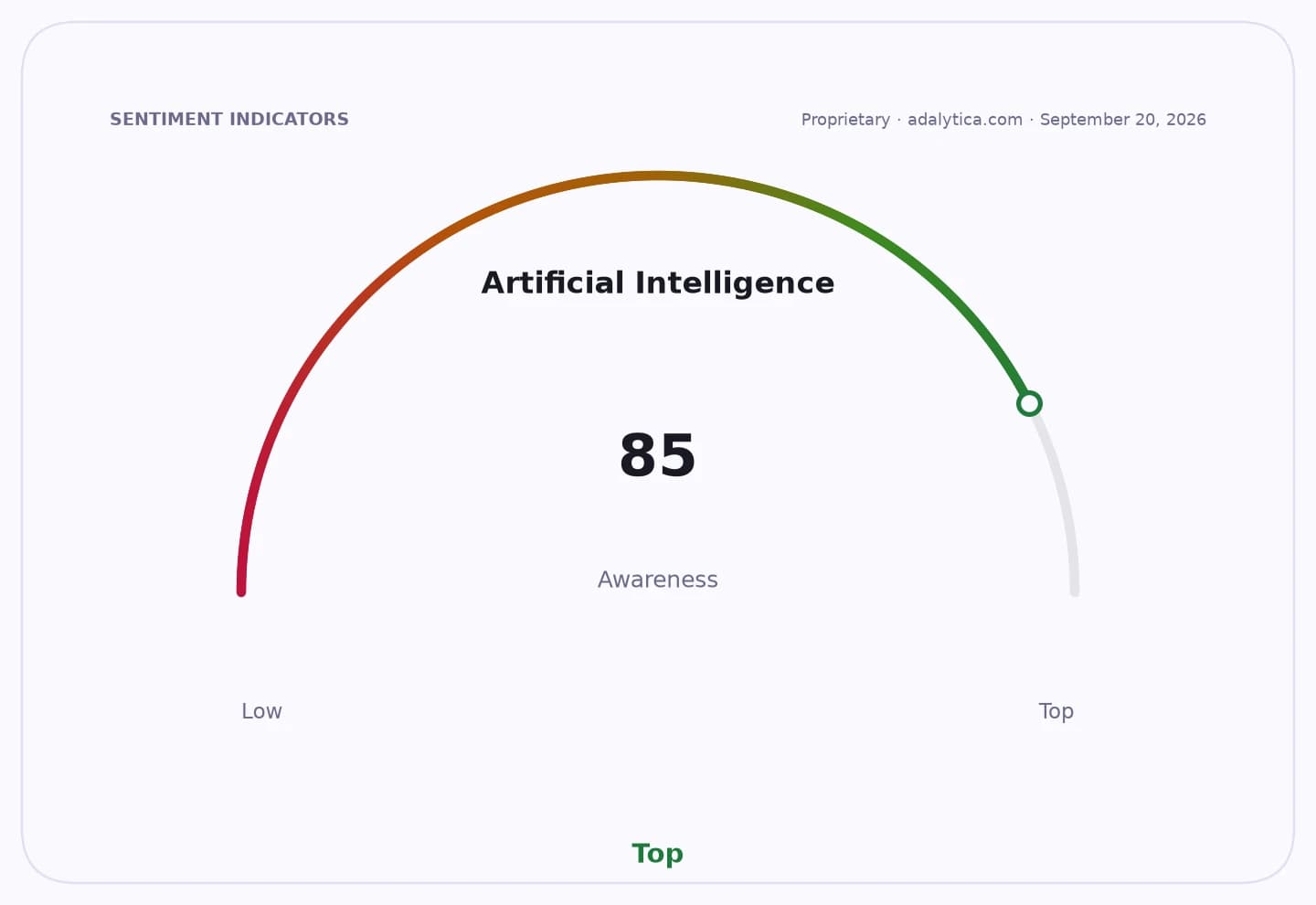
Sentiment IndicatorsⓘProprietary · adalytica.com · September 19, 2026
This is a snapshot — live sentiment, awareness and momentum for 130+ markets update continuously in the dashboard.Open AlphaPulse
For Nvidia, the setup is more nuanced than a simple bullish or bearish call. The stock has risen about 15% this year, outpacing the S&P 500’s roughly 10% gain and keeping it at the center of the AI trade, even after bouts of sharp swings. Recent technical readings show the stock just above its 50-day moving average and well above its 200-day average, but the relative strength index has oscillated enough to suggest sentiment can reverse quickly when positioning gets crowded. The Adalytica sentiment snapshot for Nvidia is also at 11, labeled “Extreme Fear,” underscoring that enthusiasm around AI has given way to a more defensive tone among traders.
That is why strategists are pointing to options structures such as a strangle, which can profit from a large move in either direction rather than requiring the investor to predict the exact outcome. In the example cited by Barron’s columnist Steven M. Sears, a trader could buy both a call and a put on the SPDR S&P 500 ETF Trust with strikes above and below the current price, positioning for a breakout while the VIX remains subdued. The appeal is straightforward: if the next catalyst produces a sharp move, the trade can work whether the market rallies or sells off. The risk is equally clear — the move must be large enough to cover the premium paid.
The macro calendar raises the odds of that kind of move. The Federal Reserve still has two meetings left this year, on Oct. 28 and Dec. 9, and another rate increase after the latest tightening step would increase financing costs for leveraged investors while potentially pressuring richly valued growth stocks. That makes the volatility trade relevant not only to options desks but also to holders of Nvidia and semiconductors more broadly, where valuations remain tied to expectations for relentless AI spending.
The semiconductors themselves remain powerful momentum vehicles, which is precisely why volatility can cut both ways. Nvidia shares are still the clearest barometer of AI demand, while exchange-traded funds such as the VanEck Semiconductor ETF and leveraged products like the SOXL can amplify the move. The latter have already shown how quickly sentiment can turn: SOXL has swung violently this year, with its 50-day average still far above recent levels, reflecting a market willing to pay up for upside but also to punish crowded positioning just as fast.
For investors, the message is less about picking a top or bottom in Nvidia than about recognizing that the trade has matured. Strong earnings, persistent AI capital spending and a still-supportive technical backdrop argue that the bull case is not broken. But low implied volatility, a packed Fed calendar and the unwinding of crowded hedge-fund-style bets argue that the next phase may be defined by wider price ranges rather than a smooth trend higher.
That makes volatility itself the asset to watch. If AI enthusiasm returns, Nvidia and its suppliers can extend their gains. If profit-taking and tighter policy dominate, the same names could retrace quickly. Either way, investors betting on the AI complex may be better served by preparing for bigger swings than by assuming the year’s strongest theme will keep moving in a straight line.
| Entity | Gains | Losses |
|---|---|---|
| Option buyers | ▲Bigger price swings | ▼Time decay, premium cost |
| Nvidia bulls | ▲Upside from renewed AI buying | ▼Profit-taking and crowded positioning |
| Nvidia bears | ▲Sharp correction if sentiment breaks | ▼Any renewed AI momentum |
| Leveraged semiconductor ETFs | ▲Magnified trend capture | ▼Fast drawdowns in a reversal |