NZD/USD is sliding through key technical support, and that break matters because it points to more room for downside in a currency already struggling to hold bids against a firmer U.S. dollar.
NZD/USD Falls Toward 0.5820 on Bearish Technicals

The pair has dropped more than 1% in just four hours, with the move taking it toward 0.5820, a level traders are watching as the first major line of defense. A decisive break there would open the door to 0.5760 and then 0.5745, while only a close back above 0.5850 would begin to repair the damage. The short-term setup has deteriorated quickly: the pair has fallen below its 200-period simple moving average, broken an upward trend line and left MACD in bearish territory below its signal and zero lines.
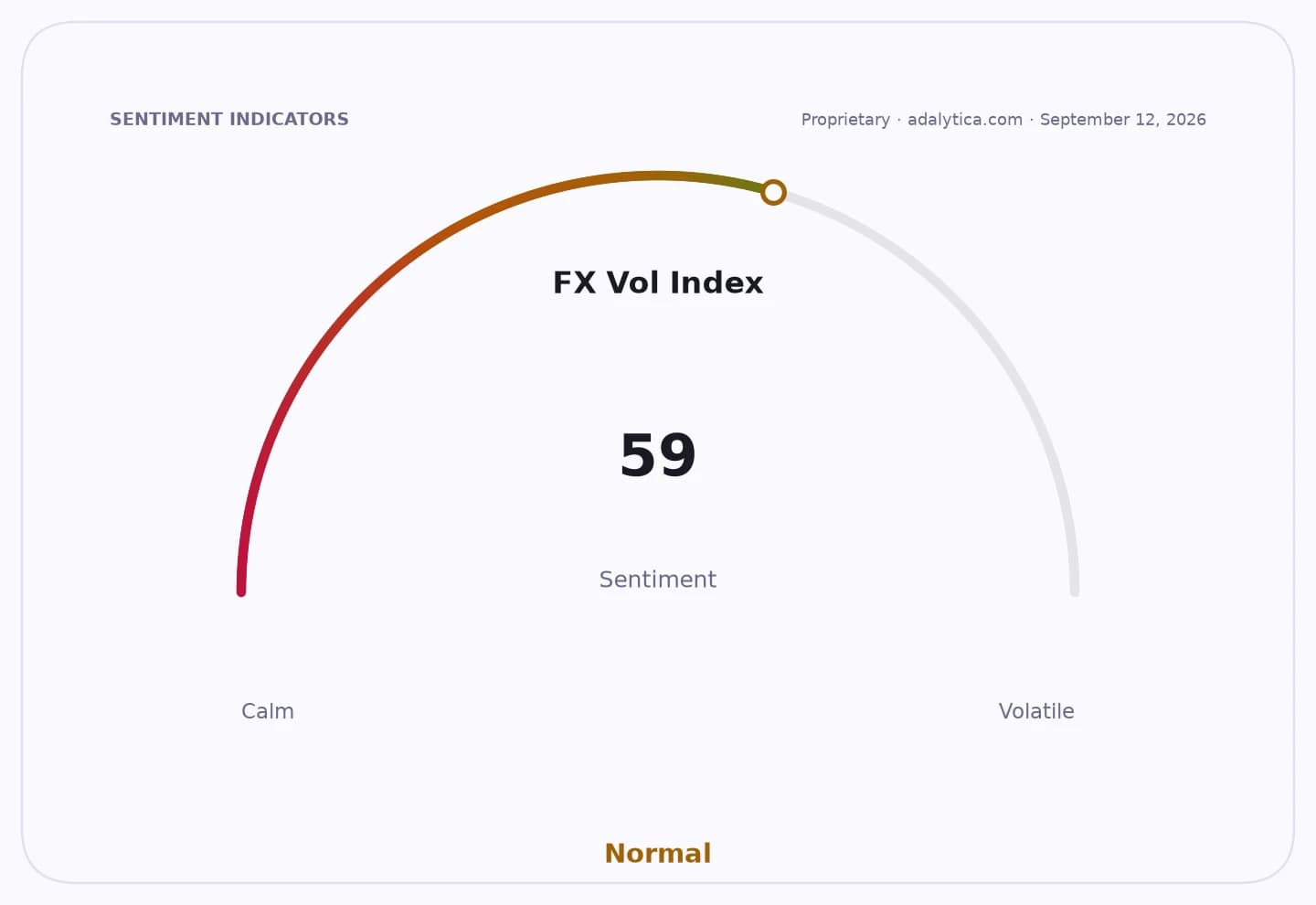
Sentiment IndicatorsⓘProprietary · adalytica.com · September 4, 2026
This is a snapshot — live sentiment, awareness and momentum for 130+ markets update continuously in the dashboard.Open AlphaPulse
That technical breakdown matters economically because it reflects a shift in capital flows away from higher-beta currencies and toward the dollar. In plain terms, the market is demanding a larger premium to own the kiwi, and that usually happens when investors are less willing to chase global growth exposure. For New Zealand, that can tighten financial conditions at the margin, making imports cheaper but also weighing on confidence-sensitive sectors that rely on a stable currency and steady external demand.
The move also fits a broader macro backdrop that is still favorable to the U.S. dollar. Adalytica’s FX Volatility Trading Signals show “Extreme Fear” in volatility markets, while the dollar’s own trade signal has turned firmer over the past week. That combination tends to punish commodity and cyclical currencies first, especially when local fundamentals are not strong enough to offset risk aversion.
For investors, the immediate implication is that the kiwi may remain a funding-currency candidate rather than a clean long. That is important for anyone with exposure to New Zealand assets, Australasian equities, or carry trades that rely on stable FX. If 0.5820 gives way, systematic sellers could accelerate the move and drag spot toward the next support band faster than fundamental traders expect.
The overbought reading on the stochastic oscillator suggests the pair may be due for a short pause, but that does not change the larger picture. In technical terms, oversold conditions can slow a decline; they do not reverse one on their own. Until NZD/USD reclaims 0.5850 in a convincing way, the path of least resistance remains lower.
| Entity | Gains | Losses |
|---|---|---|
| U.S. dollar | ▲Safe-haven demand | ▼None material |
| NZD/USD bears | ▲Momentum trade | ▼Short-term oversold bounce risk |
| New Zealand exporters | ▲Cheaper currency tailwind | ▼Import costs rise |
| Kiwi bulls | ▲Brief rebound only | ▼Key support break risk |