Gold and oil moved in opposite directions in week 36, with crude extending gains as investors priced in tighter supply and a more persistent geopolitical risk premium, while gold lost ground under the pressure of higher-rate expectations and a firmer dollar.
Oil Rises While Gold Falls in Week 36

That divergence matters because it captures the market’s current macro hierarchy: inflation risk and supply security are supporting energy, but the prospect of a hawkish Federal Reserve is still a headwind for non-yielding assets such as gold. For investors, it also shows that commodity leadership is no longer broad-based. The winners are exposed to physical tightness and geopolitical disruption, while the losers are those most sensitive to real yields and dollar strength.
Sentiment IndicatorsⓘProprietary · adalytica.com · September 10, 2026
This is a snapshot — live sentiment, awareness and momentum for 130+ markets update continuously in the dashboard.Open AlphaPulse

West Texas Intermediate was quoted at $91.48 on Sept. 1 in the supplied data, with the model pointing to $91.75 on Sept. 2, after a jump of 5.1% in the latest move shown. The broader oil complex remained firm, with USO rising to $149.97 on Sept. 9 from $141.96 on Sept. 4, a move that kept the fund well above its 50-day average of $125.55. Its relative strength index climbed to 75.8, a level that typically points to stretched momentum, but the technical trend remains constructive as the 50-day average continues to rise and the ETF trades comfortably above its 200-day average of $108.25.
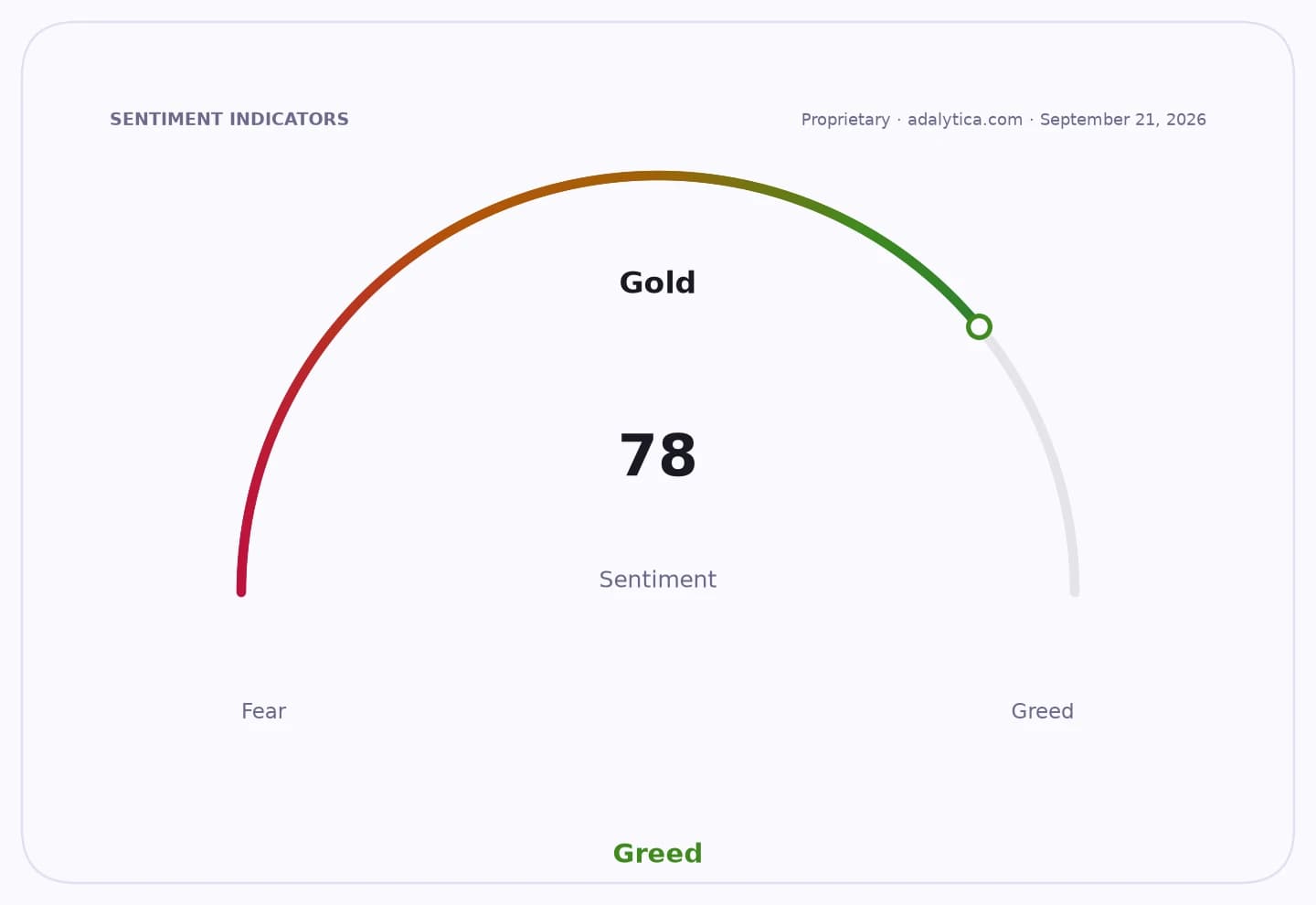
Gold told the opposite story. GLD slipped to $403.35 on Sept. 9 from $406.77 on Sept. 4, while remaining below its 200-day moving average of $415.70. The 50-day average, at $390.09, is still below the spot level, which keeps the medium-term trend intact, but the recent fade shows how quickly gold can lose momentum when macro drivers turn less favorable. Adalytica’s Gold Fear & Greed Index was at 32, labeled neutral, after a sharp drop over the prior month, while awareness remained in “extreme fear,” underscoring how fragile conviction has become even after a strong rally earlier in the year.
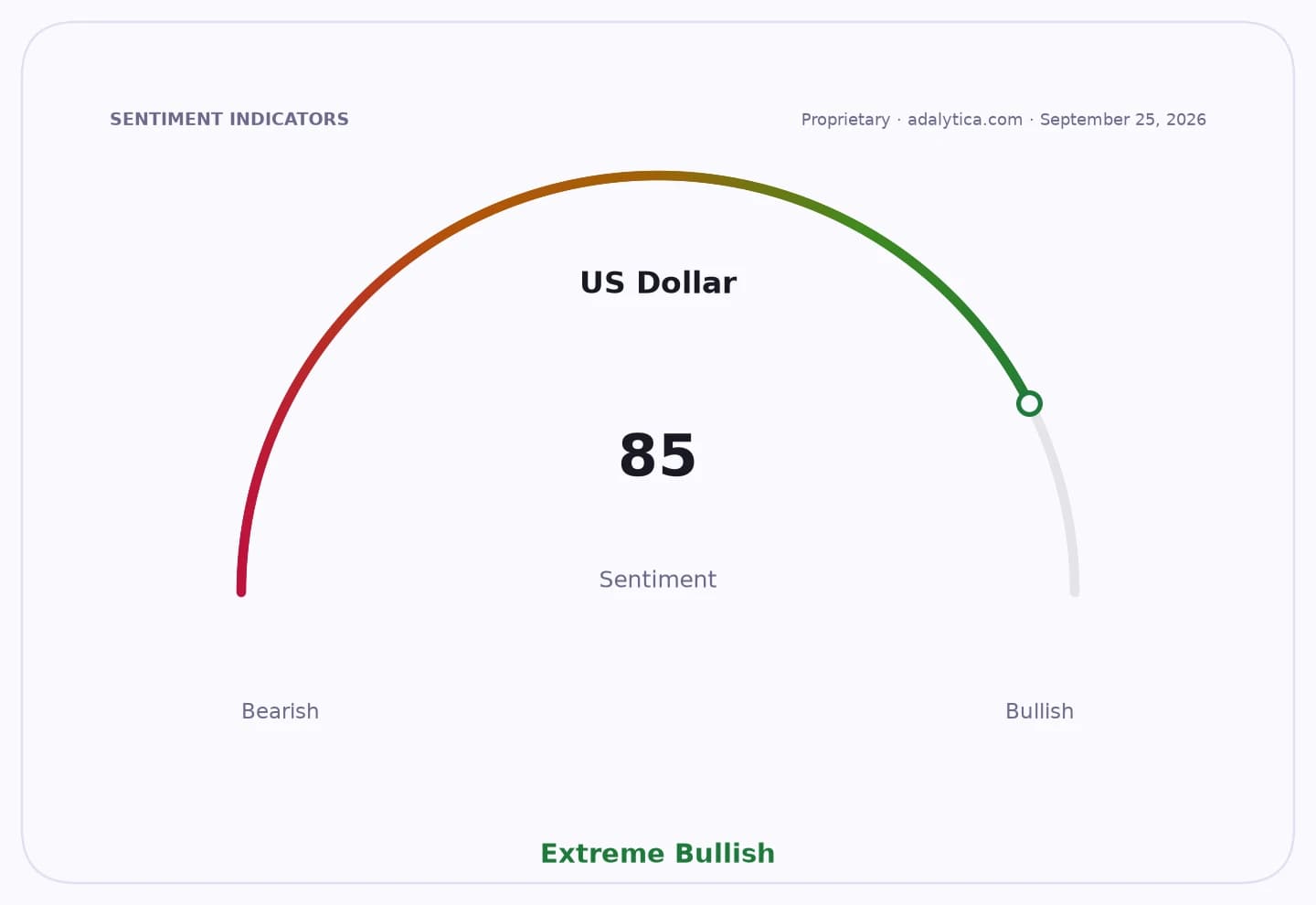
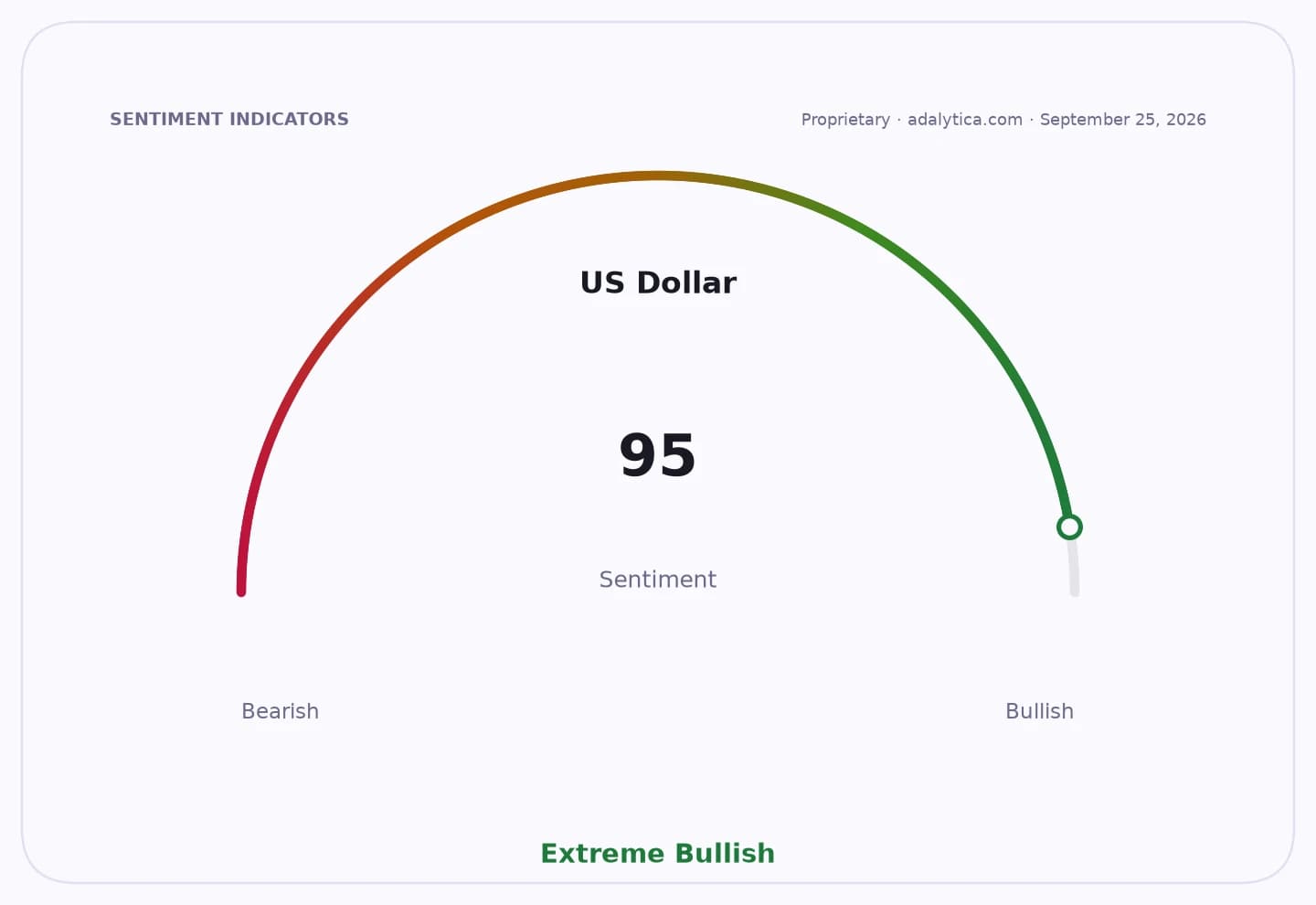
The dollar is part of the explanation. Adalytica’s US Dollar Trade Signals showed sentiment at 73, in greed territory, and up 54 points over 30 days. A stronger dollar typically weighs on commodities priced in dollars, especially precious metals. It also fits with the market’s read-through from US labor data and the prospect of higher rates, which lift real yields and reduce the appeal of gold as a store of value.
Oil’s outperformance is being reinforced by the macro backdrop. The US Treasury 10-year/2-year spread was around 40 basis points in the latest readings, a still-positive curve that suggests the market has not fully priced an imminent recession, leaving room for demand to hold up while supply risks persist. At the same time, Adalytica’s Global Stability Sentiment was neutral, even as its awareness reading stayed elevated, a mix consistent with traders hedging geopolitical risk without rushing into outright panic.
For investors, the message is that commodities are being repriced asset by asset rather than as a single inflation hedge. Energy remains the cleaner expression of supply disruption and geopolitical tension, while gold has become more of a rates-and-dollar trade. The bull case for oil is continued supply restraint and lingering conflict risk; the bear case is that higher prices eventually hurt demand and invite policy response. For gold, the bull case is that any weakening in the dollar or shift toward easier monetary policy could quickly restore demand; the bear case is that sticky yields keep capital flowing elsewhere.
The key catalyst now is whether incoming US data and central-bank guidance deepen the case for tighter policy or whether geopolitical developments keep crude bid and revive gold’s safe-haven appeal. Until then, week 36 looks less like a synchronized commodity move than a split between inflation-sensitive energy and rate-sensitive metals.
| Entity | Gains | Losses |
|---|---|---|
| Oil producers | ▲Higher realized prices | ▼Demand destruction risk |
| Gold bulls | ▲Safe-haven support if rates fall | ▼Strong dollar and yields |
| Energy consumers | ▲— | ▼Higher input costs |
| Dollar bulls | ▲Commodity headwinds | ▼Fed easing would trim support |