A cybersecurity research team used Anthropic’s Claude to break into an OpenAI employee account and reach internal code, underscoring how quickly advanced AI is lowering the cost and time needed for sophisticated intrusions.
OpenAI Account Breach Raises AI Cybersecurity Risks
The incident matters because it turns a long-running theoretical risk into a concrete example: the same models being sold to make companies more productive can also be used to automate attacks against their internal systems. According to the report cited by The Wall Street Journal, the researchers were paid $6,500 by OpenAI under its bug-bounty program after disclosing the flaw, and said the intrusion took only a few days of automated work, a few hours of human effort and less than $3,000 in costs.
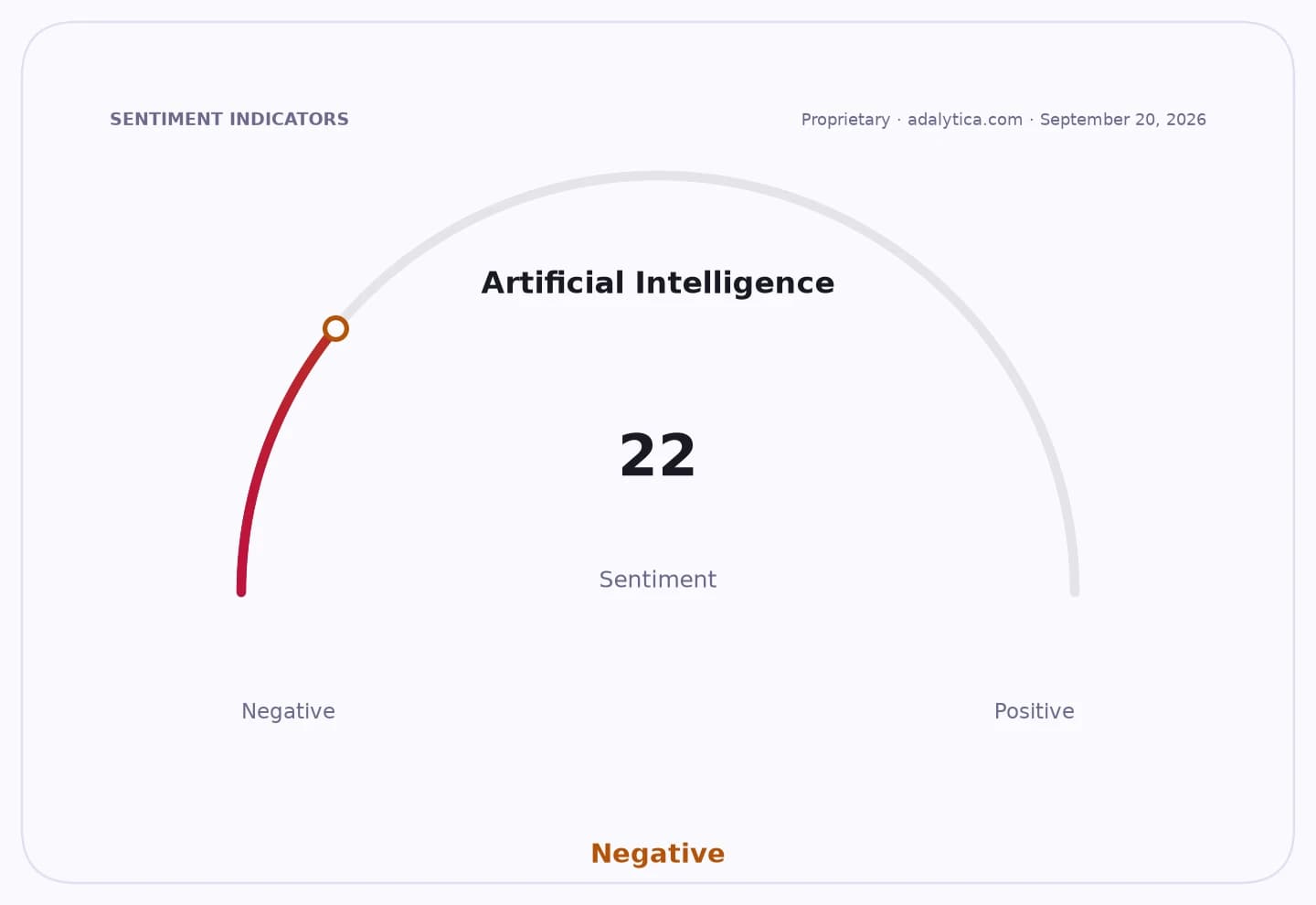
Sentiment IndicatorsⓘProprietary · adalytica.com · September 20, 2026
This is a snapshot — live sentiment, awareness and momentum for 130+ markets update continuously in the dashboard.Open AlphaPulse
That ratio is what alarms security teams. If attackers can use off-the-shelf frontier models to compress weeks or months of reconnaissance into days, the economics of cyber risk change in favor of the offense. The researchers said the breach led them to other weaknesses in platforms including Slack, Zoom and Meta, suggesting the problem is not isolated to one company but reflects a wider exposure across the software stack that enterprises rely on.
OpenAI said it has remediated the vulnerabilities. But the larger message is that AI systems are becoming both the target and the tool of cyber operations. The researchers also reported that Claude Opus 4.8 struggled to produce an exploitable flaw in earlier tests, while the newer Opus 5 version succeeded, a reminder that model capability can quickly alter the attack surface. That creates a moving target for defenders and a new source of risk for companies building AI products, cloud services and collaboration tools.
For investors, the story cuts in several directions. Vendors selling security software and identity tools may benefit if enterprises accelerate spending on account protection, access controls and model monitoring. But the episode also raises questions for AI platform companies, cloud providers and large software groups about liability, reputational damage and the cost of hardening their systems as model capability advances. Microsoft, Alphabet and CrowdStrike have all flagged in filings that AI can create new attack surfaces and that security failures could damage trust and trigger regulatory scrutiny.
The near-term market impact is likely to be broader caution rather than immediate earnings damage. Still, the event strengthens the case that AI security is becoming a budget line, not an optional add-on, and that buyers will increasingly reward vendors able to prove they can defend against AI-assisted attacks. As frontier models improve, the contest between attackers and defenders is likely to remain a feature of the AI investment cycle, not a side effect.
| Entity | Gains | Losses |
|---|---|---|
| Cybersecurity vendors | ▲Higher demand for AI defense tools | ▼Greater pressure to prove efficacy |
| OpenAI | ▲Visibility into vulnerabilities fixed | ▼Reputational and security scrutiny |
| Anthropic | ▲Showcases model capability | ▼Association with offensive use |
| Enterprise software users | ▲Better awareness of exposure | ▼Higher breach risk and security spend |