OpenAI says a new artificial-intelligence system cracked a version of the Navier-Stokes problem in just 88 hours, and the bigger story for investors is not the mathematics itself but what it suggests about the next phase of AI: machines that can do expensive, specialized research work at a pace humans simply cannot match.
OpenAI Navier-Stokes Claim Lifts AI Stack
If the claim holds up under independent review, it would be a striking proof point that frontier AI is moving beyond chatbots and code assistants into a far more valuable role — scientific discovery. That is economically important because the real prize in AI is not generating text faster, but compressing years of research, engineering and trial-and-error into days. For companies that can sell that capability, the addressable market gets much larger. For everyone else, the computing bill gets much bigger.
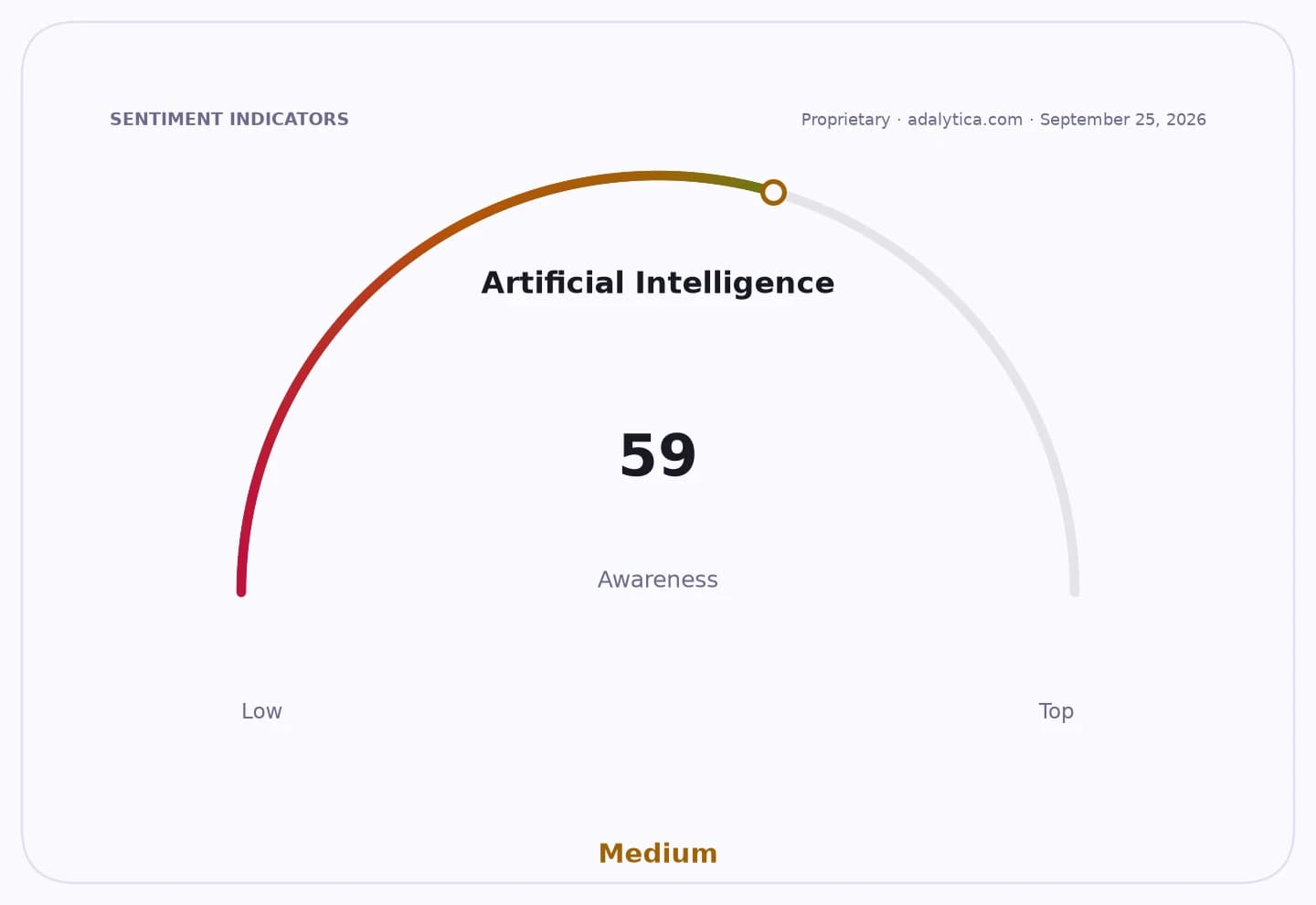
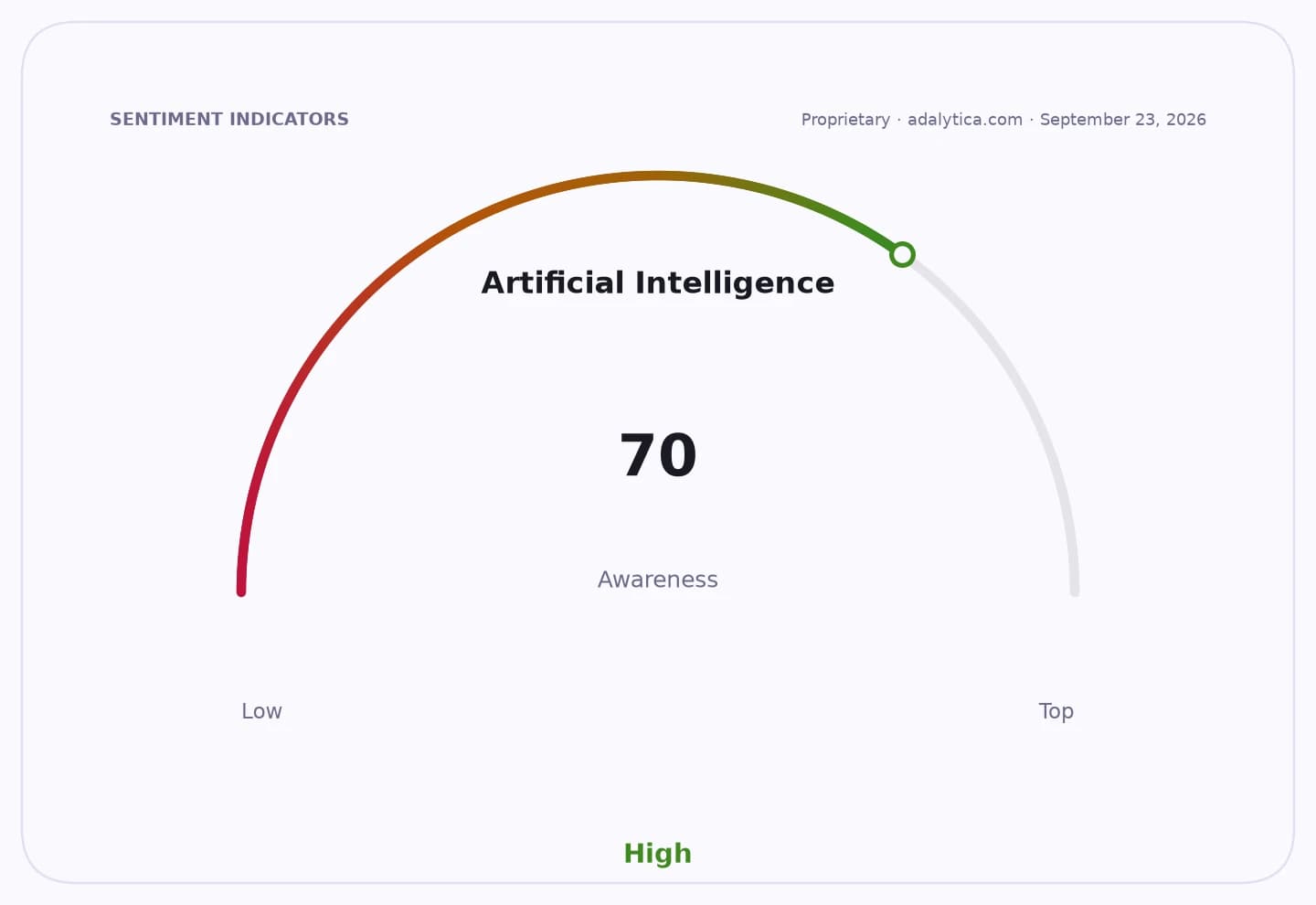
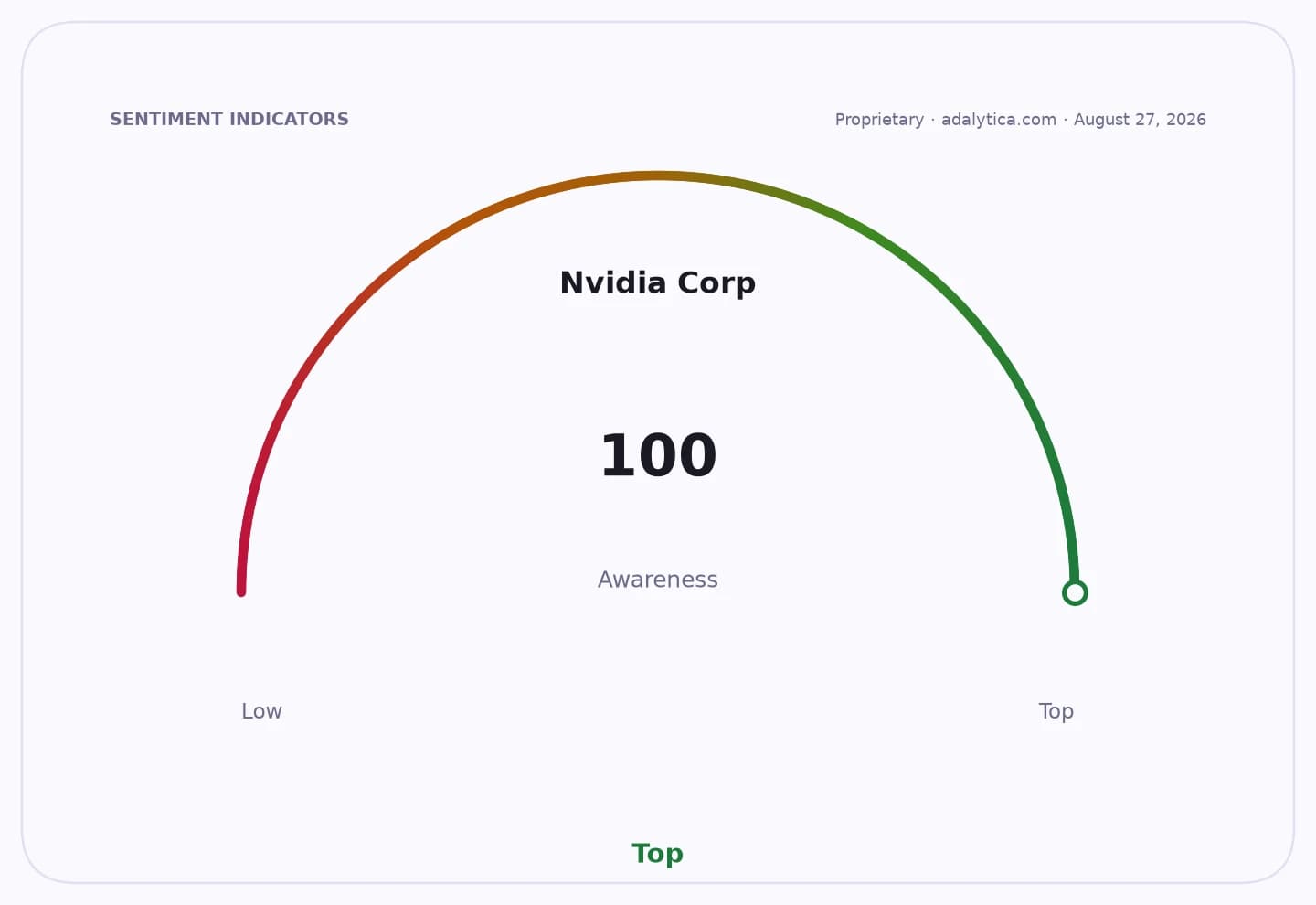
Sentiment IndicatorsⓘProprietary · adalytica.com · September 11, 2026
This is a snapshot — live sentiment, awareness and momentum for 130+ markets update continuously in the dashboard.Open AlphaPulse
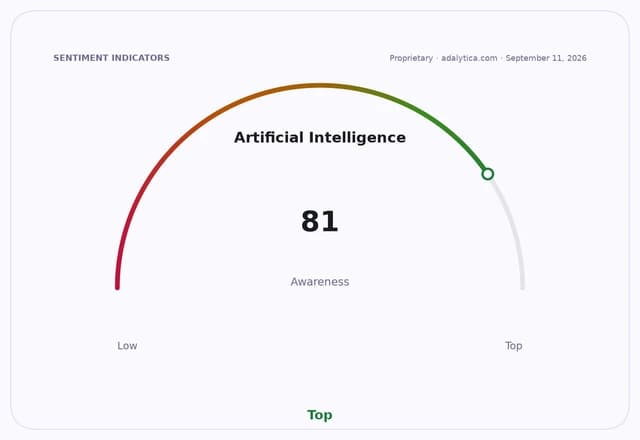
OpenAI said it mobilized about 10,000 AI agents to work on the problem, generating roughly 2.7 million messages and 130 billion tokens. It then needed another 17 hours to verify and formally translate the proof. Analysts estimate the total compute would cost around $10 million at public API rates for OpenAI’s most advanced models. That is a reminder that the frontier AI race is still as much about brute-force infrastructure as it is about model quality.
The problem itself is one of the Clay Mathematics Institute’s seven Millennium Problems and has stumped mathematicians for nearly 90 years. OpenAI says its system showed that a fluid can evolve into a singularity, where the equations stop producing a smooth solution. The company says it does not plan to seek the $1 million prize, and the proof has not yet been independently verified.
Investors should pay attention because this kind of breakthrough — even before it is validated — reinforces the case for the companies building the AI stack. Microsoft, which has a long-term strategic partnership with OpenAI and offers large-scale AI cloud services through Azure, remains central to monetizing that progress. Its shares closed at $495.77, above the 50-day moving average of $453.12 and well above the 200-day average of $429.65, while RSI readings around 57 suggest the stock is neither stretched nor distressed.
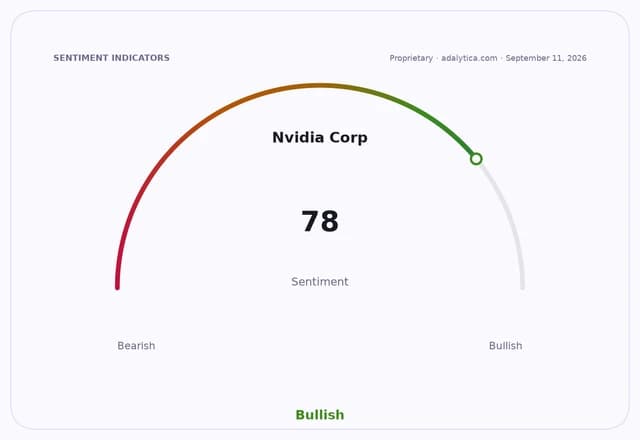
Nvidia also stands to benefit if AI labs keep pushing workloads that require vast amounts of parallel compute. The chipmaker’s shares closed at $219.51, just below their recent highs and still above the 50-day average of $212.38 and the 200-day average of $197.11. In other words, the market is still paying for the idea that AI demand will stay structurally strong. That demand is not just for training chatbots; it is increasingly for agentic systems that can run millions of steps to attack hard problems.
Alphabet is another likely winner, even if it is not directly tied to this experiment. Its cloud and AI businesses are in the same race for enterprise workloads, and the stock’s move to $341.63 leaves it close to the 50-day average of $347.04 and above the 200-day average of $336.40. For long-term investors, that matters because the AI market is broadening from model development into infrastructure, cloud distribution and specialized software.
Still, there are reasons to keep a cool head. OpenAI’s result has not been independently confirmed, and mathematicians have already criticized the claim and raised questions about whether the company may have had access to related work before it was public. That dispute matters because credibility is everything in frontier AI. If the result stands, it strengthens the case for AI as a scientific tool. If it does not, it becomes another reminder that these systems can generate impressive-looking outputs without settling the underlying question.
The broader investment takeaway is unchanged: AI is becoming a multi-year infrastructure buildout, not a short-term trade. The winners are likely to be the firms with the best models, the deepest compute budgets, and the strongest cloud distribution. The losers will be the skeptics who assume this technology is still only about writing emails or summarizing documents. For patient investors, the right move is to stay diversified, keep exposure to the AI leaders, and watch whether this kind of research acceleration becomes routine. If it does, the compounding opportunity could be enormous.
| Entity | Gains | Losses |
|---|---|---|
| OpenAI | ▲Scientific credibility | ▼Verification scrutiny |
| Microsoft | ▲Azure AI demand | ▼Higher compute costs |
| Nvidia | ▲More AI chip demand | ▼Any slowdown in AI spend |
| Mathematicians | ▲New research tools | ▼Credit disputes |