A newly built four-bedroom house with a boys’ quarters in Oyarifa, Accra, is being marketed for $250,000, a price that highlights how scarce turnkey family homes remain in Ghana’s fast-growing peri-urban housing belt.
Oyarifa four-bedroom house listed for $250,000

The listing matters because it sits in the sweet spot for middle-to-upper-income buyers who want proximity to Accra without paying core-city prices. Oyarifa has become one of the capital’s more sought-after suburban pockets as households trade up from dense central neighborhoods toward larger compounds, newer construction and easier road access. For developers, that supports pricing power; for buyers, it keeps the affordability bar high.
Sentiment IndicatorsⓘProprietary · adalytica.com · September 9, 2026
This is a snapshot — live sentiment, awareness and momentum for 130+ markets update continuously in the dashboard.Open AlphaPulse
The asking price is quoted as the cedi equivalent of GH¢2.84 million, underscoring the currency risk built into Ghana’s residential market. Even when sellers accept negotiable terms, dollar-linked pricing makes local affordability highly sensitive to exchange-rate swings and income growth. That is especially important in a market where housing demand is being driven less by speculative flips than by end-user need: families, returning diaspora buyers and professionals looking for move-in-ready homes with ensuite bedrooms, fitted kitchens and self-compound layouts.
The listing’s feature set is aimed at that buyer base. New fixtures, air conditioning, a spacious compound and a boys’ quarters indicate a product positioned above basic shelter and closer to an aspirational owner-occupier asset. In a market where construction costs have been pressured by imported materials and financing remains expensive, newly built homes often command a premium over older stock, even when comparable square footage is available elsewhere.
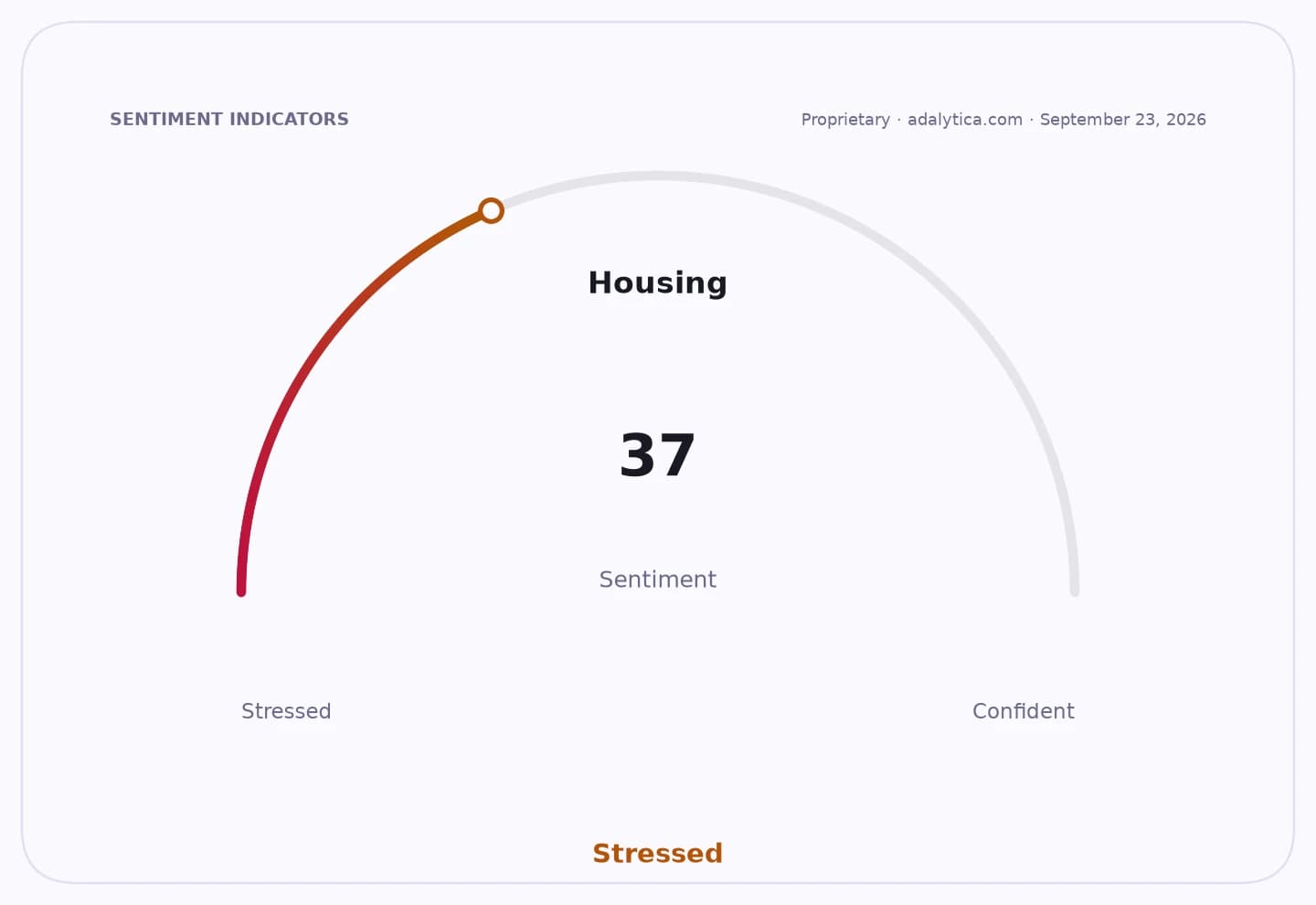
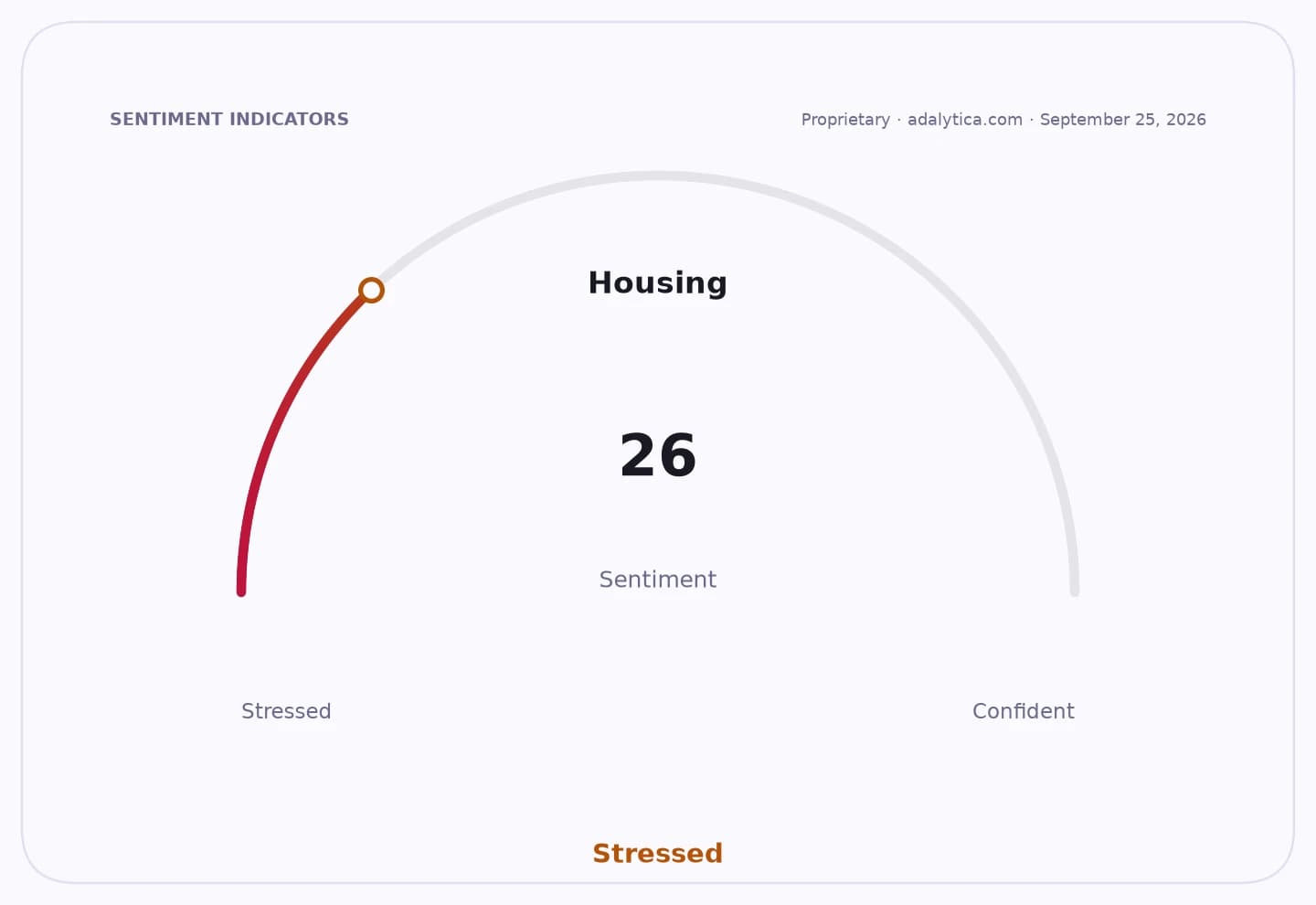
That broader backdrop is consistent with the mood in housing markets more generally. Adalytica’s Housing Fear & Greed Index shows sentiment at 37, neutral, while awareness remains elevated at 85, suggesting buyers are paying close attention even as conviction softens. The Housing and Rent Inflation Sentiment gauge is also neutral at 59, pointing to a market still adjusting to higher living costs rather than one in clear expansion or contraction. Together, those indicators suggest demand is present, but price sensitivity is rising.
For investors, the key question is whether Oyarifa’s premium can hold if financing conditions stay tight and cedi volatility persists. Bullish case: suburban Accra continues to absorb pent-up demand from buyers priced out of the city core, supporting values for well-located, newly built family homes. Bearish case: a $250,000 tag in a market tied to local incomes narrows the buyer pool, lengthening sale times and putting pressure on sellers to negotiate.
The next catalyst will be whether listings at this level continue to move, or whether developers are forced to adjust pricing to match domestic purchasing power. If absorption stays firm, Oyarifa could remain a bellwether for Accra’s upper-end family housing market; if not, it will be another sign that dollar-denominated asking prices are running ahead of local demand.
| Entity | Gains | Losses |
|---|---|---|
| Oyarifa developers | ▲Higher listing power | ▼Slower absorption if prices bite |
| Affluent homebuyers | ▲New-build family stock | ▼Limited affordability |
| Existing sellers | ▲Benchmark support | ▼Need to match new supply |
| Domestic buyers in cedis | ▲More housing choice | ▼Dollar-linked price pressure |