Pakistan’s used and new-car market is being held up by strong demand even as buyers confront elevated prices and no updated auto policy, leaving households and dealers to navigate the sector without clearer regulatory guidance.
Pakistan auto market stays firm amid policy delay

That matters economically because passenger vehicles are one of the clearest gauges of consumer confidence, credit availability and imported-input inflation. When price lists for mainstream models such as the Suzuki Alto VXR, Toyota Corolla Altis X, Toyota Hiace, Daehan Shehzore and BMW X1 remain high, the cost of mobility stays elevated for families and businesses already dealing with tighter budgets and a volatile rupee. It also keeps pressure on broader inflation expectations, especially in a market where imported parts, assembly costs and financing rates still shape showroom pricing.
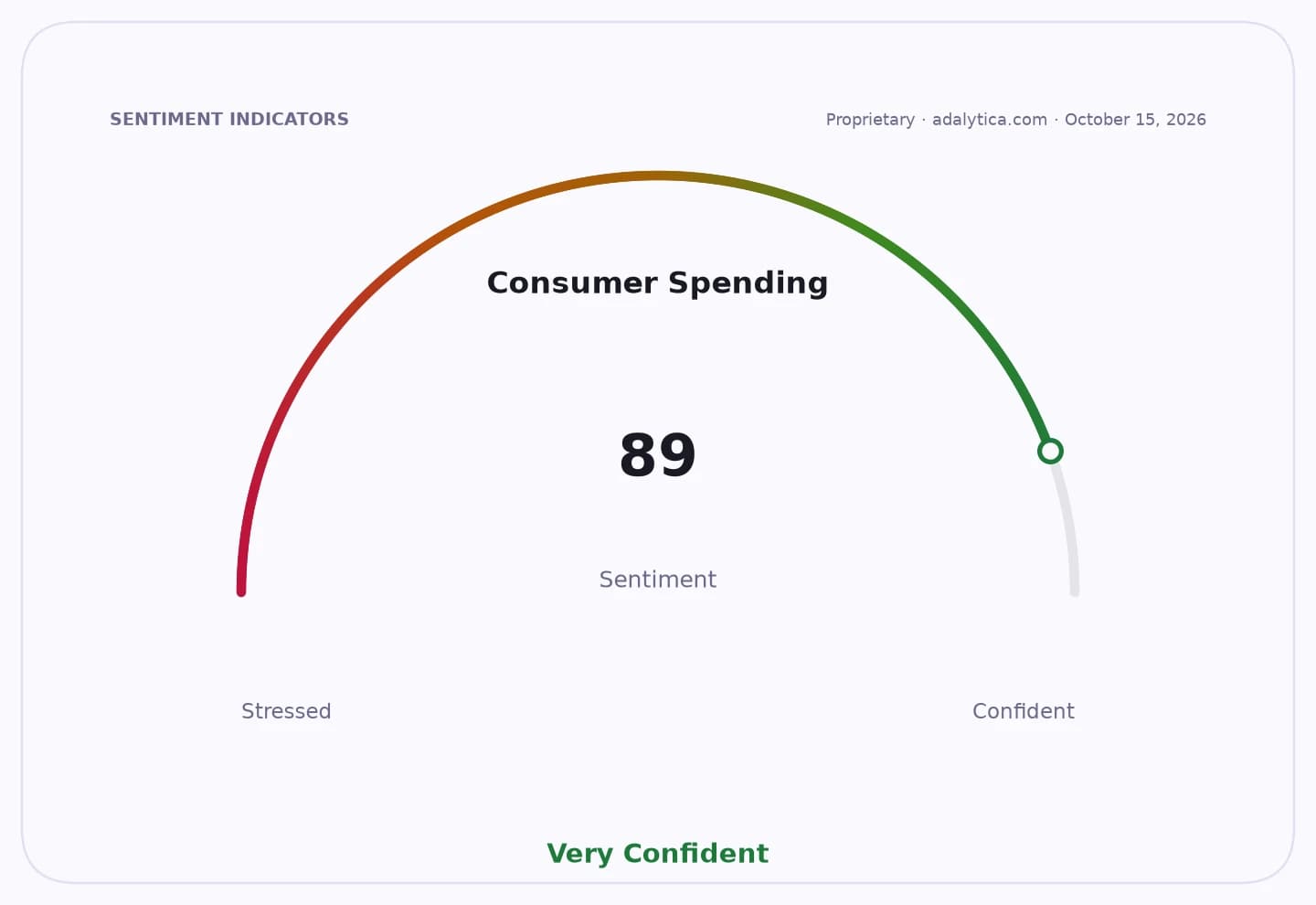
Sentiment IndicatorsⓘProprietary · adalytica.com · October 19, 2026
This is a snapshot — live sentiment, awareness and momentum for 130+ markets update continuously in the dashboard.Open AlphaPulse
The latest price context underscores how wide the spread has become across segments. Toyota’s Pakistan lineup, for example, shows a Corolla at PKR 6.169 million, a Hiace at PKR 14.699 million and a Land Cruiser at PKR 156.829 million, while even a Toyota Aqua is priced at PKR 4.5 million. That gap illustrates a market where entry-level affordability is still strained and premium demand remains intact, rather than one where a policy reset has brought pricing discipline or fresh volume growth from lower-cost cars.
For investors, the message is less about any single model than the resilience of automotive demand in a fragmented policy environment. Strong bookings are supportive for assemblers, distributors and financiers tied to consumer credit, but the absence of a new auto policy leaves long-term capex, localization plans and import assumptions harder to price. That uncertainty tends to favor firms with stronger balance sheets and brand power, while smaller assemblers and parts suppliers remain exposed to swings in imports, taxes and regulatory change.
The macro backdrop is mixed but still supportive for demand. U.S. inflation remains elevated and the 10-year Treasury yield is near 5.1%, a reminder that global financing conditions are not loose. Yet U.S. unemployment at 4.2% and broad risk aversion in equities, including extreme fear readings in Adalytica’s S&P 500 trade signals, suggest investors are still preferring cashflow visibility over cyclical optimism. In that setting, auto prices in Pakistan are a local expression of a wider problem: demand is present, but policy clarity and affordability are not.
The near-term catalyst is whether Islamabad finally releases an updated auto policy. If it does, the market will look for clues on tariffs, localization, EV incentives and import rules, all of which could reshape pricing, volumes and margins across assemblers and dealers. If it does not, the current pattern is likely to persist: robust bookings at the top end, strained affordability at the mass-market end, and continued uncertainty around the sector’s investment cycle.
| Entity | Gains | Losses |
|---|---|---|
| Toyota, Suzuki, BMW dealers | ▲Strong bookings | ▼Pricing pressure from policy delay |
| Buyers of entry-level cars | ▲Limited model availability | ▼Affordability strain |
| Auto assemblers | ▲Stable demand | ▼Regulatory uncertainty |
| Government policymakers | ▲Time to craft policy | ▼Credibility if delays continue |