Pakistan’s Federal Board of Revenue is pressing ahead with a data sweep of government employees by Oct. 27, a move that could broaden the tax base at a time when authorities are struggling to lift collections without further squeezing compliant taxpayers.
Pakistan FBR data sweep of government employees by Oct. 27
The request matters because salaried public-sector workers are among the easiest groups for tax authorities to verify, making them a natural first target for enforcement drives. For a government under fiscal pressure, even modest gains from better data matching can improve compliance, reduce leakage and support revenue targets without immediate rate hikes.
Sentiment Indicators
The initiative also highlights a familiar weakness in Pakistan’s tax system: a narrow base, heavy reliance on withholding and persistent gaps in enforcement. Anti-corruption cases in local tax administration and warnings over fraudulent refund schemes point to a system still burdened by weak controls and low trust, even as officials try to tighten oversight.
For investors, the implications are mixed. Better tax administration can be credit-positive if it improves revenue durability and reduces reliance on ad hoc measures, but an aggressive enforcement push can also add friction for households and public employees already facing inflation and fiscal stress. It may also feed into the broader debate over how quickly Pakistan can stabilize public finances without deepening social resistance.
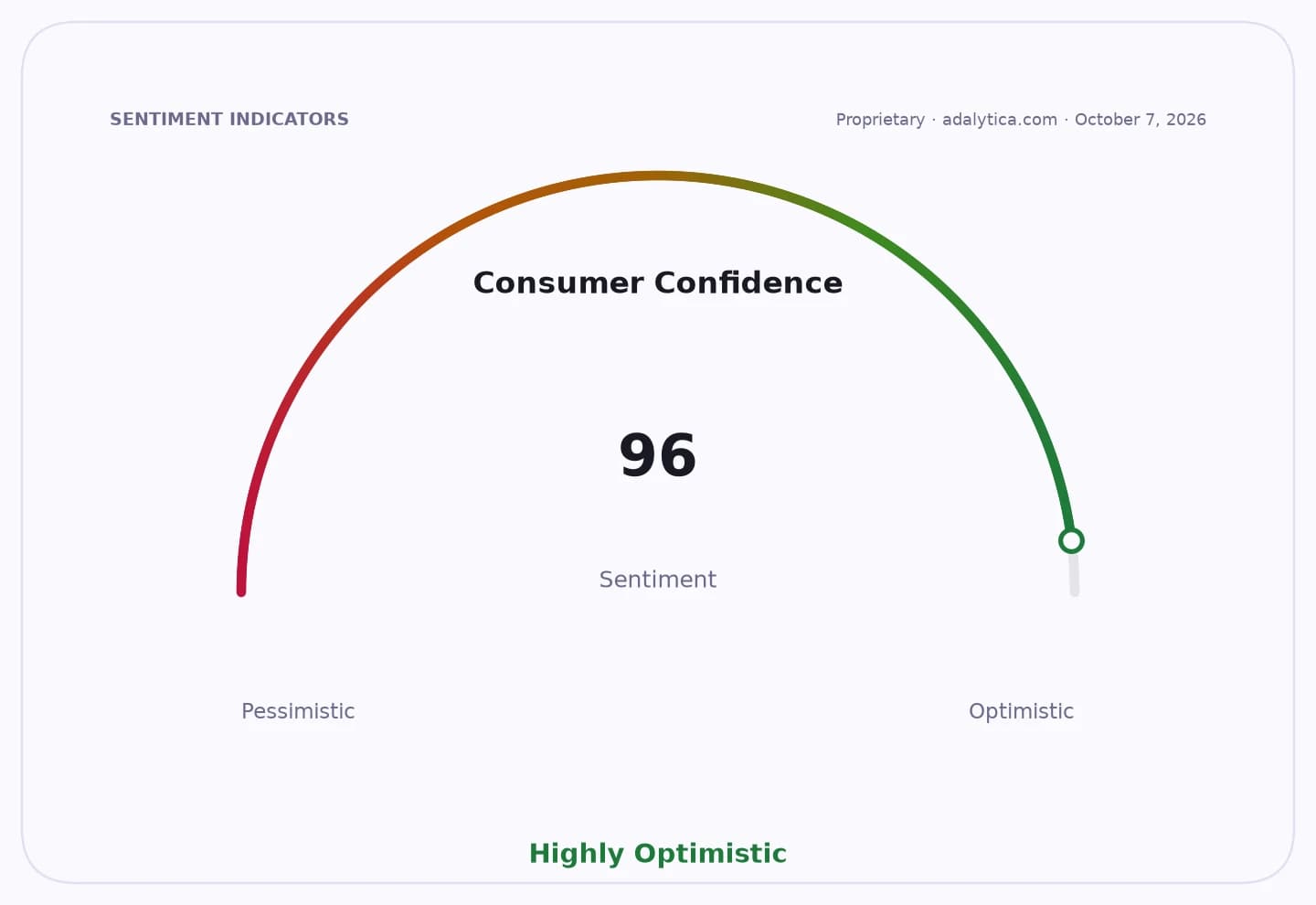
The timing is notable as consumer sentiment around recession risk remains fragile, with Adalytica’s consumer-confidence measure in fear territory. Any effort to widen the tax net will therefore be judged not just on revenue gains, but on whether it can be implemented cleanly enough to avoid undermining spending power and public confidence.
If the FBR can use employee records to close obvious compliance gaps, it would be a practical step toward a more reliable tax regime. But the larger test is whether the government can turn a one-off data request into sustained administrative reform rather than another short-lived collection campaign.
| Entity | Gains | Losses |
|---|---|---|
| FBR | ▲Better compliance data | ▼Administrative pushback |
| Pakistan government | ▲Higher revenue visibility | ▼Political friction |
| Salaried employees | ▲Clearer tax rules | ▼Higher scrutiny |
| Tax evaders | ▲Fewer loopholes | ▼Narrower escape routes |