Pakistan’s benchmark shares fell sharply, with the KSE-100 index losing 720 points as investors cut exposure to a market already vulnerable to regional tensions, currency uncertainty and weak risk appetite.
Pakistan KSE-100 Falls 720 Points on Risk Aversion

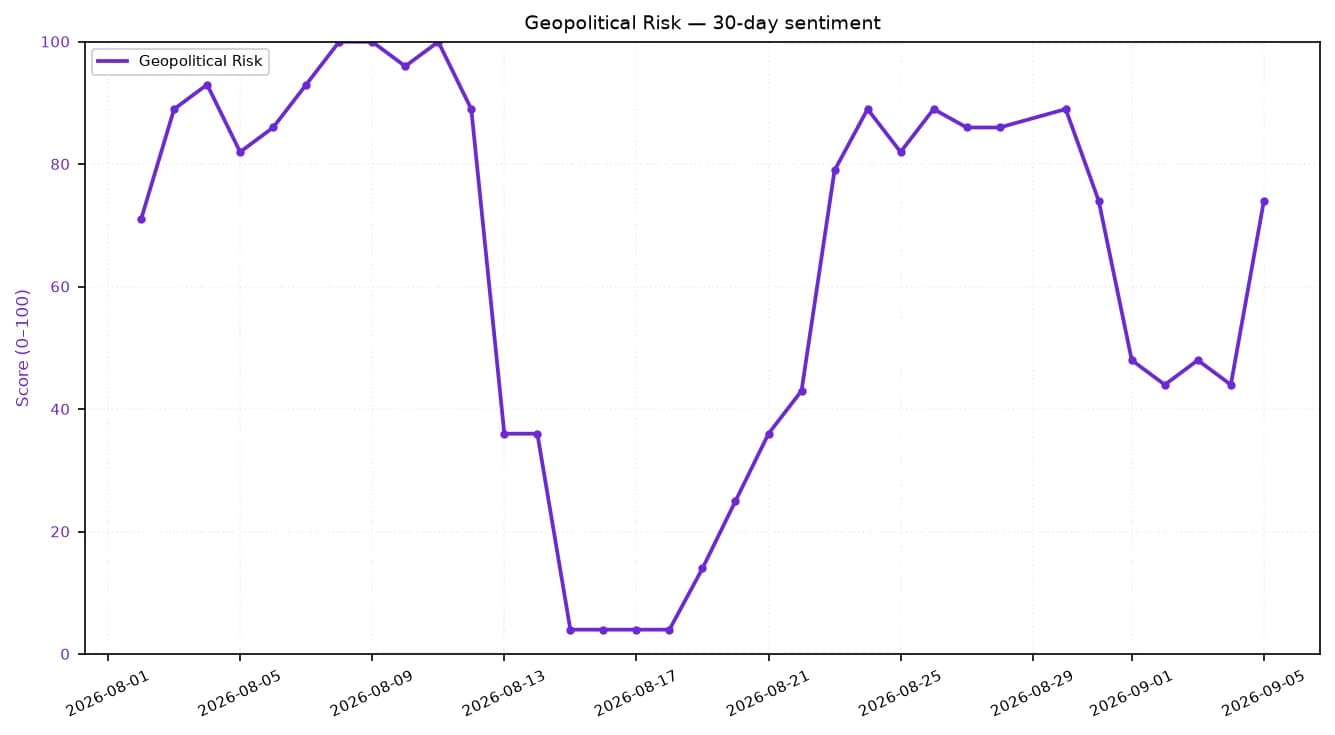
The selloff matters because Pakistan’s equity market remains tightly linked to confidence in macro stability. In a market where foreign flows are thin and domestic participation is easily shaken, even a modest rise in geopolitical stress can trigger outsized moves in blue chips, banks and energy names. A 720-point decline is not just a day’s volatility; it is a reminder that Pakistan equities trade as much on security headlines and policy credibility as on company earnings.
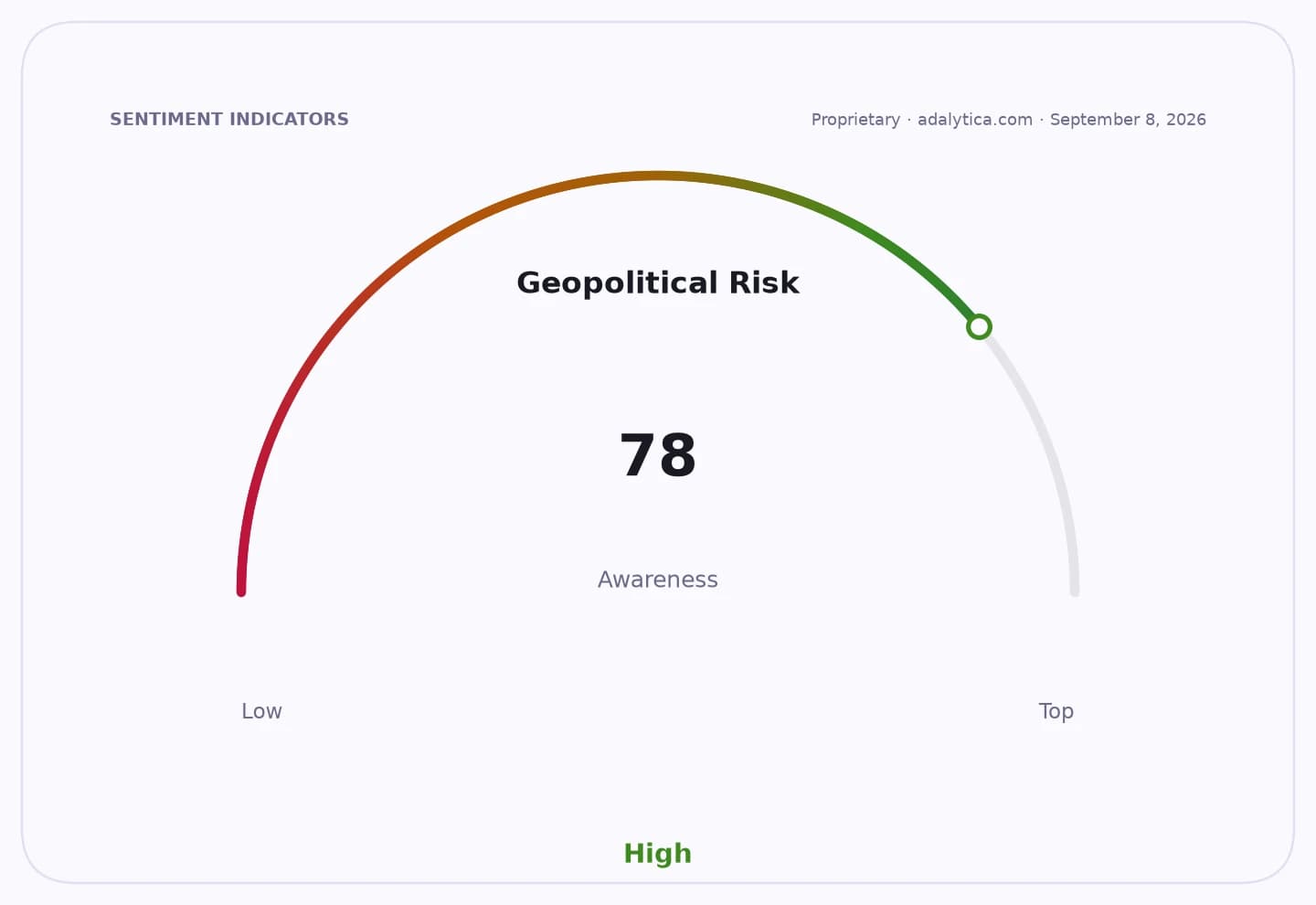
Sentiment IndicatorsⓘProprietary · adalytica.com · August 31, 2026
This is a snapshot — live sentiment, awareness and momentum for 130+ markets update continuously in the dashboard.Open AlphaPulse
The pressure came against a broader backdrop of heightened concern over conflict in the region and persistent friction between Pakistan and India, both of which tend to dampen buying interest in a market that has recently struggled to sustain rallies. Investors are also watching the rupee closely, because currency stability is central to corporate margins, imported inflation and the case for local assets. While the broader dollar backdrop was not the main driver of the move, the absence of a clear risk-on signal in global markets offered little support.
The macro picture remains fragile. Pakistan still needs steady external financing, improved fiscal discipline and a calmer political environment to convince investors that the recent stabilization narrative can endure. When geopolitical risk rises, that narrative weakens quickly: portfolio managers demand a higher risk premium, local investors retreat to cash or defensive holdings, and any rebound in the KSE-100 becomes harder to maintain.
There is a counterargument. If tensions ease and the rupee holds steady, the market can recover quickly because valuations in Pakistan remain sensitive to sentiment rather than long-term growth expectations alone. That makes the market capable of sharp rebounds, but also leaves it exposed to sudden reversals when headlines deteriorate.
For investors, the immediate question is whether this is a one-day shakeout or the start of a broader de-risking phase. The answer will depend on regional developments, currency behavior and whether policymakers can keep macro conditions stable enough to restore confidence.
| Entity | Gains | Losses |
|---|---|---|
| Cash and defensive holders | ▲Lower mark-to-market risk | ▼Miss rebound upside |
| Short-term traders | ▲Volatility opportunities | ▼Directional whipsaws |
| Export-oriented firms | ▲Softer local-currency pressure if rupee weakens | ▼Higher input costs if imports rise |
| Pakistan equities broadly | ▲Potential bargain entry if tensions ease | ▼Risk premium expansion |