India’s accusation that Pakistan Navy ships violated a 1991 maritime agreement after a collision in the Arabian Sea has turned a routine naval encounter into a diplomatic test with broader security and investor implications for South Asia.
India Pakistan naval clash in Arabian Sea
The immediate issue is not the minor collision itself, but whether the two nuclear-armed rivals still have enough discipline to uphold confidence-building measures designed to prevent a much more dangerous escalation at sea. New Delhi says Pakistan’s “dangerous” maneuvering breached the April 1991 agreement on prior notification of military exercises and movements, including Article 10 provisions intended to keep naval vessels and submarines from coming within 3 nautical miles of each other in international waters. Pakistan has rejected India’s account, deepening a familiar pattern of mutual blame that raises the odds of miscalculation.
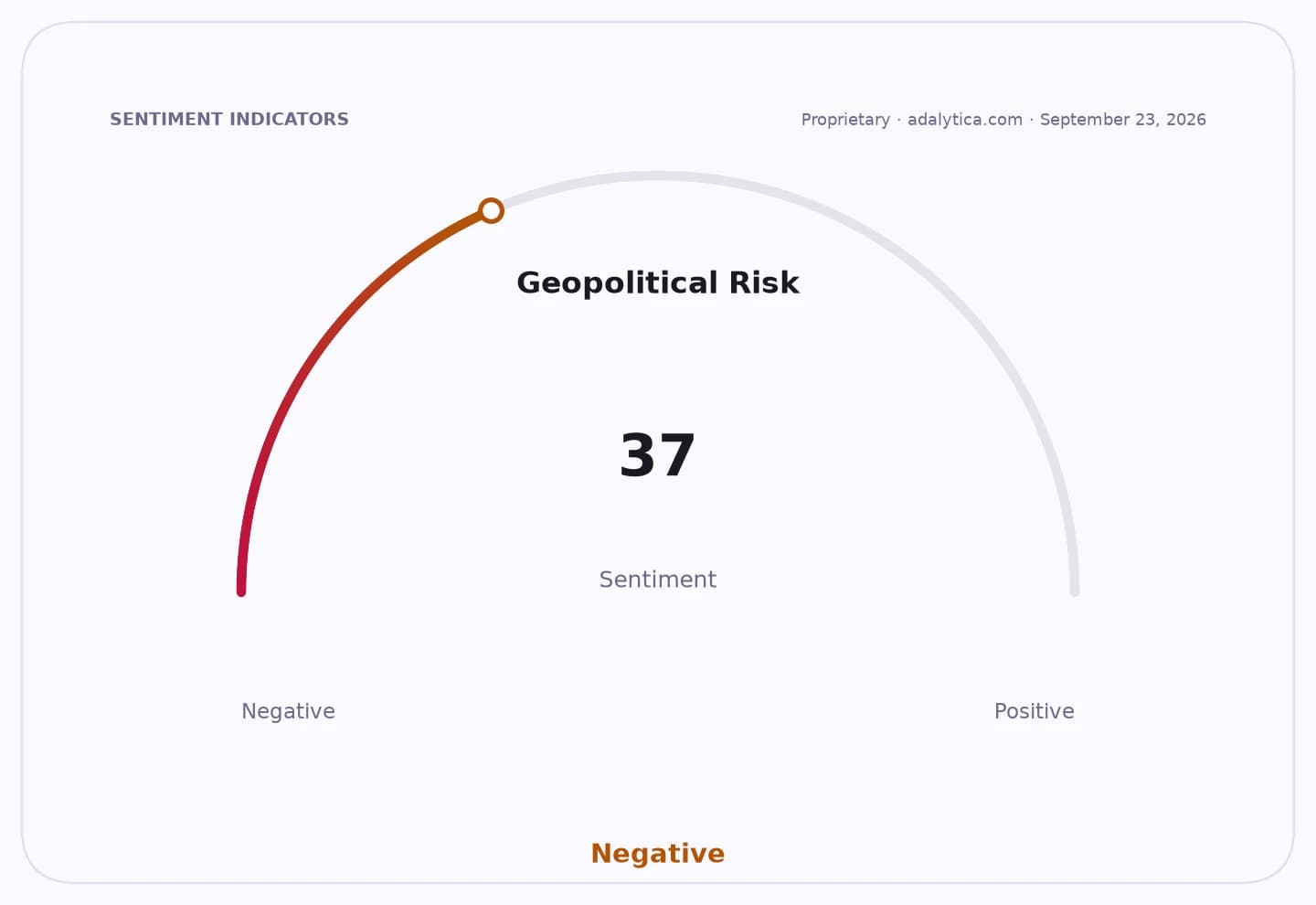
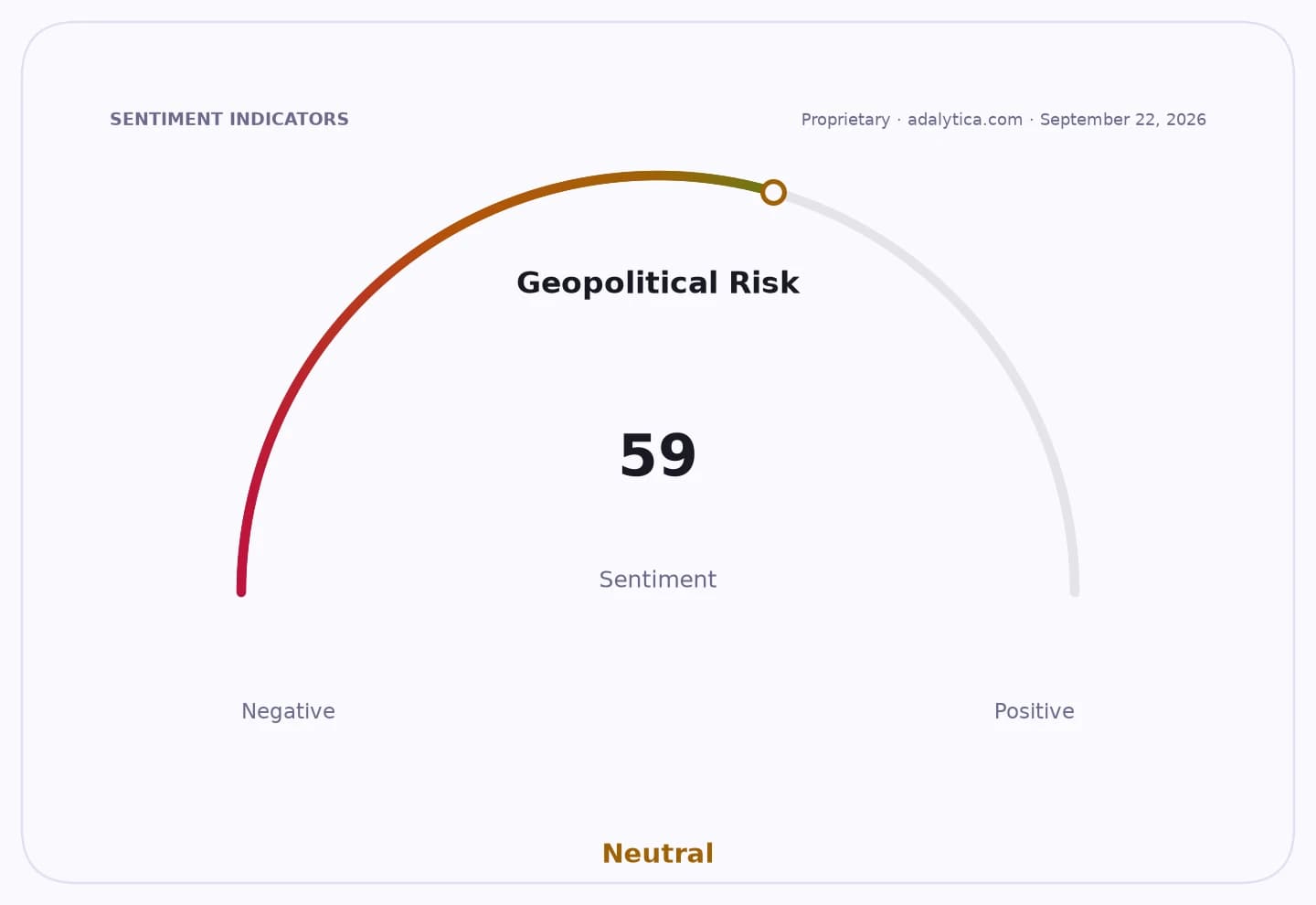
Sentiment IndicatorsⓘProprietary · adalytica.com · September 19, 2026
This is a snapshot — live sentiment, awareness and momentum for 130+ markets update continuously in the dashboard.Open AlphaPulse
That matters economically because maritime friction between India and Pakistan adds another layer of geopolitical risk to a region already carrying elevated security premiums. Even a limited naval incident can complicate shipping insurance, defense readiness and diplomatic engagement at a time when markets are sensitive to any escalation that might affect energy flows or broader Asian risk sentiment. For India, the episode reinforces the case for higher defense vigilance and continued investment in naval capability. For Pakistan, it revives scrutiny over military professionalism and adherence to agreed protocols at a time when its economy is under severe strain and external confidence remains fragile.
The incident came in the Arabian Sea, where an Indian warship and a Pakistani naval vessel reportedly came into contact after what India called an unsafe turn by the Pakistani ship. No major casualties were reported. India summoned the Pakistani charge d’affaires in Delhi to protest what it called reckless and unprofessional conduct, underscoring that the dispute is now as much about preserving diplomatic signaling as it is about the collision itself.
For investors, the significance is less about immediate market impact than about the persistence of tail risks around Indo-Pakistan relations. Historically, such flare-ups can briefly lift demand for defensive assets and increase attention on defense contractors, while leaving broader South Asian risk assets vulnerable if rhetoric hardens. Indian equities and the rupee have generally been more resilient to these episodes than Pakistan’s markets, but recurrent maritime or border confrontations can still feed into risk models, sovereign spreads and regional sentiment.
The broader narrative is one of fraying restraint. The 1991 agreement was meant to prevent exactly this kind of incident by mandating advance notice of exercises and minimum separation at sea. When that framework is challenged, the practical question for markets is whether the dispute stays confined to protest notes and public messaging or becomes another point of escalation in an already unstable bilateral relationship.
The main catalyst now is whether both sides reinforce naval protocols or whether this becomes another entry in the long record of Indo-Pak maritime and border confrontations. The more the incident is used to harden positions rather than clarify rules, the more it will weigh on regional risk perception and on any asset exposed to South Asian geopolitical volatility.
| Entity | Gains | Losses |
|---|---|---|
| India Navy | ▲Stronger case for vigilance | ▼Risk of escalation costs |
| Pakistan Navy | ▲Short-term deniability | ▼Credibility on protocol adherence |
| Indian defense sector | ▲Higher security focus | ▼None immediate |
| South Asian risk assets | ▲Limited safe-haven demand | ▼Higher geopolitical premium |