Pakistan’s foreign exchange buffers improved only marginally this week, but the steadier reserves picture came as global gold prices fell to a two-month low, underscoring how tighter financial conditions are still shaping markets well beyond Islamabad.
Pakistan reserves rise as gold falls
The State Bank of Pakistan said its liquid reserves rose $19 million to $21.49 billion in the week ended Oct. 16, while total reserves in the system stood at $26.83 billion, including commercial banks’ holdings. The gain is small, but it matters because it keeps the central bank’s reserve base moving in the right direction at a time when even modest increases help support confidence in the rupee and lower the risk premium on external financing.
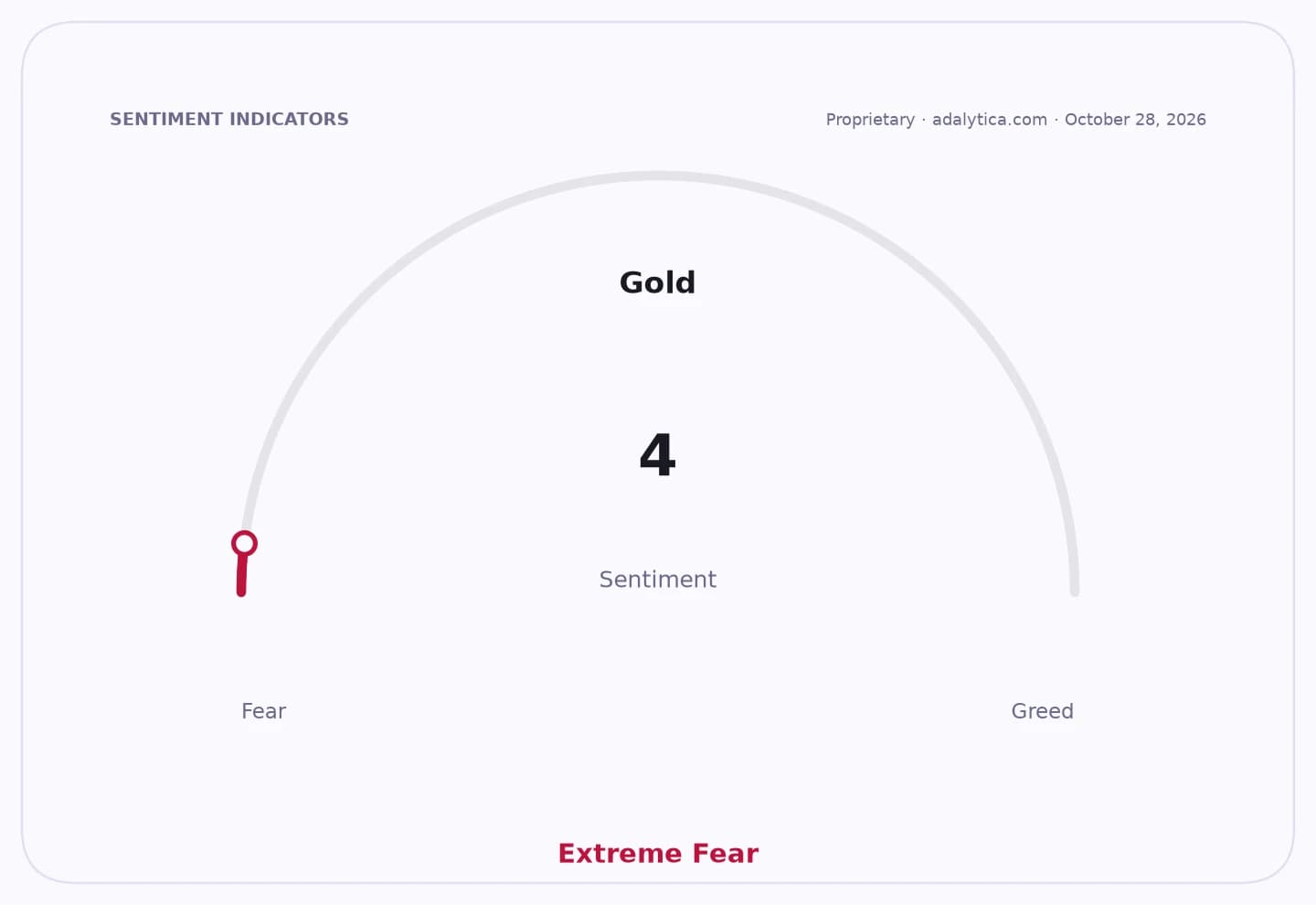
Sentiment Indicators
The rupee barely moved, inching up to 276.85 per dollar from 276.86 a day earlier, a sign that the currency remains broadly stable even as Pakistan continues to lean on reserve management rather than a more forceful appreciation. For investors, that combination — a flat exchange rate and slowly improving reserves — suggests policymakers are still prioritising stability over bold currency moves.
The bigger market signal came from gold, which fell sharply in both domestic and international markets. In Pakistan, bullion dropped Rs3,000 per tola to Rs431,536, while the international spot price slid 2.1% to $4,055.69 an ounce and touched its lowest level since Aug. 4. The move reflects a broader repricing in global markets as rising oil prices revive inflation concerns and reduce expectations for aggressive interest-rate cuts.
That matters because gold is still a key hedge for retail buyers, local jewellers and global investors looking for safety amid geopolitical tension. When prices retreat this fast, it usually means traders are reassessing the path for US monetary policy and the dollar, both of which affect demand for non-yielding assets. Reuters reported that December US gold futures also fell 1.9% to $4,071.40 an ounce.
Technical levels are now in focus. Adnan Agar, director at Interactive Commodities, said $4,000 is a crucial support area for gold, with a break below the $4,000-$3,950 band potentially opening the way to $3,800 and then $3,700. If the metal holds above $4,000, he said, a rebound toward $4,150-$4,180 remains possible. That leaves the next few sessions heavily dependent on where prices settle and whether investors continue to trim exposure ahead of the Federal Reserve’s policy meeting and US PCE inflation data next week.
For Pakistan, the two stories are linked: firmer reserves help anchor the currency, while weaker gold can ease pressure on importers and domestic buyers even as it dents safe-haven demand. The country’s external position is still fragile, but a gradual reserve build-up and a stable rupee reduce near-term stress. The test now is whether that resilience can be sustained if global rates stay higher for longer and commodity markets remain volatile.
| Entity | Gains | Losses |
|---|---|---|
| State Bank of Pakistan | ▲Slight reserve improvement | ▼Limited cushion vs shocks |
| Pakistani rupee | ▲Stable exchange rate | ▼Upside capped by external pressure |
| Gold buyers/jewellers in Pakistan | ▲Lower local bullion prices | ▼Weaker safe-haven demand |
| Global gold bulls | ▲— | ▼Higher-rate, stronger-dollar backdrop |