Gold jewelry prices in Palembang stayed broadly unchanged even as Indonesia’s benchmark stock index suffered its steepest daily fall in nearly three decades, underscoring that local bullion pricing does not move in lockstep with equity-market stress.
Palembang Gold Prices Stay Flat After IHSG Drop
The sharp drop in the Jakarta Composite Index, or IHSG, sent households and investors looking for a refuge, but the immediate payoff for gold buyers was limited. Jewelry shops in Palembang were still quoting around Rp13.8 million per suku, or 6.7 grams, at Mastuti Gold Lemabang, Toko Anda on Jalan Rustam Effendi and Tomo Makmur Jaya, according to local price checks. That stability matters because it shows that a domestic risk-off shock does not automatically translate into higher retail gold prices.
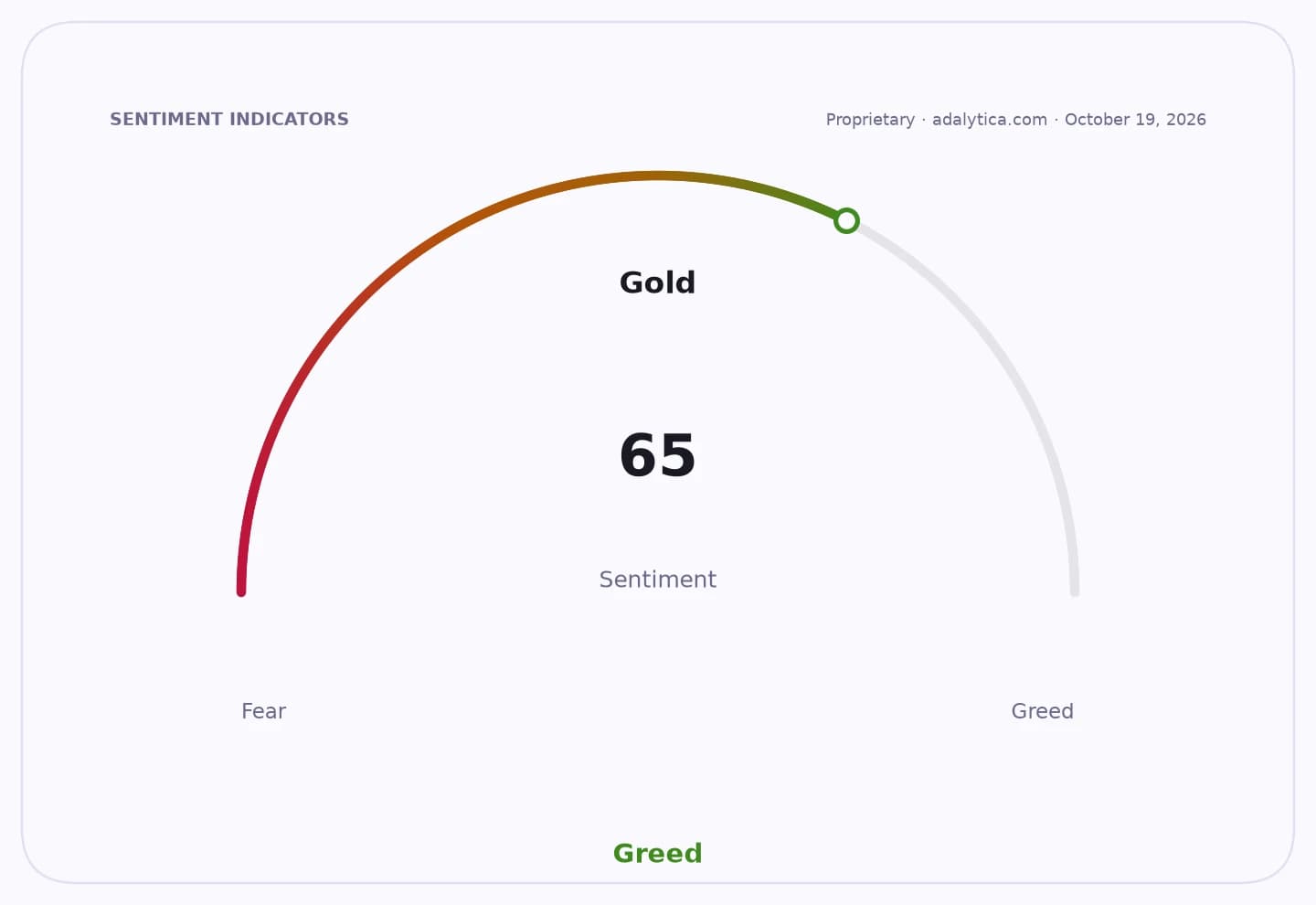
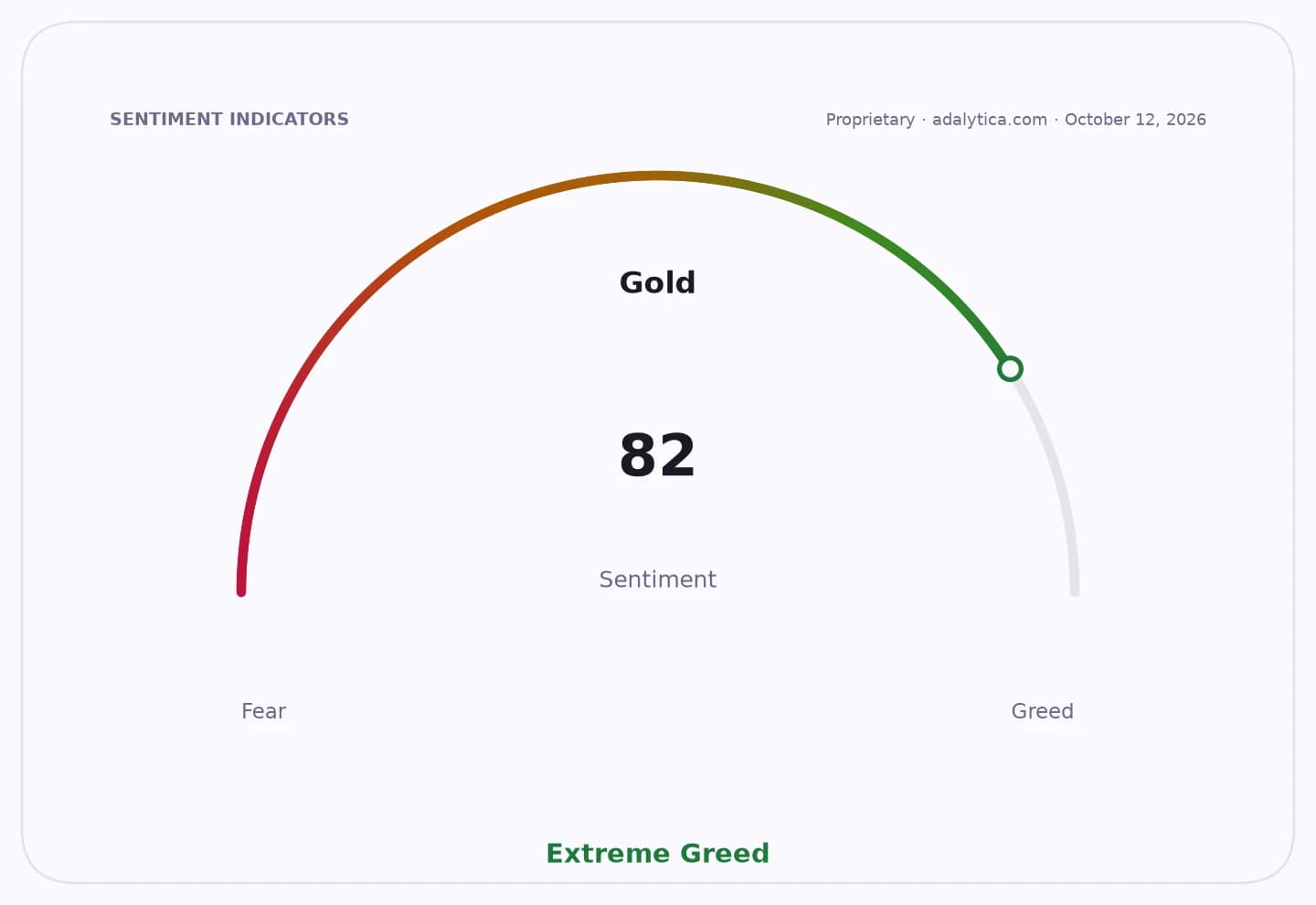
Sentiment IndicatorsⓘProprietary · adalytica.com · October 18, 2026
This is a snapshot — live sentiment, awareness and momentum for 130+ markets update continuously in the dashboard.Open AlphaPulse
Instead, the local market is being pulled by a wider set of forces: the global gold price, the rupiah, interest rates and underlying physical demand. For investors, that means gold remains a diversification tool, but not a clean hedge against every equity selloff. In other words, a crash in shares can lift interest in gold without necessarily lifting the price in the same session.
The contrast between stocks and bullion was especially stark after the IHSG fell more than 11% on Oct. 16, the deepest one-day decline since January 1998, after MSCI said Indonesia no longer meets its emerging-market classification and would be moved toward standalone status. That decision raised the risk of foreign outflows from funds tracking the index and intensified demand for defensive assets.
At the same time, benchmark gold prices were already elevated by global standards. Pegadaian-listed prices put Antam 1-gram bars at Rp2.6 million, UBS at Rp2.533 million and Galeri24 at Rp2.509 million, though store-level prices in Palembang can differ depending on purity, workmanship and inventory. Global gold futures were trading around $4,181 an ounce, with technical readings showing the metal had recovered from a recent oversold spell as RSI rebounded to 51.5 after dipping to 31.6 a day earlier.
That leaves two competing narratives for investors. The bullish case is that sustained equity volatility, foreign-fund risk and lingering macro uncertainty keep bullion in favor as a portfolio hedge. The bearish case is that if the rupiah stabilizes and global gold softens, local retail prices may stay flat even if domestic fear remains high.
For now, Palembang’s gold counters are telling a simpler story than the stock exchange: panic in equities does not automatically produce a rush higher in jewelry prices, but it does reinforce gold’s role as a fallback asset when confidence in risk markets weakens.
| Entity | Gains | Losses |
|---|---|---|
| Gold buyers in Palembang | ▲Stable retail prices | ▼Missed upside from safe-haven rally |
| Stock investors on the IHSG | ▲Potential rebound buyers | ▼Sharp mark-to-market losses |
| Gold retailers/Jewelry stores | ▲Higher attention to bullion | ▼No immediate pricing windfall |
| Foreign equity funds | ▲None | ▼Higher outflow risk after MSCI change |