Employees are increasingly skeptical that performance-based pay will fairly reward them, a shift that matters because compensation is one of the few levers employers have to hold down churn, lift output and protect margins as wage growth cools.
Pay Skepticism Clouds Payroll Firms
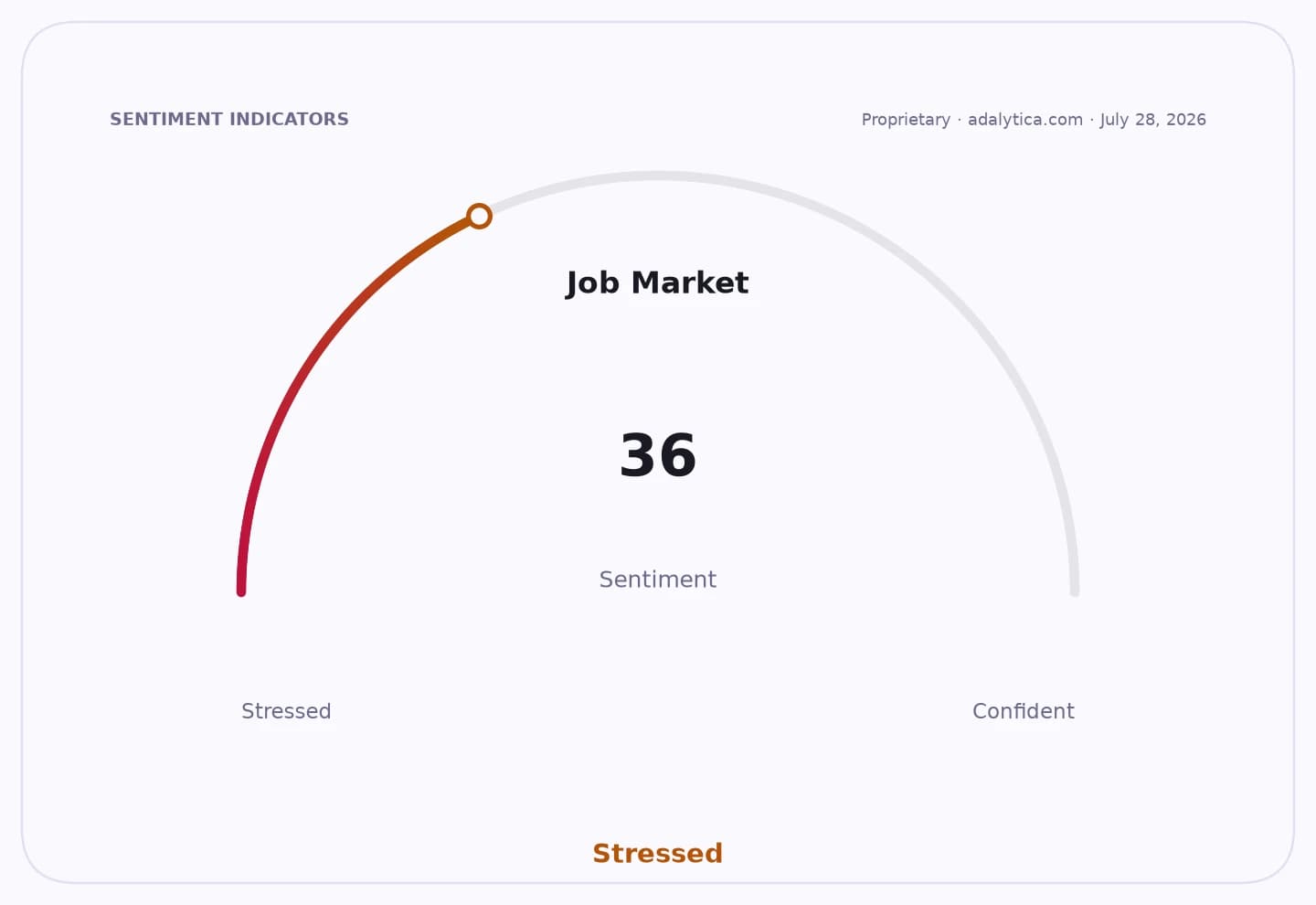
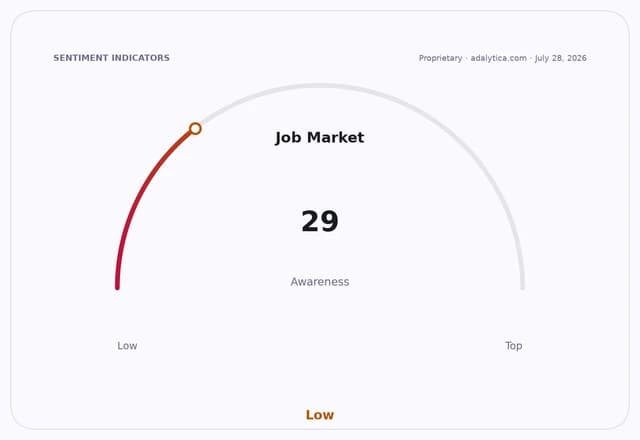
That doubt is showing up against a backdrop of still-solid labor demand but rising stress over how pay is set. Adalytica’s Job Market Sentiment gauge is at 36, in neutral territory, with awareness in fear mode at 29 and sentiment down 61 points over seven days. The sudden deterioration suggests workers are less convinced that incentives, bonuses and merit-based raises will keep pace with inflation or reflect performance accurately.
Sentiment IndicatorsⓘProprietary · adalytica.com · July 28, 2026
This is a snapshot — live sentiment, awareness and momentum for 130+ markets update continuously in the dashboard.Open AlphaPulse
The issue matters economically because incentive pay is meant to align employee effort with company results. If workers believe the system is opaque or unreliable, the effect can be lower engagement, weaker retention and less willingness to stretch beyond minimum expectations. That can raise recruiting and replacement costs for employers even when headline unemployment remains relatively stable. It also risks blunting the productivity gains companies are hoping to get from tighter pay discipline.
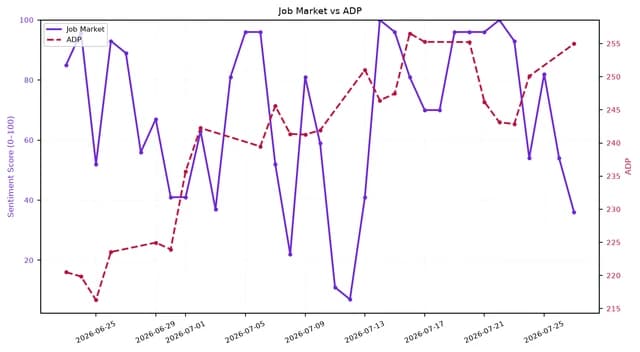
The concern is particularly relevant for payroll and human-capital services firms such as ADP and Paychex, which sit close to labor-market behavior and are exposed to how employers manage compensation, bonuses and benefits. Both stocks have recovered sharply from earlier weakness, with ADP climbing to 254.98 and Paychex to 115.48, but the price action also shows a market trying to decide whether recent gains reflect better operating conditions or merely a technical rebound from oversold levels. ADP’s RSI has moved back to 58.6 and Paychex’s to 65.8, while both trade near or above their 50-day moving averages, suggesting sentiment has improved even as the labor narrative remains unsettled.
The broader policy backdrop reinforces the tension. A government move to raise dearness allowance for public-sector workers underscores that inflation compensation is still a live issue in many labor markets, especially where pay adjustments lag rising living costs. That sort of policy support can stabilize household purchasing power, but it also highlights the risk that employees in the private sector will compare their own incentives unfavorably with indexed or automatically adjusted pay.
For employers, the bullish case is that a softer labor market and slowing inflation eventually make incentive plans more credible, because pay differentiation becomes easier to justify and less costly to fund. The bearish case is that skepticism hardens into a broader trust problem, forcing companies to pay more to get the same effort and weakening the efficiency case for variable compensation.
Investors should watch whether the weakness in worker sentiment starts to show up in retention data, wage expense, and demand for payroll administration, benefits and PEO services. If employees keep doubting incentives, the cost of keeping talent may rise even in a cooler labor market — a combination that would pressure margins and complicate earnings expectations for labor-adjacent companies.
| Entity | Gains | Losses |
|---|---|---|
| Employers | ▲More leverage on pay costs | ▼Lower engagement |
| Employees | ▲Possible policy-linked pay support | ▼Doubt about fairness |
| ADP / Paychex | ▲More demand for compensation admin | ▼Margin pressure if churn rises |
| Investors | ▲Opportunities in labor-tech resilience | ▼Risk of weaker sentiment-driven spending |