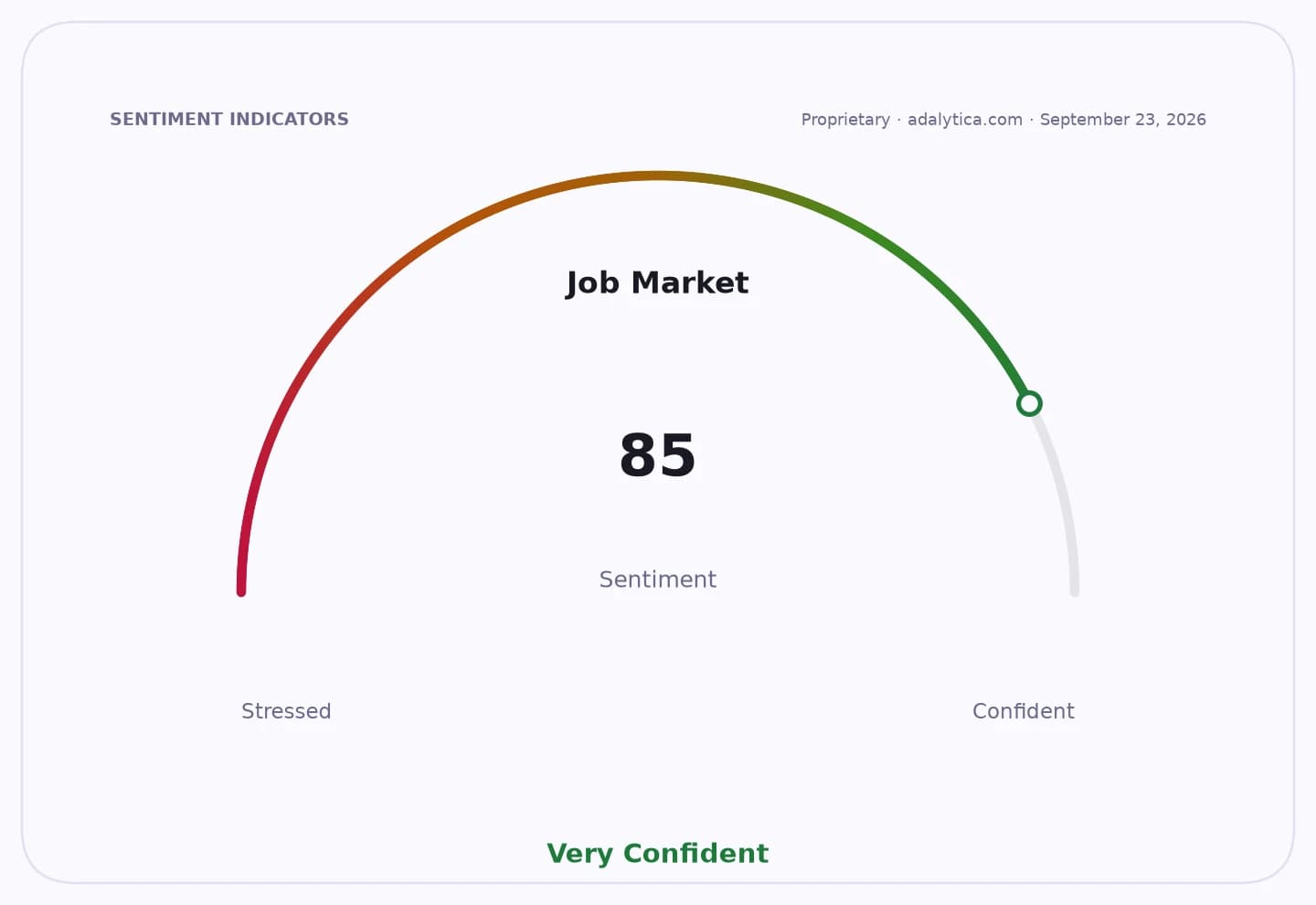
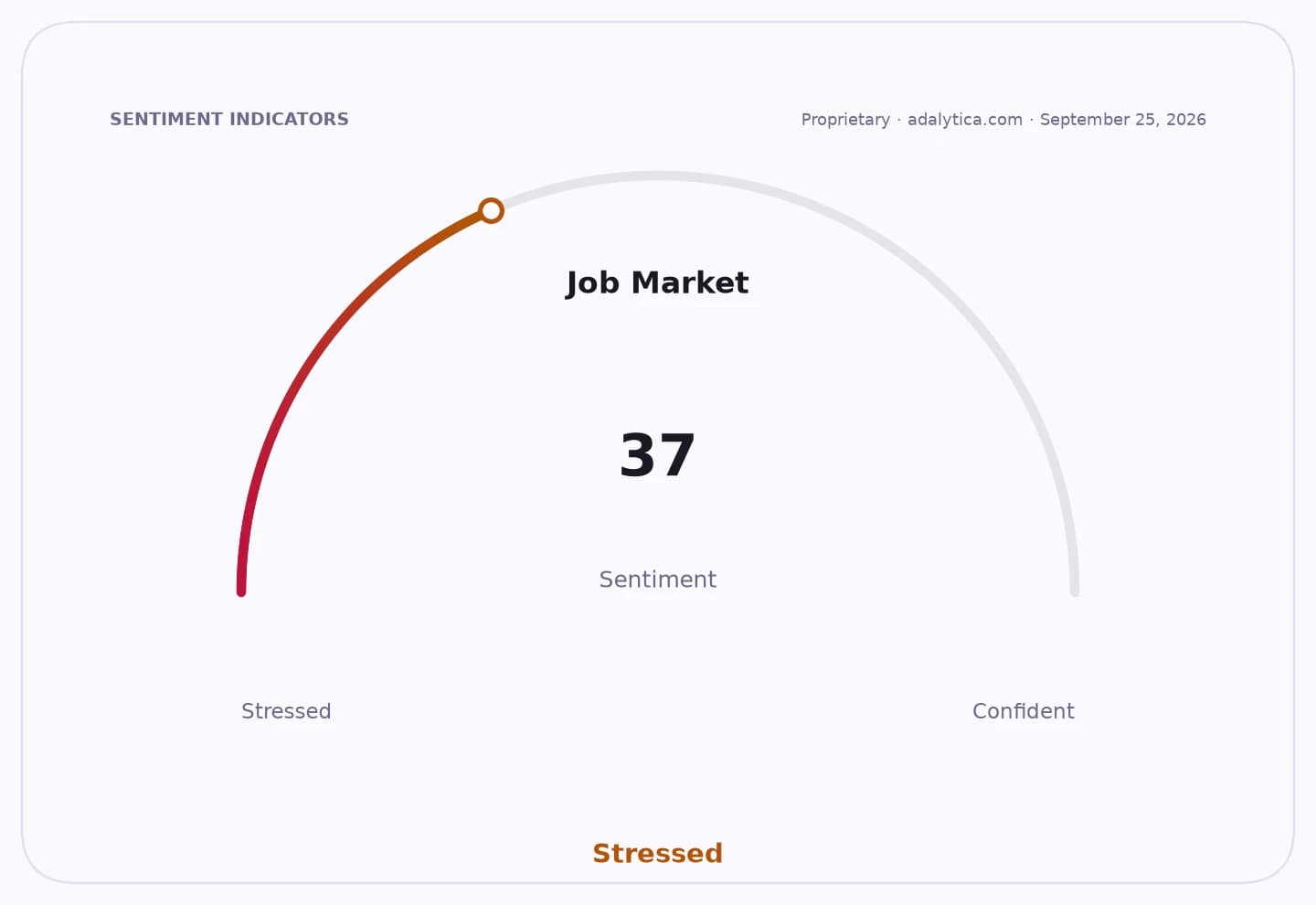
Peru’s formal job market kept expanding in July, reinforcing a steadier domestic backdrop for consumption and wages even as growth in much of Latin America remains uneven.
Peru formal jobs and wages rise in July
The Central Reserve Bank of Peru said formal employment, including public and private payrolls, rose at least 4% for an eighth consecutive month, while private-sector formal jobs increased 6.1% from a year earlier after a 5.3% rise in June. The latest reading adds to evidence that Peru’s labor market has moved beyond a short-lived rebound and is now sustaining growth broad enough to support household income and tax collections.
Sentiment IndicatorsⓘProprietary · adalytica.com · September 17, 2026
This is a snapshot — live sentiment, awareness and momentum for 130+ markets update continuously in the dashboard.Open AlphaPulse
The BCRP said the economy added 268,000 formal jobs from a year earlier in June, with services, agriculture and commerce accounting for most of the gains. Services contributed 98,000 jobs, agriculture 78,000 and commerce 48,000, underscoring that the improvement is not confined to one sector. Agriculture stood out with employment up 15.9% year on year, while mining jobs rose 11.7%, albeit by a smaller absolute amount of 16,000 positions.
That matters economically because payroll growth is one of the clearest gauges of demand resilience. A broader formal labor market tends to feed through into stronger real wages, higher consumer spending and firmer revenues for businesses selling into Peru’s domestic market. The BCRP also said formal wage mass rose 3.5% in real terms in July versus a year earlier, while private-sector wage mass climbed 3.8% and has now expanded for 28 straight months.
For investors, the combination of rising formal hiring and a still-positive wage trend points to a relatively supportive backdrop for banks, retailers, consumer-facing companies and service providers exposed to Peru’s internal demand. It also supports the central bank’s case that the labor market is not yet flashing recession risk, even if the pace of improvement is uneven across industries.
The sector mix is important. Services and commerce usually translate quickly into consumption, while agriculture’s strong hiring points to better activity outside Lima and the mining gains suggest the resource sector remains an anchor rather than a drag. That helps explain why Peru’s labor data has remained resilient even as broader regional sentiment has turned more cautious.
The question now is whether the momentum can persist into the second half of the year without being eroded by slower external demand or renewed political and security risks. For now, the labor figures argue for stability rather than strain, with formal employment and wage mass continuing to provide one of the clearer supports for Peru’s economy.
| Entity | Gains | Losses |
|---|---|---|
| Peruvian workers | ▲Higher formal jobs | ▼None immediately |
| Consumers | ▲Stronger wage support | ▼Weak demand shock risk |
| Domestic companies | ▲Better spending outlook | ▼Higher labor costs |
| Export-oriented sectors | ▲Mining/agriculture hiring gains | ▼External slowdown risk |