Peru’s government is pushing a labor overhaul that could change how companies are inspected, rewarding firms that comply with labor rules and focusing enforcement on repeat offenders and informal employers.
Peru labor overhaul would target repeat offenders
The proposal, sent to Congress as part of a broader request for legislative powers, would give Sunafil a more preventive and results-driven model of oversight. The centerpiece is a labor compliance profile built from a company’s history of inspections, corrections, repeat violations, formal payroll registration and final sanctions. For investors and employers, that matters because it could make Peru’s labor regime less random, more data-driven and more closely tied to formalization.
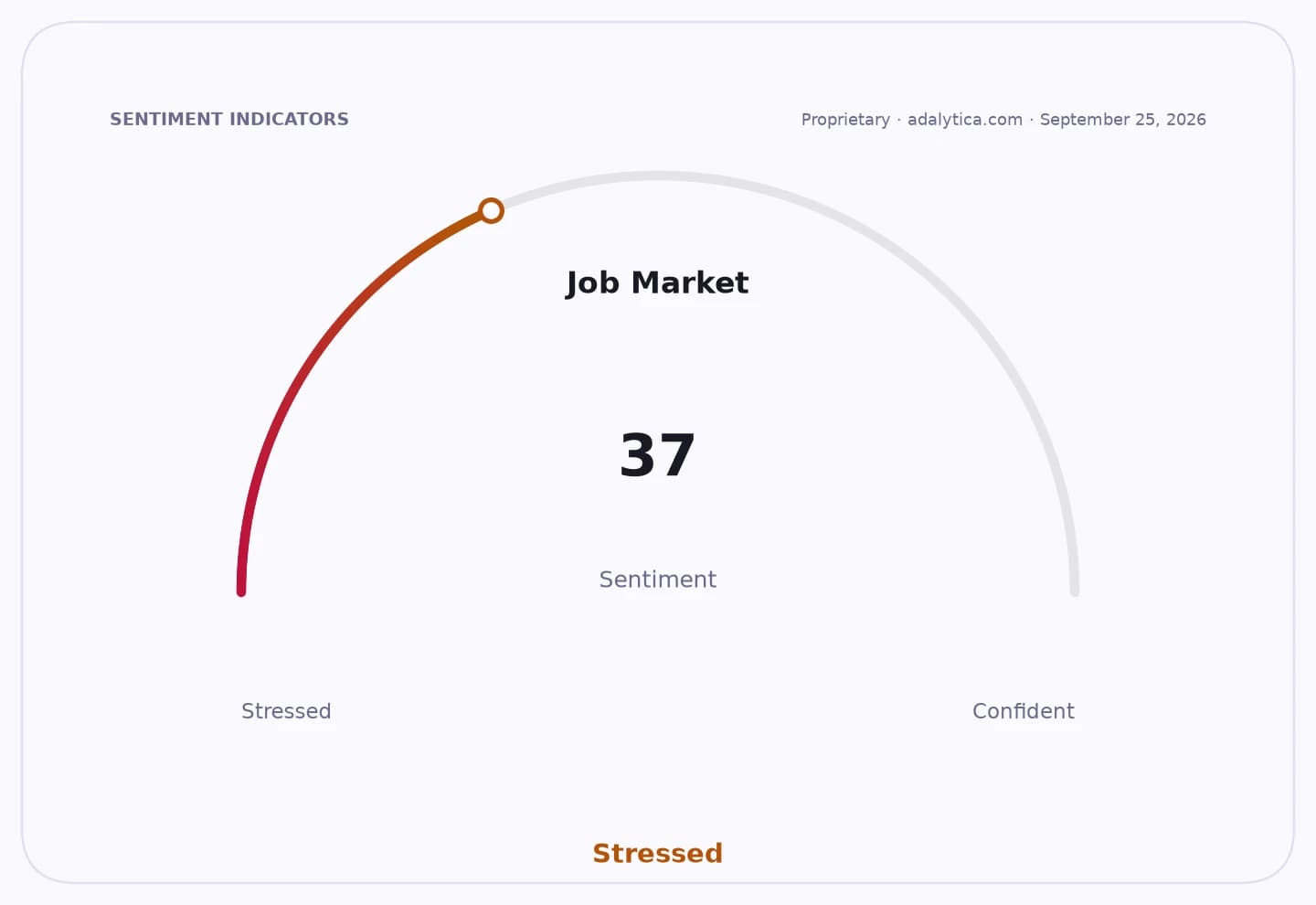
Sentiment IndicatorsⓘProprietary · adalytica.com · September 22, 2026
This is a snapshot — live sentiment, awareness and momentum for 130+ markets update continuously in the dashboard.Open AlphaPulse
That is economically important in a country where informality remains one of the biggest drag on productivity, tax collection and worker stability. A system that distinguishes between a company that fixes an administrative mistake and one that repeatedly keeps workers off the books could encourage more firms to enter the formal economy and stay there. In theory, that means more stable payrolls, better access to credit and training, and a more reliable base for consumption over time.
The idea also mirrors the compliance profile already used by the tax authority, Sunat, which classifies taxpayers by their behavior. Labor lawyers cited by the report say a similar model could give compliant firms practical advantages, including technical support, training, preferential access to state programs, certifications and possibly financial or tax incentives. That is the kind of policy shift long-term investors should watch, because formalization tends to widen the revenue base without relying only on higher rates.
For companies, the upside is a more predictable inspection regime. Firms with clean records could face fewer routine inspections and more preventive guidance, while Sunafil would concentrate its limited resources on businesses with repeated infractions, workers not on payroll, accidents, complaints or signs of labor fraud. That could reduce compliance friction for well-run employers and help level the playing field against informal competitors that cut costs by skirting the rules.
But the proposal still leaves important safeguards unresolved. Labor specialists warned that a good profile should not become immunity from inspection, especially when there is a complaint, unpaid benefits or a workplace accident. They also argued that only final sanctions should count as negative history, since many fines are challenged or overturned later. If the system is built badly, it could end up labeling companies unfairly or, worse, inspecting only the formal firms already visible in official databases while missing the informal economy entirely.
That tension is the heart of the story for investors: if Peru gets this right, it could improve enforcement, support formal employers and gradually strengthen labor productivity. If it gets it wrong, it risks adding bureaucracy without solving the underlying informality problem. For now, this looks like a policy worth watching closely, especially for employers, consumer-facing sectors and anyone with exposure to Peru’s long-term growth story.
| Entity | Gains | Losses |
|---|---|---|
| Compliant formal employers | ▲Fewer routine inspections | ▼Less short-term regulatory scrutiny |
| Informal or repeat-offender firms | ▲None | ▼More targeted enforcement |
| Workers in the formal economy | ▲Better compliance and benefits | ▼Less tolerance for noncompliance |
| Sunafil | ▲More efficient inspections | ▼Less discretion over broad sweeps |