A five-bedroom home in Piedmont changing hands for $4.2 million underscores how scarce, high-amenity properties in affluent Bay Area neighborhoods continue to clear at elevated prices even as the broader housing market wrestles with affordability and uneven demand.
Piedmont Sale Highlights Bay Area Luxury Resilience
The sale matters because it points to a market split: upper-end buyers with access to wealth, stock gains or business liquidity are still willing to pay up for location, size and exclusivity, while many would-be homeowners remain sidelined by mortgage costs and limited inventory. In a market where transaction volumes are often constrained by low supply, a single close at this level is less about one house and more about the pricing power of a tightly held luxury segment.
That dynamic has become more pronounced across premium suburban enclaves. Properties in desirable school districts and commuter-friendly neighborhoods continue to attract buyers who are often less rate-sensitive than the median purchaser. For sellers, especially in markets with chronic undersupply, that creates a floor under valuations for well-located homes that are move-in ready and offer the kind of space affluent households still want.
The transaction also fits a broader pattern in housing: luxury real estate tends to be more resilient than the middle of the market when financing conditions tighten. The conventional indicators used by market participants — from moving averages to RSI readings in broader housing-related sentiment gauges — may show momentum, but the underlying story here is fundamental rather than technical: inventory scarcity and wealth concentration are keeping premium prices sticky.
For investors, the implication is twofold. First, housing markets are not moving in lockstep; strength at the top can coexist with weakness in affordability-sensitive segments. Second, the persistence of high-end sales suggests that the Bay Area’s wealth effect, tied to technology compensation and capital gains, is still supporting discretionary spending on real assets. That can benefit brokers, mortgage lenders with jumbo exposure, home-services firms and local tax bases, even as it leaves entry-level buyers under pressure.
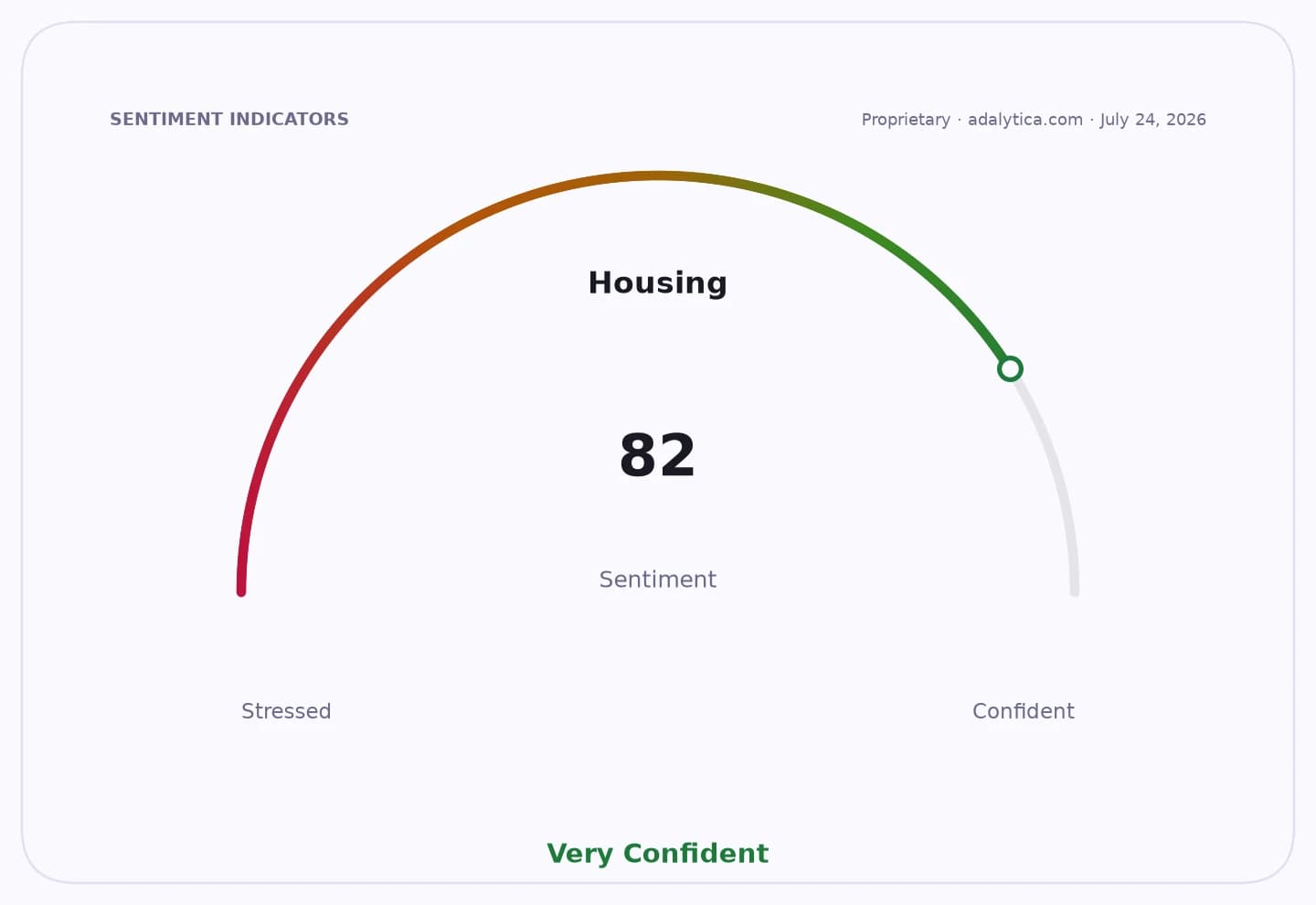
Adalytica’s housing and rent inflation sentiment gauge, which is in a “Greed” reading and has risen sharply over the past week and month, points to a renewed sense of momentum around shelter costs. That does not mean the market is overheated in a speculative sense, but it does suggest buyers and sellers increasingly expect elevated pricing to persist. The risk is that if rates remain restrictive or the labor market softens, even wealthy buyers may become more selective, which could cap further upside unless supply stays tight.
In short, the Piedmont sale is another reminder that in elite Bay Area housing, scarcity still sets the price. The next test will be whether comparable listings can keep clearing at similar levels, or whether this deal proves to be a marker of resilience at the top of the market rather than the start of a broader rebound.
| Entity | Gains | Losses |
|---|---|---|
| Luxury sellers | ▲Strong pricing power | ▼Less urgency to discount |
| Affluent buyers | ▲Asset access in prime areas | ▼Higher entry cost |
| Middle-market buyers | ▲Little direct benefit | ▼Affordability remains strained |
| Local brokers/lenders | ▲Higher-fee transactions | ▼Limited volume if inventory stays thin |