A new line of research in Australia’s iron-rich Pilbara region is raising the possibility that ancient ore bodies could one day become a commercially meaningful source of natural hydrogen, a development that could reshape the economics of clean energy and give miners and energy investors a fresh long-duration growth theme.
Pilbara natural hydrogen research draws investor interest
That matters because hydrogen has long been presented as a decarbonization tool, but the sector has struggled with high production costs, heavy electricity needs and uneven government support. If hydrogen can be generated naturally from iron ores rather than made only through energy-intensive electrolysis, the cost curve could improve dramatically. For an economy looking for lower-carbon fuels for industry, transport and heavy machinery, that would be a meaningful shift — not just a scientific curiosity.
Sentiment IndicatorsⓘProprietary · adalytica.com · September 29, 2026
This is a snapshot — live sentiment, awareness and momentum for 130+ markets update continuously in the dashboard.Open AlphaPulse
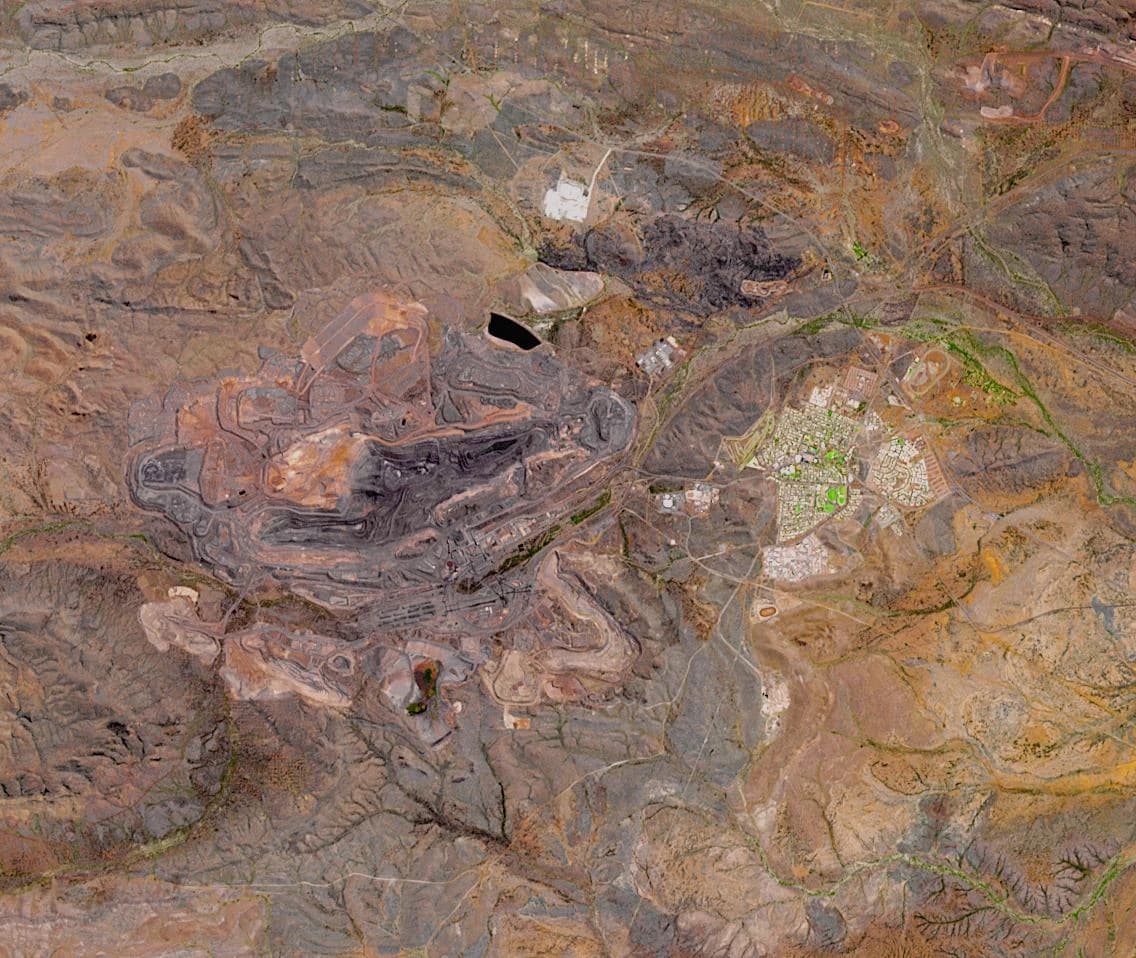
Australia is already one of the world’s most important mining exporters, and the Pilbara sits at the center of that story. The region’s giant iron ore systems are not just a source of export revenue; they are a vast geological asset base that researchers are now examining for a potentially new use. In investment terms, that creates optionality. The same terrain that helped build mining giants could also become a platform for a hydrogen industry tied to existing infrastructure, local skills and established supply chains.
For investors, the attraction is straightforward: natural hydrogen, if proven at scale, could offer a lower-cost and potentially more scalable alternative to some current clean-fuel pathways. That would matter for miners with exposure to Western Australia, for industrial gas and energy companies, and for infrastructure owners positioned around the Pilbara. It could also extend the investment case for assets that are usually valued only for iron ore, not for their broader energy potential.
The broader backdrop is supportive. The global hydrogen market is still developing, but it is not short of ambition. Governments and companies from Spain to India are pouring capital into green hydrogen even as some European support wobbles. Australia’s opportunity is different: it sits at the intersection of resource geology and energy transition. That combination is what makes the natural hydrogen thesis so compelling — it does not require inventing a new industry from scratch so much as discovering a new use for an old one.
There are, of course, major risks. The science still has to be proven, commercial extraction still has to be demonstrated and the regulatory framework would need to catch up. Investors should treat this as a long-dated option, not a near-term earnings driver. But that is exactly why it deserves attention. Markets often underestimate how long it takes for a laboratory idea to become an industrial asset class, then suddenly reprice the winners when the economics become real.
For now, the Pilbara hydrogen story is best understood as a high-upside exploration theme with real strategic logic behind it. If the research holds, Australia could end up with another exportable energy advantage layered on top of its mining empire. For long-term investors, that makes it worth watching closely.
| Entity | Gains | Losses |
|---|---|---|
| Pilbara miners | ▲New energy optionality | ▼Pure iron-ore-only valuation |
| Clean-energy developers | ▲Lower-cost hydrogen source | ▼High-cost electrolysis economics |
| Australia | ▲New export industry potential | ▼Need for new regulation and proof |
| Competing hydrogen hubs | ▲Attention and capital pressure | ▼First-mover advantage risk |