Young consumers are increasingly spending their evenings, money and social time in gyms instead of bars, and that shift is creating a durable tailwind for fitness brands even as the broader consumer backdrop looks shaky.
Planet Fitness at $51.21 as gym spending rises

For investors, the importance goes well beyond a lifestyle fad. If younger adults are prioritizing wellness, exercise and community over nightlife, that can support recurring gym memberships, athletic apparel sales and sporting-goods demand through a cycle that often lasts years, not quarters. It also helps explain why fitness remains one of the more resilient pockets of consumer spending even when confidence is weak.
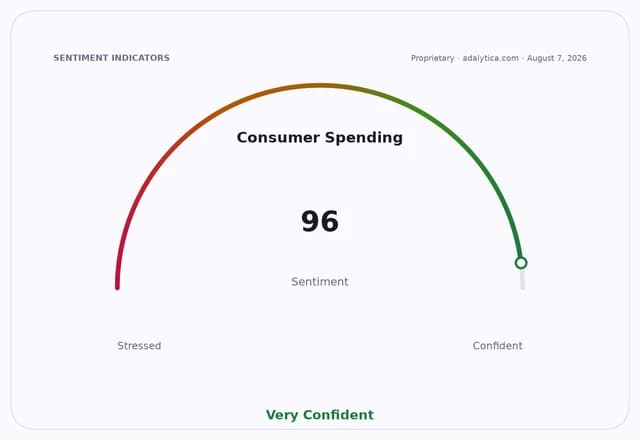
Sentiment IndicatorsⓘProprietary · adalytica.com · August 7, 2026
This is a snapshot — live sentiment, awareness and momentum for 130+ markets update continuously in the dashboard.Open AlphaPulse

The evidence is showing up in the stocks. Planet Fitness, the most direct proxy for the gym boom, has been volatile, but it has also rebounded sharply from a brutal spring selloff. The shares closed at $51.21 on Aug. 6, more than 15% above their June 24 level of $53.86 and well above the $44.01 low reached in May, when trading volume exploded to 17.2 million shares. The stock is still far below its 200-day moving average of $78.65, which says investors remain cautious, but the recent bounce suggests the market is starting to price in a steadier membership story.
That matters because Planet Fitness lives and dies on consistency: recurring dues, franchised club growth and a brand that fits the budget-conscious, post-pandemic consumer who wants a social outlet without bar tabs. The company’s latest filing also highlights how important membership mix, pricing and net member growth are to same-club sales. If younger consumers continue swapping nights out for workouts, that could keep the runway open for clubs, equipment and low-cost access models.
Consumer Spending vs PLNTadalytica.com
Explore this data interactively — full history, time series and cross-market comparisons.Open AlphaPulse
The trend is not just good for gym operators. Lululemon’s shares closed at $124.73 on Aug. 6, up modestly from $123.03 two days earlier, while Dick’s Sporting Goods ended at $198.62. Both stocks have had their own rough patches, but they remain tied to a bigger secular theme: consumers buying into performance, wellness and athleisure as part of everyday life. That is a powerful shift for long-term investors because it spreads across apparel, footwear, accessories and equipment, not just one company or one quarter.
There is a catch, of course. A weaker economy can still crimp discretionary spending, and the latest consumer confidence reading from Adalytica.com points to fear even as consumer-spending sentiment sits at extreme greed. That split suggests households may be choosy, not carefree. In other words, they may cut back on expensive nights out before they cut back on a gym membership or a pair of running shoes.
The long-term takeaway is simple: if younger consumers keep treating fitness as a social identity rather than a chore, the winners are likely to be the brands that make wellness affordable, convenient and habit-forming. Planet Fitness, Lululemon and Dick’s all stand to benefit in different ways, but the bigger story is that the gym may be becoming the new bar for a generation that prefers compounding health over one-night spending. That is a trend worth watching, and for patient investors, worth owning through a diversified portfolio.
| Entity | Gains | Losses |
|---|---|---|
| Planet Fitness | ▲recurring memberships | ▼bar/nightlife spending |
| Lululemon | ▲athleisure demand | ▼discretionary apparel skeptics |
| Dick’s Sporting Goods | ▲fitness and sports sales | ▼old-school entertainment spenders |
| Younger consumers | ▲health habits, community | ▼alcohol-heavy social routines |