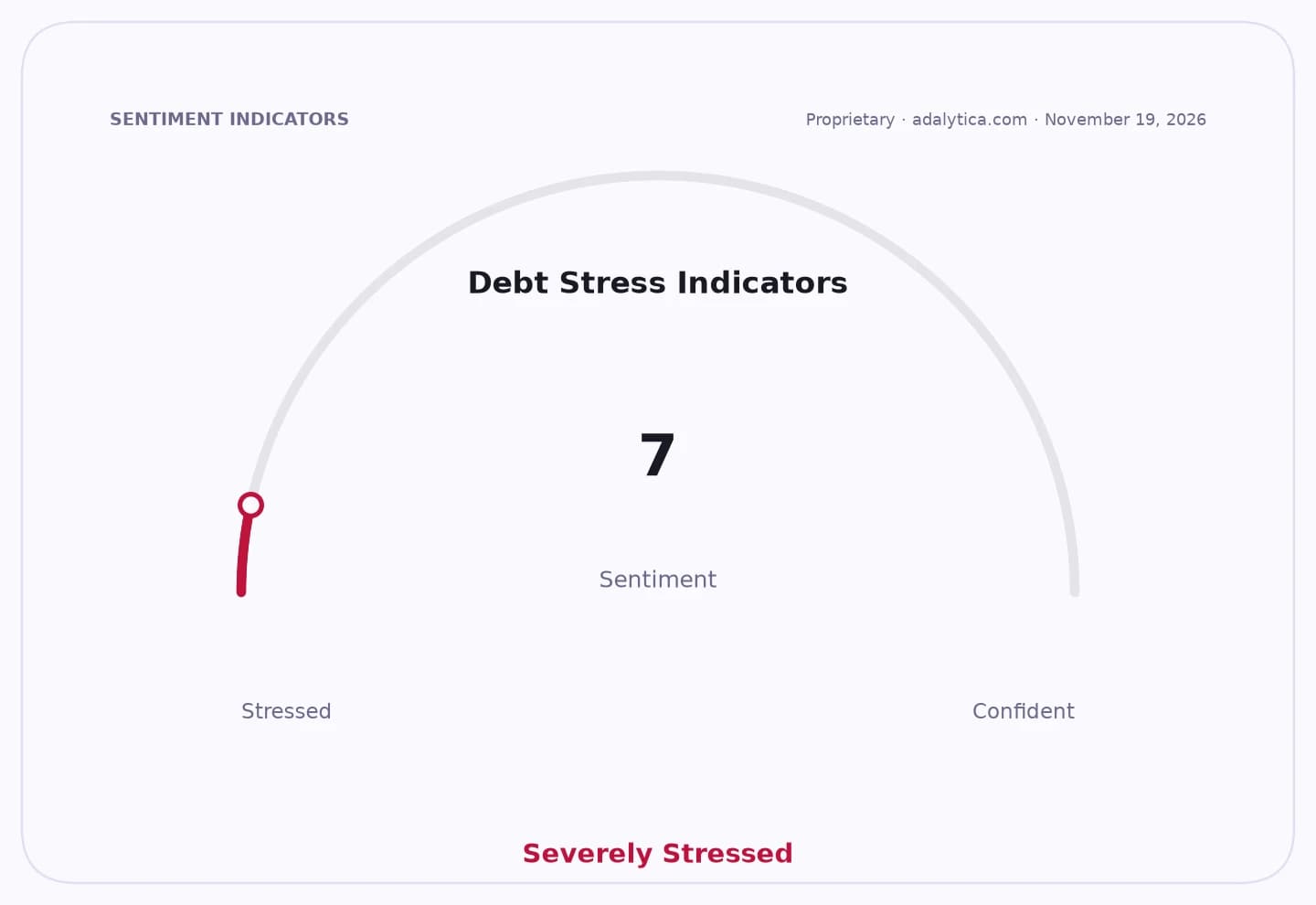
Nearly 350,000 Poles are now exposed to bailiff enforcement as household finances deteriorate, with overdue credit and non-credit obligations reaching about 81 billion zlotys and multiple-creditor cases rising across the country.
Poland debt enforcement rises as arrears hit 81 bn zlotys
The scale matters because enforcement is typically the end stage of a debt problem that has already spread through families’ cash flow, savings and borrowing capacity. For lenders, utilities and telecoms, it signals that a larger share of arrears is moving beyond reminders and restructuring talks into court-ordered recovery, raising collection costs and pushing up losses.
Sentiment Indicators
The latest figures suggest the pressure is not isolated. Big InfoMonitor says more than 347,000 people have obligations to at least three creditors, while only 39% of Poles say they are coping well financially and 23% fear poverty. That combination points to a fragile consumer backdrop in which small missed payments can quickly snowball into legal action.
Under Polish procedure, creditors first seek voluntary repayment, then can take the case to court before a bailiff becomes involved once a judgment is enforceable. In practice, experts say one unpaid debt can already trigger enforcement risk, while three unpaid obligations often make it almost inevitable.
That is why the debt threshold matters less than the pattern of missed payments. The article says bailiffs most often target wages, pensions and bank accounts, but collections are capped by law: 50% of salary for non-alimony debts, 25% of pensions and up to 60% in alimony cases, with protected amounts including the minimum wage and certain benefits such as 800+.
For investors, the story is a warning that household distress can feed back into bank asset quality, consumer finance volumes and servicing costs. It also underscores how high interest rates and rising living costs are tightening repayment behavior, even as debt collection firms and secured lenders may see more business.
Even after enforcement begins, the debt does not disappear if the borrower has no assets, meaning lenders can return to the claim later if the debtor’s finances improve. The key risk for households is that delay increases the bill through interest, court fees and enforcement costs, making early restructuring the cheapest exit.
| Entity | Gains | Losses |
|---|---|---|
| Creditors | ▲Higher recovery odds | ▼More legal costs |
| Bailiffs / collectors | ▲More enforcement cases | ▼Higher reputational backlash |
| Borrowers in distress | ▲Chance to renegotiate early | ▼Wage, pension, asset seizure |
| Banks and utilities | ▲Tighter payment discipline | ▼Rising arrears and losses |