For consumers trying to escape overdrafts, credit card balances and installment purchases, the order of repayment can save real money — and in today’s higher-rate world, that matters more than ever.
Germany debt repayment advice on high-interest balances
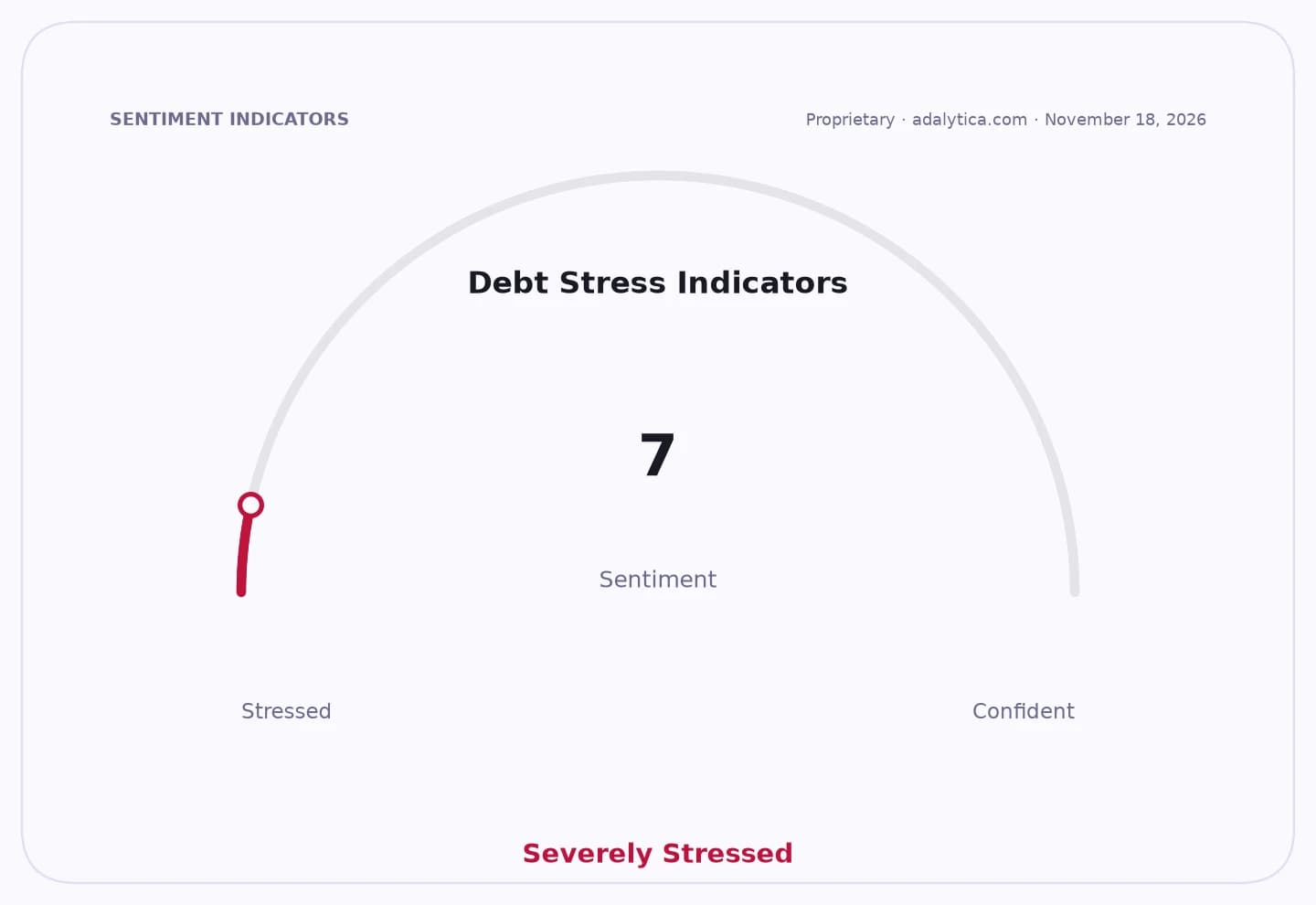
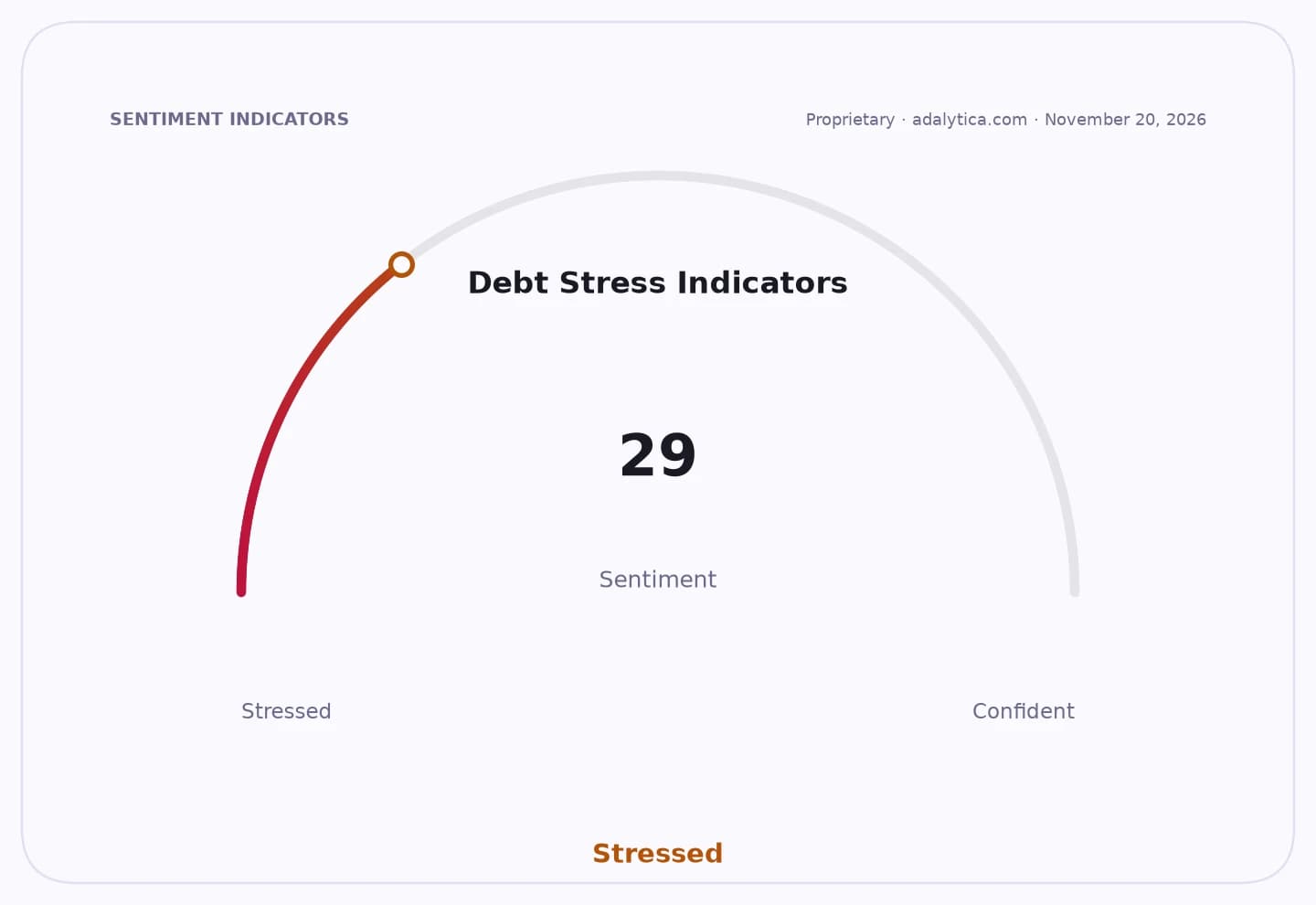
Germany’s latest debt statistics show the pressure many households are under. More than 10% of adults are now over-indebted, according to Creditreform’s Schuldneratlas, with the number rising by about 293,000 to 7.36 million people. The average debt load among those seeking counseling is 34,650 euros, though the median is closer to 19,000 euros, underscoring how a relatively ordinary mix of obligations can become unmanageable once interest and fees pile up.
Sentiment Indicators
That is why the practical question is not whether to pay debt down, but which debt to attack first. The answer, on the numbers, is clear: the highest-interest balance usually deserves the first euro of extra repayment. In a model example based on a borrower owing 20,000 euros across a 0% installment plan, a 10% overdraft, an 18% credit card balance and an 8% personal loan, the “avalanche” method — directing spare cash to the costliest debt — produced the lowest total interest bill.
The payoff difference was modest if the goal was simply to become debt-free as quickly as possible. Across monthly extra payments ranging from 450 euros to 1,000 euros, the avalanche method was only about one month ahead of the snowball approach, which targets the smallest balance first. But on cost, the gap was larger. At a 450-euro monthly budget, the avalanche method cut total interest to roughly 4,600 euros, versus about 5,030 euros for even payments and nearly 5,070 euros for the snowball strategy. At 1,000 euros a month, the avalanche method was about 18% cheaper.
That matters economically because debt service is not just a household problem — it is a consumer-spending problem, a bank-credit problem and, when it spreads broadly enough, a macro problem. When borrowers waste cash on avoidable interest, they leave less for rent, energy, food and other essentials. If repayments slip, the burden can quickly shift from unsecured credit to collections, restructuring and, in the worst cases, insolvency. The data show that most over-indebted people are juggling multiple creditors, not one simple loan, which is exactly the kind of balance-sheet strain that can snowball.
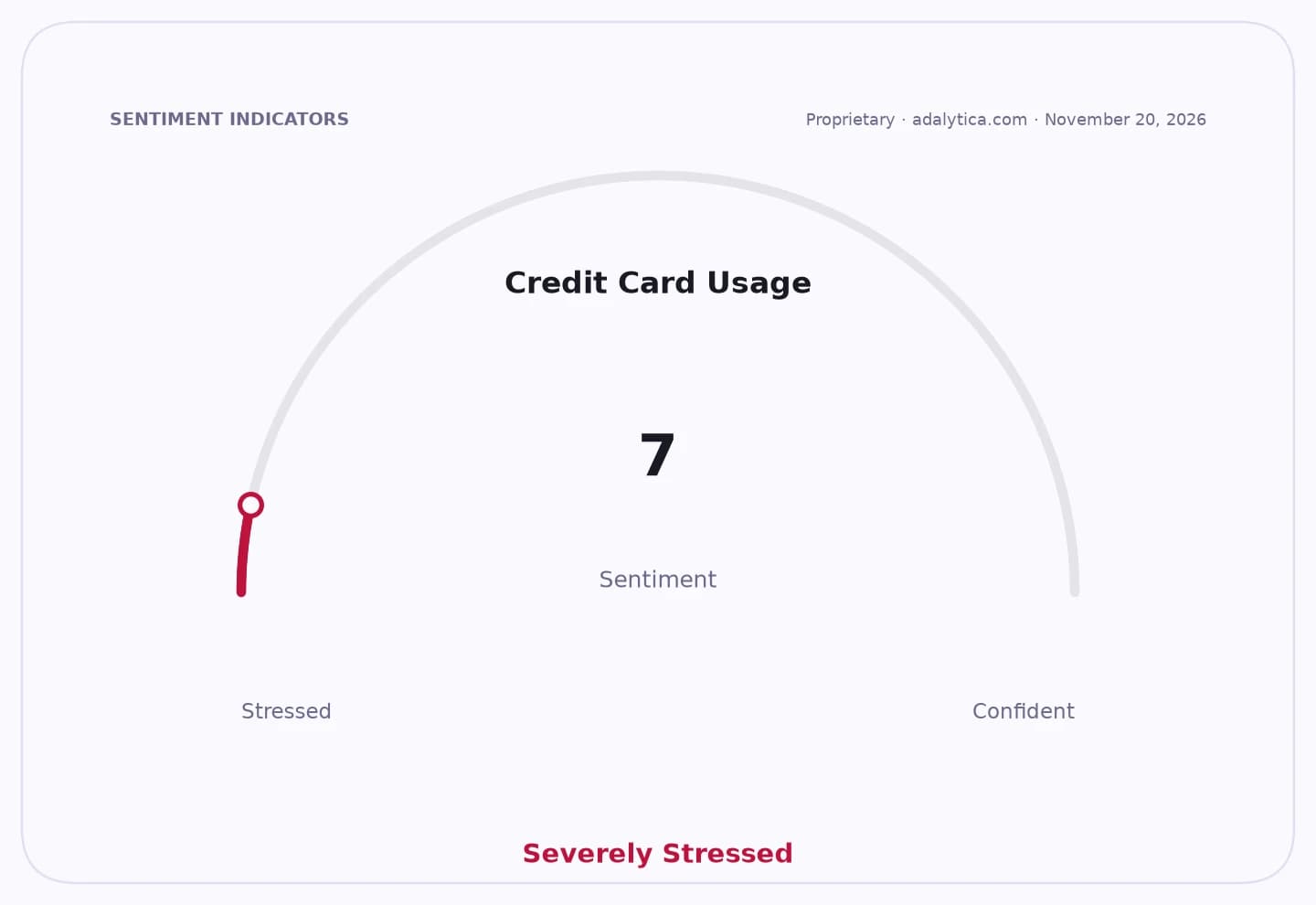
The strain is showing up in credit markets too. In the U.S., bad debt at 28 listed banks jumped nearly 27% in the first nine months of 2026, more than double loan growth, a reminder that lenders are already seeing the effects of stretched borrowers. That backdrop helps explain why the share prices of consumer finance names such as Capital One, Synchrony Financial and American Express have become sensitive to signs of repayment stress. Credit investors are watching whether households can keep pace with higher borrowing costs, not just whether they are borrowing at all.
For investors, the lesson is broader than a budgeting tip. High rates change behavior, and they change credit quality. The 10-year Treasury yield hovering around 5% and the Fed funds rate near 3.9% keep the cost of revolving debt elevated, making overdrafts and credit cards especially punishing. Conventional technical indicators on some consumer lenders have also turned weaker in recent trading, reflecting investor caution as loan losses and slower repayment habits remain in focus.
Still, the long-term takeaway is constructive. Households that prioritize the most expensive debt first can reduce interest faster, preserve flexibility and lower the odds of sliding into deeper distress. For anyone already behind, the advice is even simpler: protect housing, utilities and basic living expenses first, then negotiate or refinance the costliest balances if possible. And if the debt load is no longer manageable, formal counseling can be the difference between a temporary setback and a lasting reset.
For investors, that means two things: consumer credit quality deserves close attention, and lenders with disciplined underwriting and strong collections will likely prove more resilient than those relying on easy credit growth. For households, it means the right repayment order is not a small detail — it is the difference between paying down debt efficiently and paying far more than necessary. Worth watching, and worth acting on early.
| Entity | Gains | Losses |
|---|---|---|
| Borrowers with high-interest debt | ▲Lower total interest | ▼Slower relief if they pay smallest balance first |
| Lenders on overdrafts/credit cards | ▲Interest income in the near term | ▼Higher default risk if balances linger |
| Consumers using avalanche method | ▲Faster wealth preservation | ▼Less psychological quick win |
| Banks and investors in consumer credit | ▲Better repayment discipline | ▼Higher losses if debt stress spreads |