France is tightening consumer credit rules by forcing banks and lenders to check a borrower’s ability to repay before granting overdrafts, installment payments and small loans, a shift that consumer advocates say should curb over-indebtedness even if it restrains spending in the near term.
France tightens overdraft and BNPL credit checks
Debt Stress Indicators
The reform, which takes effect Friday, folds overdrafts and split payments into the consumer-credit regime for the first time, bringing them under the same affordability checks that already apply to other loans. That makes the measure economically significant: it is designed to slow the use of short-term borrowing to fund everyday consumption, a pattern that can keep households afloat briefly but often leaves them paying more next month.
Sentiment Indicators
Fabrice Messoumian, who heads the Le Hérisson association in the Toulouse area, said the tougher rules are "the right direction" because “more restrictions and controls” should protect vulnerable borrowers. He said overdrafts can be useful in one-off cases, but using them to live on “is a bad habit” that “deepens next month’s budget.”
The reform also targets the fast-growing buy-now-pay-later market, where retailers and websites have pushed split payments to encourage higher spending. Under the new rules, lenders must verify financial capacity before approving those transactions, a move that could temper sales conversion at merchants while reducing the risk that consumers stack up multiple small debts they cannot service.
Mini-loans under 200 euros are also now treated as consumer credit, closing off a low-friction borrowing channel that advocates say has become increasingly common even for basic grocery purchases. The broader economic aim is to reduce reliance on costly informal or revolving debt, which can amplify household stress and worsen repayment problems across the banking system.
For investors, the change is a mixed bag. It may weigh on lenders and payment providers exposed to revolving balances, overdrafts and installment products, including consumer-finance groups such as Synchrony Financial and Capital One, while improving credit quality over time if delinquency rates ease. Shares in those names have already been under pressure, with Synchrony down to $68.18 from $76.47 earlier this month and Capital One at $179.84 from $207.88 in late October, alongside weak technical readings.
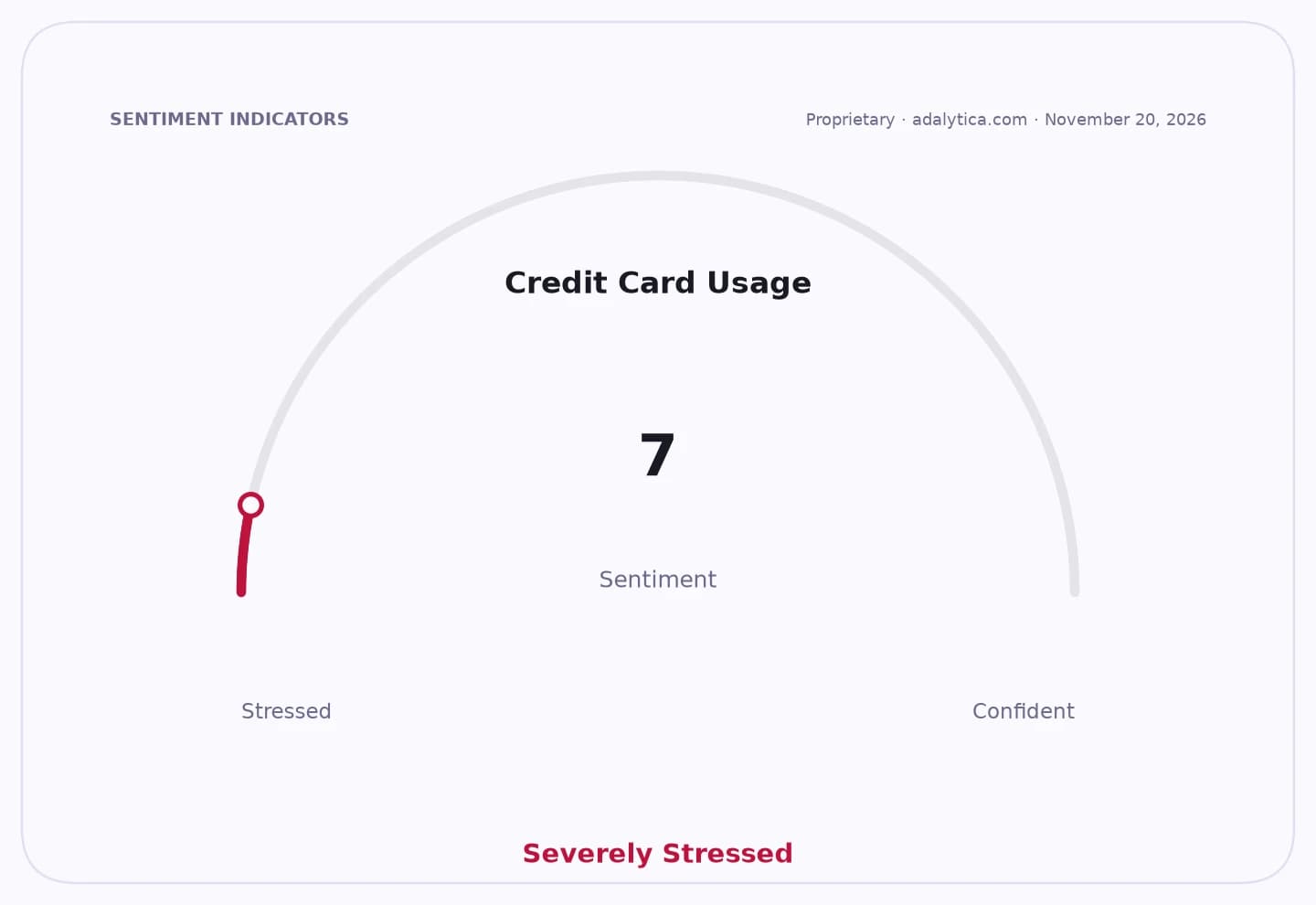
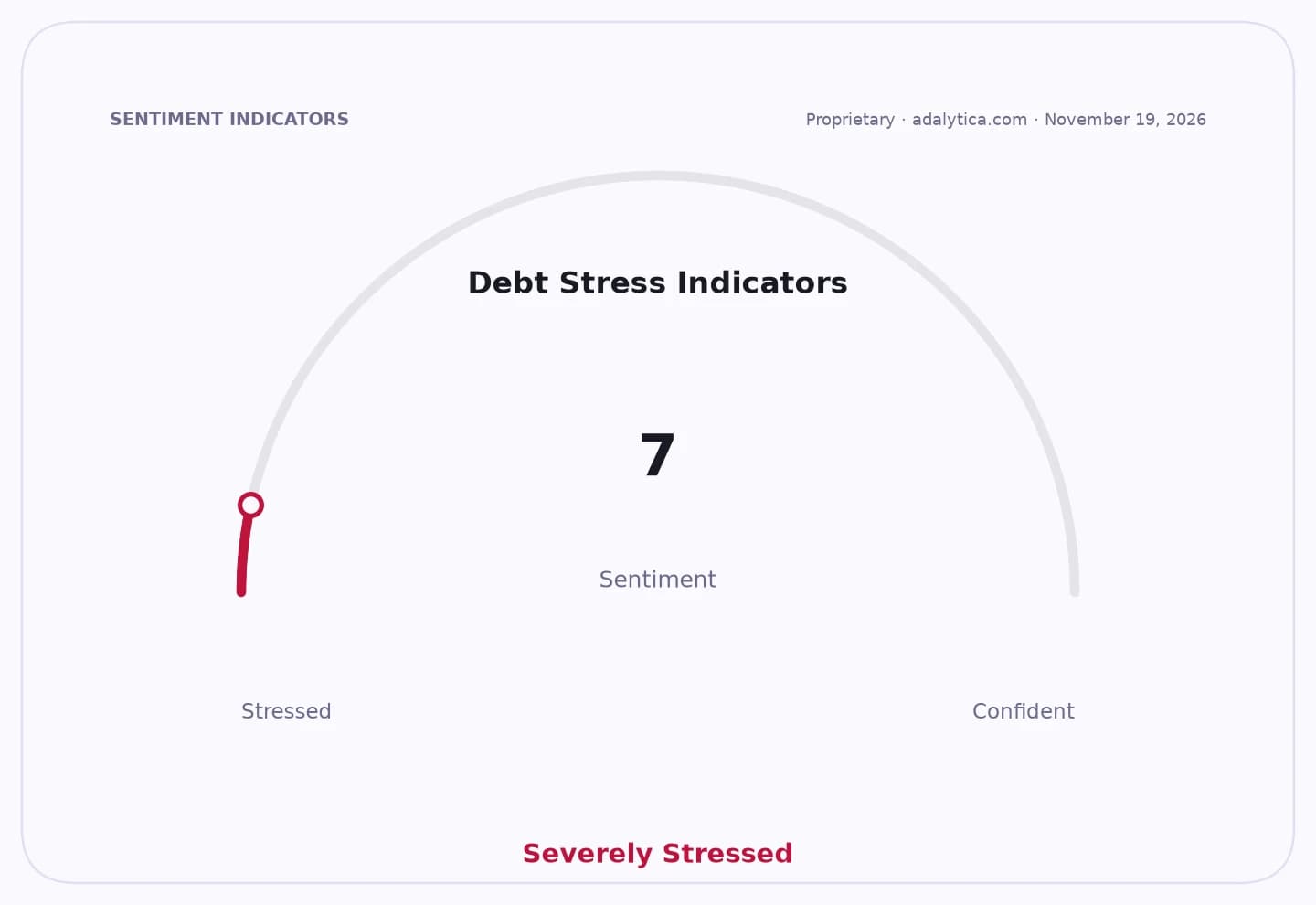
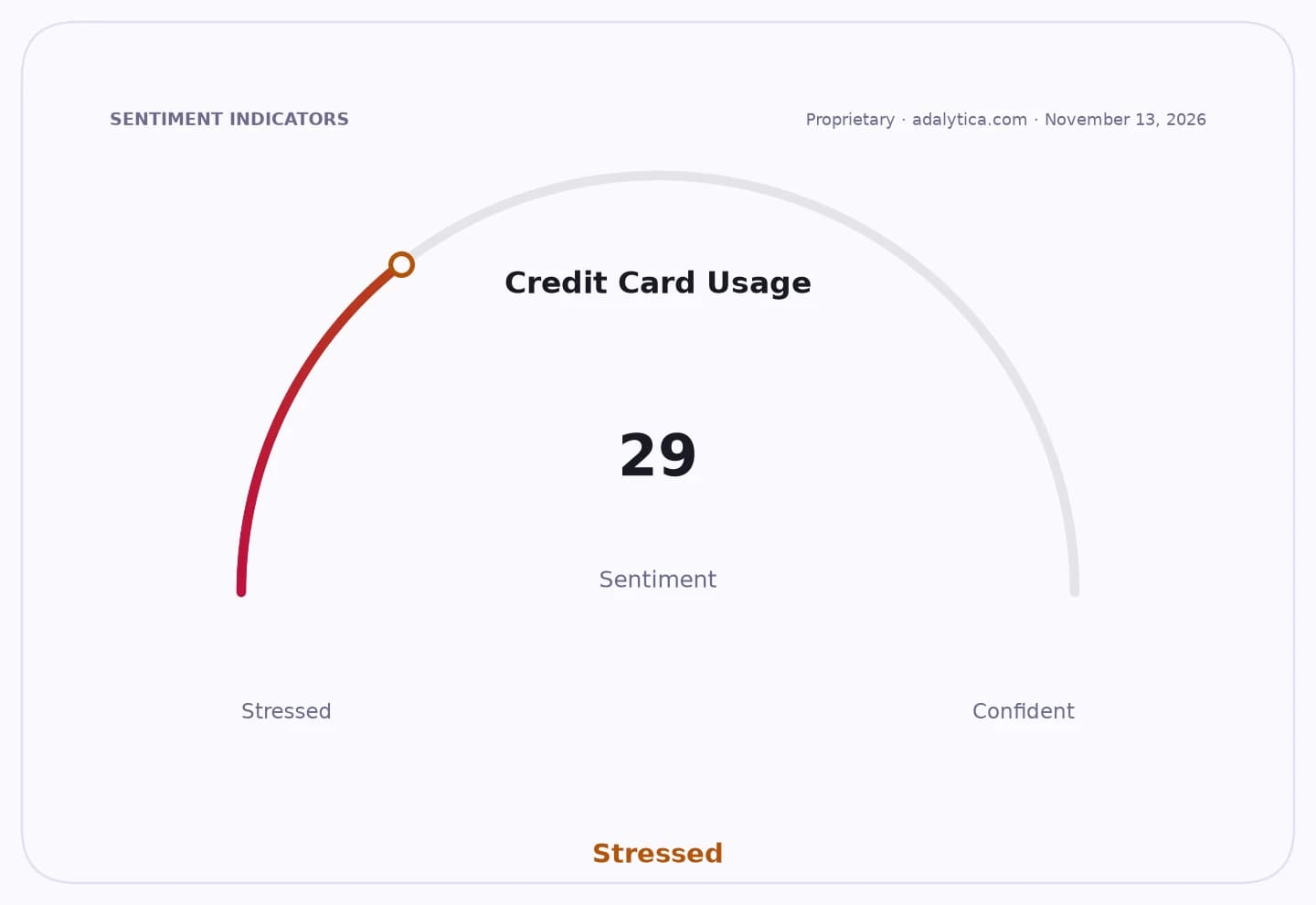
The timing also fits a wider policy push to protect households as debt stress remains a concern. Adalytica’s Household Debt Stress sentiment snapshot shows fear at 29, underscoring the market’s focus on consumer resilience heading into year-end.
The next catalyst will be whether tighter affordability checks dent loan growth or instead improve portfolio quality enough to offset slower volumes, especially if regulators extend similar rules to other forms of short-term credit.
| Entity | Gains | Losses |
|---|---|---|
| Over-indebted consumers | ▲Better repayment screening | ▼Easier access to quick credit |
| Banks and lenders | ▲Lower default risk over time | ▼Slower overdraft and installment growth |
| Merchants and BNPL providers | ▲Healthier customers long term | ▼Fewer impulse purchases |
| Consumer-finance stocks | ▲Potentially better credit quality | ▼Near-term revenue pressure |