Borrowers in Nigeria are falling into a deeper debt trap as digital loan apps and microfinance lenders warn that weak credit checks, poor data sharing and soaring living costs are pushing defaults higher and threatening the economics of online lending.
Nigeria digital lenders face rising loan defaults
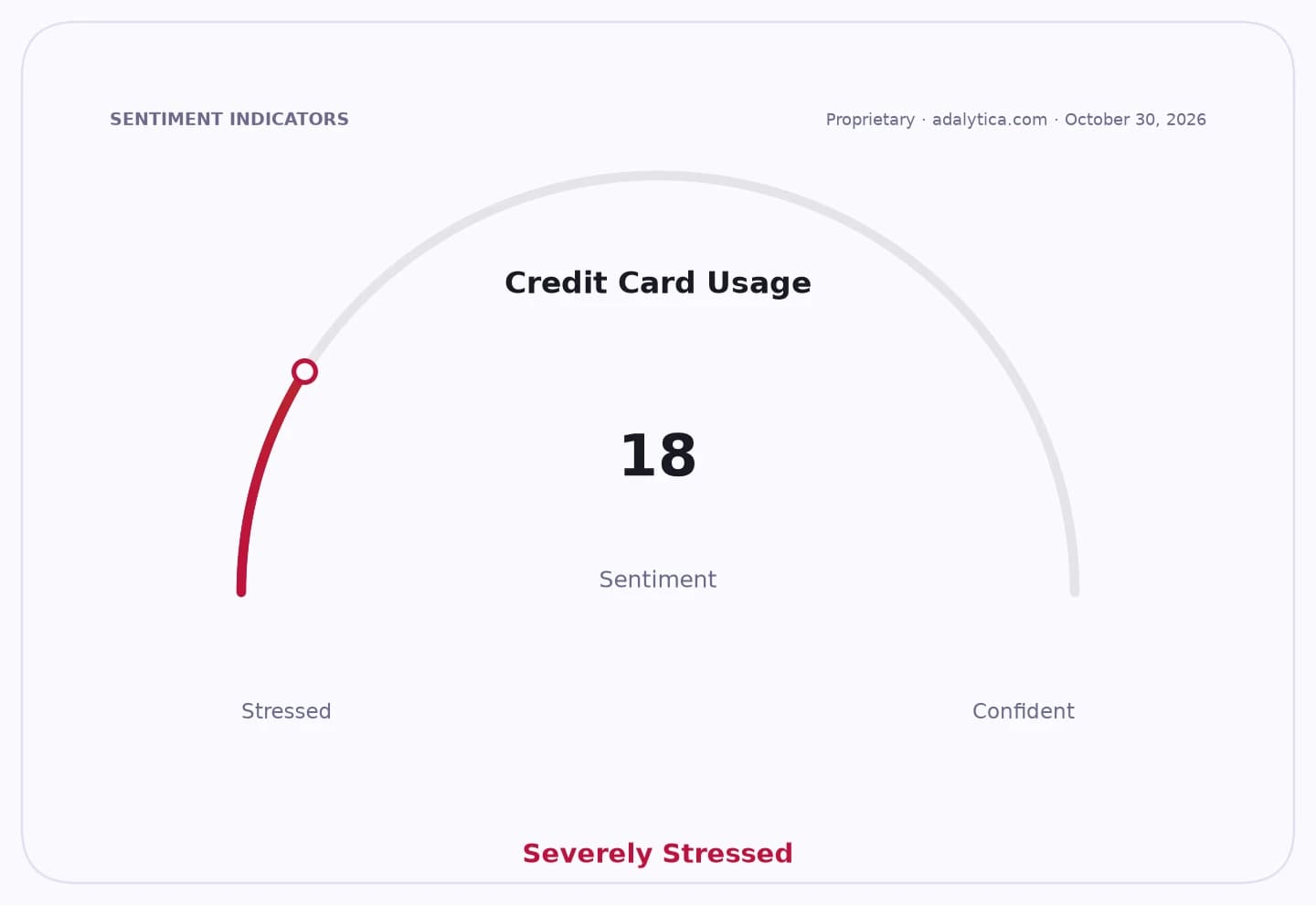
Credit Card Usage
That matters because this is no longer just a consumer hardship story. It is an underwriting problem that can turn a fast-growing fintech market into a high-loss, high-cost business, especially when unsecured loans are being approved in minutes for food, rent, school fees and medical bills. When repayment breaks down, lenders raise rates to protect margins, which pushes even more borrowers into stress and widens the spiral.
Sentiment Indicators
The warning signs are already visible. OPay disclosed in a U.S. Securities and Exchange Commission filing that it wrote off $113.15 million in loans in the first half of 2026, while $113.80 million of its $415.33 million loan book was overdue, equal to 27.4%. Industry players say that is not an outlier but a symptom of a broken credit ecosystem where borrowers can tap multiple apps without lenders seeing the full picture.
The core problem is information failure. Operators want stricter screening and a central database that would let banks, microfinance institutions and digital lenders check updated borrowing and repayment records before approving new loans. Right now, lenders say many apps rely too lightly on Bank Verification Numbers and transaction histories, while some borrowers juggle one loan to repay another. In a market where effective charges can reach 50% a month, the result is predictable: fresh credit becomes emergency liquidity, then a repayment crisis.
For investors, the lesson is that credit growth without credit discipline is not scalable. The market often prices fintech lenders as growth stories, but the bigger driver of valuation is credit quality, funding stability and loss provisioning. A lender can grow originations quickly and still destroy equity if collections weaken and write-offs accelerate. The firms best positioned to win are not the ones chasing the most borrowers, but the ones with better data, tighter underwriting and access to income-verified SME clients instead of unsecured household spending loans.
That makes the next phase of Nigeria’s digital lending market a selection game. Lenders that can prove disciplined risk controls, report defaults consistently and shift toward business borrowers should gain share. Those that keep financing survival spending without a reliable credit bureau backstop risk higher charge-offs, tighter funding and regulatory pressure. For investors, the asymmetric opportunity is in the platforms that can turn lending into an underwriting business, not a volume race.
| Entity | Gains | Losses |
|---|---|---|
| Disciplined digital lenders | ▲Lower charge-offs, stronger margins | ▼Slower loan growth |
| Weakly screened loan apps | ▲Short-term volumes | ▼Rising defaults, write-offs |
| Income-verified SME borrowers | ▲Better access to credit | ▼Less easy household cash |
| Borrowers juggling multiple apps | ▲Temporary liquidity | ▼Higher debt burden, harassment |