A viral personal-finance story about paying off a 15-year education loan in five years is resonating because it lands in the middle of a far less uplifting credit backdrop: bad debt at 28 listed joint-stock commercial banks rose nearly 27% by end-September, outpacing loan growth and underscoring pressure on households and lenders alike.
Banks, borrowers, and faster education-loan paydown
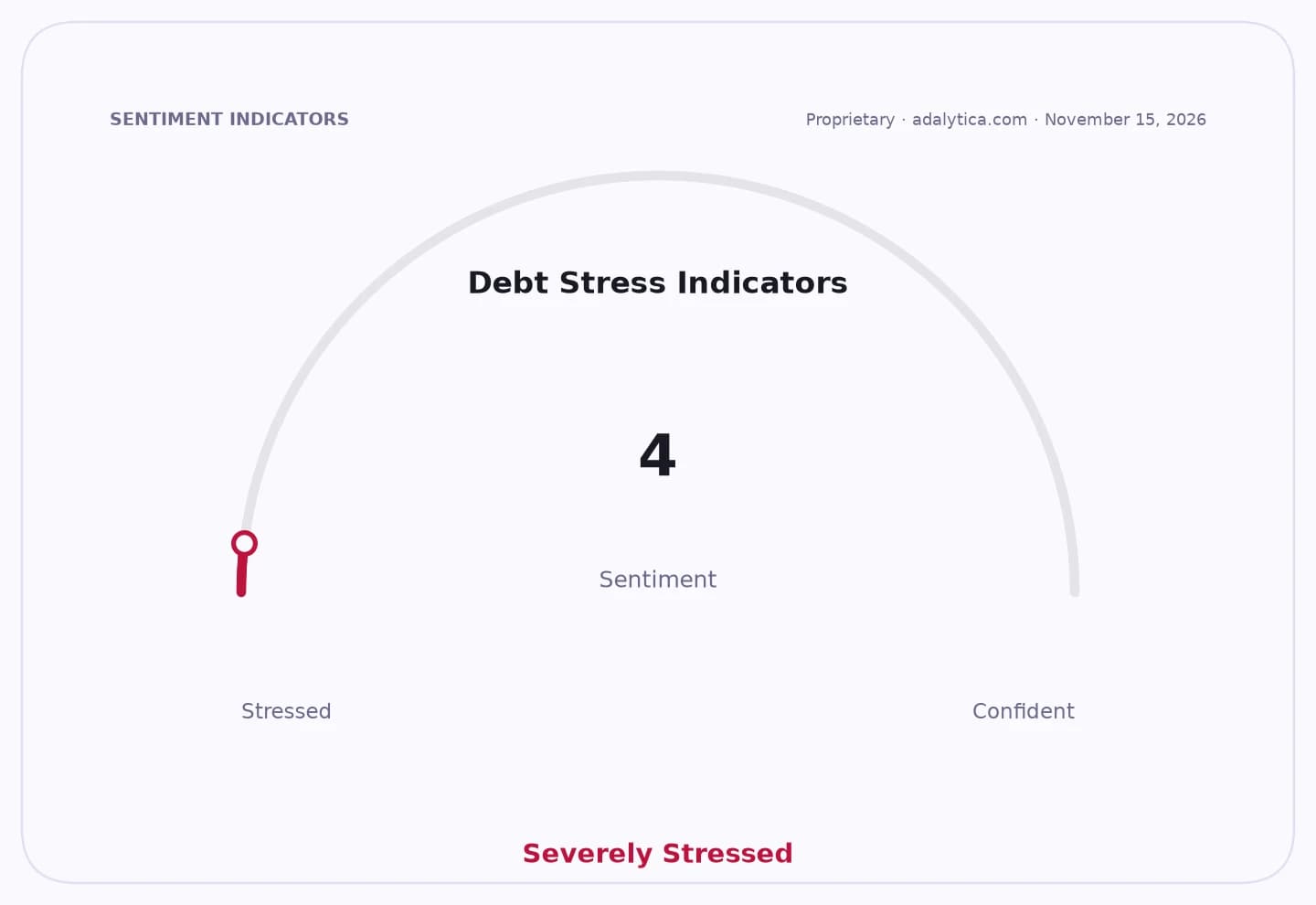
Debt Stress Indicators
The appeal of the story is not the social-media gloss but the economics behind it. When rates are sticky and defaults are rising, every extra principal payment matters. Faster repayment cuts interest expense, shortens leverage duration and reduces the probability that a household slips into delinquency as shocks build. That is why the example of a borrower wiping out a 25 lakh rupee education loan in five years, instead of 15, is being read as more than lifestyle content: it is a template for surviving a tougher credit cycle.
Sentiment Indicators
For borrowers, the arithmetic is straightforward. Extra quarterly installments, disciplined EMI payments, and channeling bonuses and stock awards toward principal can save meaningful interest over time. In the example circulating online, the borrower said the strategy saved about 10 lakh rupees in interest, with total interest paid of roughly 4.6 lakh rupees rather than about 15 lakh rupees over the full term. In a period when job security and wage growth are less certain, that discipline also preserves credit scores and keeps refinancing options open.
The wider backdrop helps explain why the message is catching on. Household debt stress remains elevated, even if some consumer-credit indicators have eased in spots. Adalytica’s Household Debt Stress Sentiment is still in “Extreme Fear” territory at 7, while its Credit Card Usage Sentiment is neutral at 36, suggesting consumers are still cautious even as usage normalizes. At the same time, wage inflation sentiment remains muted and the US unemployment rate is forecast at 4.11%, reinforcing the sense that many households are prioritizing balance-sheet repair over expansionary spending.
That matters to lenders. Capital One and American Express shares have both shown recent volatility, reflecting the market’s sensitivity to consumer-credit quality and funding costs. Capital One’s stock has slipped back below its 50-day and 200-day moving averages, while its RSI has weakened sharply, a sign traders are already discounting softer momentum. American Express has also faded from recent highs. Those moves echo the broader credit backdrop: banks can still lend, but they are doing so into a more selective consumer environment.
The investor takeaway is that debt paydown is becoming both a defensive household strategy and a credit-market signal. Borrowers that accelerate amortization reduce their own vulnerability; lenders that see more prepayment may lose some long-dated interest income, but they also face lower late-stage credit risk. The key question is whether the viral lesson remains an individual success story or becomes a broader consumer behavior shift as bad debts rise and credit conditions tighten further.
| Entity | Gains | Losses |
|---|---|---|
| Borrowers with high-rate loans | ▲Lower interest burden | ▼Less cash for consumption |
| Banks and card lenders | ▲Lower default risk | ▼Less long-dated interest income |
| Disciplined savers | ▲Stronger credit profiles | ▼Higher near-term repayment strain |
| Indebted households | ▲Faster deleveraging | ▼Reduced financial flexibility |