Rapid interest-rate increases are squeezing the way medium-sized lenders manage deposits, lending margins and liquidity, with one Danish bank chief saying he does not recall a comparable move in his 32 years in finance.
European medium-sized banks face deposit repricing pressure

For investors, the significance is not just that banks are finally earning more on assets. It is that the speed of the tightening cycle is forcing smaller and mid-sized institutions to reprice funding, hedge balance-sheet risk and compete harder for deposits just as bond yields, credit conditions and recession risks remain unsettled.
Sentiment Indicators
Martin Baltser, chief executive of Middelfart Sparekasse, has spent 14 years at the top of the Danish lender and says the current adjustment is unlike anything he has seen before. The comment captures a broader European banking backdrop in which policymakers are still leaning toward further rate rises, even as the economy slows and funding markets stay sensitive to every shift in central-bank language.
That tension matters because banks are highly exposed to the path of short-term rates. Higher policy rates can lift net interest income if deposit costs lag loan yields, but the benefit is rarely uniform. Smaller banks often face fiercer pressure to keep savers from moving cash elsewhere, while borrowers absorb steeper debt-service costs faster than large institutions with more diversified funding and trading operations.
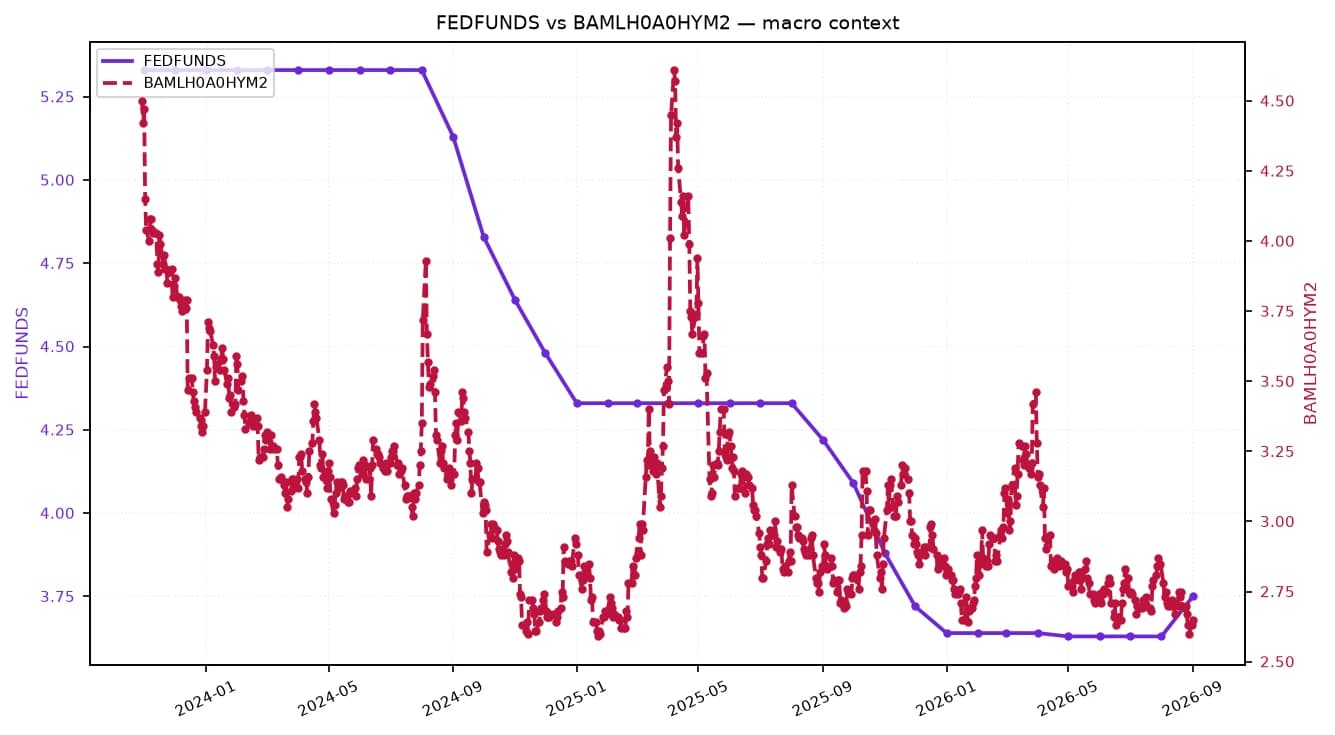
The macro backdrop has reinforced that pressure. U.S. 10-year Treasury yields have climbed to about 4.88%, according to the supplied data, while the fed funds rate is forecast around 3.89% in November. High-yield credit spreads have also widened back to roughly 3.34 percentage points, a sign that funding conditions remain volatile even after months of calmer markets. In Europe, the latest central-bank messaging has pointed to further tightening, keeping rate expectations elevated.
That has created a split-screen for investors. On one side are the earnings tailwinds: global banks have been able to harvest better margins from higher rates, and the shares of some lenders have reflected that. On the other is the risk that deposit beta — the speed at which banks raise savings rates — catches up, compressing margins just as credit quality weakens and loan demand softens.
Middelfart Sparekasse’s listed peer, MCB, has seen its share price hover around 96.44, above both its 50-day and 200-day moving averages, after strong gains earlier this year. But the stock has also swung sharply, with an RSI of 65.7 suggesting it is no longer cheap on a short-term technical basis. That kind of volatility underscores how sensitive regional-bank valuations have become to even small shifts in rate expectations and earnings visibility.
The reaction has not been confined to Denmark. In Brazil, Banco do Brasil’s shares have tumbled to 2.57 from above 4 in late October, with its RSI around 16, a reminder that bank stocks can rerate quickly when investors start worrying about asset quality, policy noise or margin compression. Rate cycles help lenders only until they start feeding stress through credit books.
The bull case for medium-sized banks is straightforward: higher rates can continue to support net interest income, and lenders with sticky retail deposits may still enjoy a profitable lag before funding costs fully reset. The bear case is more compelling if tightening persists too long: deposit competition rises, borrowers refinance at higher costs, and balance sheets built for a low-rate world become harder to manage.
Baltser’s comment is therefore less a one-off anecdote than a marker of a structural change. Medium-sized banks are operating in one of the fastest rate-adjustment environments in decades, and that means the winners will be the lenders that can reprice quickly without losing deposits, while the losers will be those forced to pay up for funding before loan books catch up.
| Entity | Gains | Losses |
|---|---|---|
| Medium-sized banks | ▲Wider lending spreads | ▼Deposit repricing pressure |
| Savers | ▲Higher deposit rates | ▼Lower loan demand |
| Borrowers | ▲None | ▼Higher debt-service costs |
| Bank equity holders | ▲Near-term earnings lift | ▼Margin compression risk |