A sizable share of U.S. homeowners are missing a debt-management tool that can slash borrowing costs at a time when credit card balances are hovering around record territory and average rates remain above 20%.
Homeowners Miss HELOC Option for Credit Card Debt
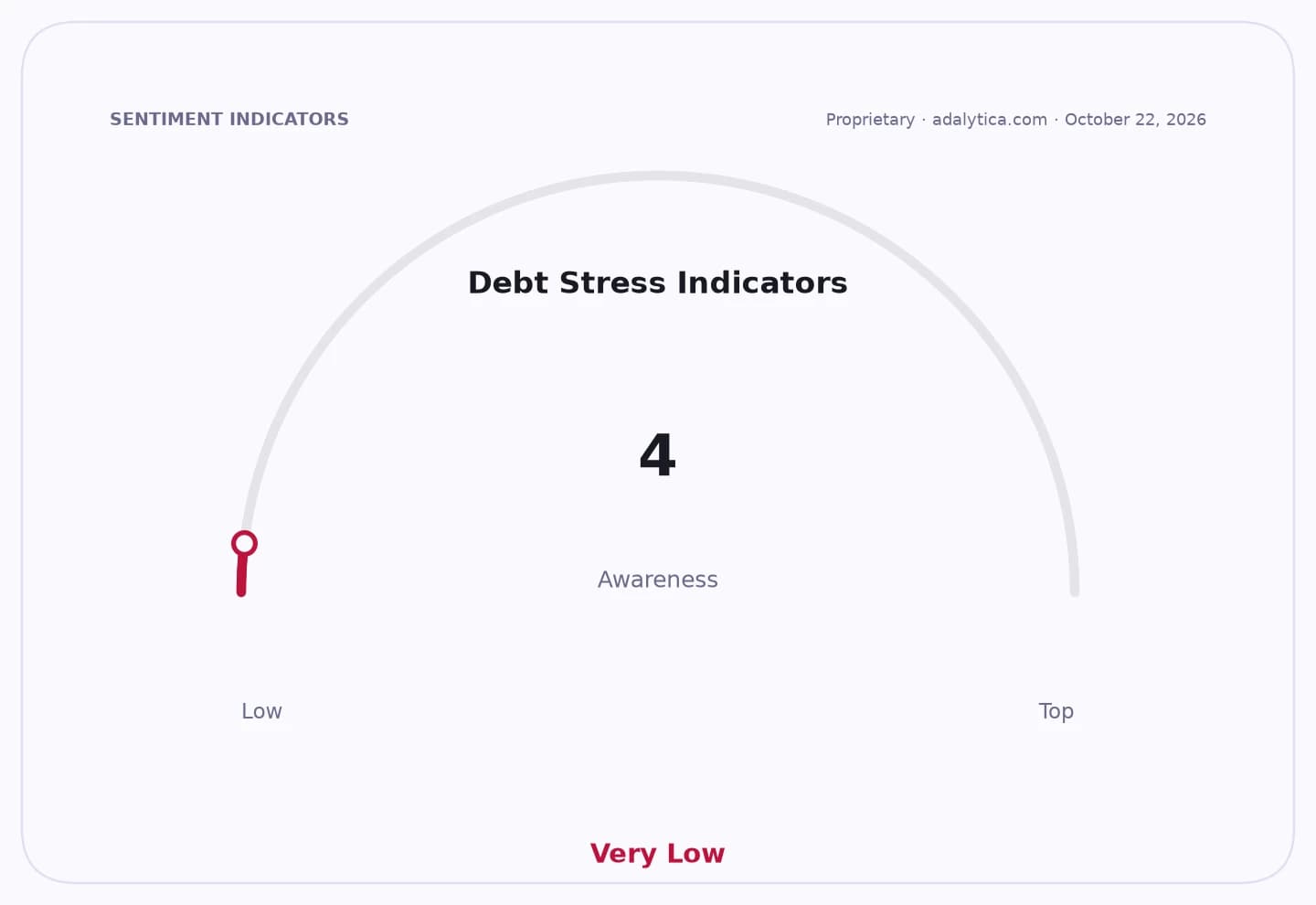
Debt Stress Indicators
The gap matters because the spread between revolving card debt and home-equity borrowing is still wide. Achieve’s survey found 31% of Americans did not know a home equity loan or HELOC could be used to refinance credit card debt, even though the company estimates average annual interest savings of about $1,197 when moving from a 22.15% credit card rate to a 7.5% HELOC rate.
Sentiment Indicators
That is not just a household budgeting issue. With the Federal Reserve putting total credit card debt at roughly $1.26 trillion, expensive revolving balances are continuing to drain disposable income and keep consumers under pressure. For banks, that can eventually mean higher delinquency risk on unsecured lending and more demand for secured credit products tied to home values.
The disconnect is especially pronounced among younger homeowners. Achieve said 60% of Gen Z respondents had not heard of home equity borrowing as a financial option, underscoring how limited knowledge can keep borrowers trapped in higher-cost debt even when they own an asset that can be used as collateral.
Homeowners’ reluctance is psychological as much as mathematical. Achieve found 42% of respondents saw borrowing against home equity as riskier than carrying a credit card balance, and 54% said they would rather avoid tapping home equity despite the higher interest burden.
That hesitation reflects the cultural status of housing in the U.S. Gallup survey data cited by Achieve showed 37% of Americans still view real estate as the best long-term investment, ahead of gold at 23% and stocks at 16%. But fear of putting a home on the line remains strong: 46% said they did not want more debt tied to their property, 32% said they believe in never borrowing against a home and 28% worried about foreclosure.
For investors, the takeaway is twofold. Credit card lenders such as Capital One and Bank of America face a consumer base that is still paying up for revolving credit, while banks with large home-equity books may see an opportunity if borrowers become more cost-conscious and more willing to substitute secured debt for unsecured balances. Bank of America said in its latest filing that home equity made up 6% of its consumer portfolio, while unused HELOC commitments totaled $42.1 billion at Sept. 30.
The broader backdrop also favors debt-restructuring products. With rates still elevated and households under strain, consumers are likely to keep looking for ways to reduce monthly interest costs. The question for lenders is whether education, not rates, becomes the main constraint on HELOC demand.
| Entity | Gains | Losses |
|---|---|---|
| Homeowners with equity | ▲Lower interest costs | ▼Less awareness of refinancing options |
| HELOC lenders / big banks | ▲More demand for secured lending | ▼Slower adoption if fear persists |
| Credit card issuers | ▲Higher card balances retained | ▼Potential refinancing outflows |
| Borrowers without home equity | ▲Fewer refinance choices | ▼Stuck with high card APRs |