Singapore’s housing boom is being financed less by bigger mortgages and more by bigger down payments, a shift that matters for banks, buyers and anyone betting on the durability of the city-state’s property market.
Singapore Housing Growth Relies More on Down Payments
OCBC said homeowners are leaning on cash and Central Provident Fund savings to bridge the gap as prices climb, helping keep loan growth well below the pace of house-price inflation. That is important because it suggests rising valuations have not yet turned into a simple debt-fuelled bubble story. Instead, higher household incomes and years of savings are giving buyers more equity to deploy up front, reducing the amount they need to borrow.
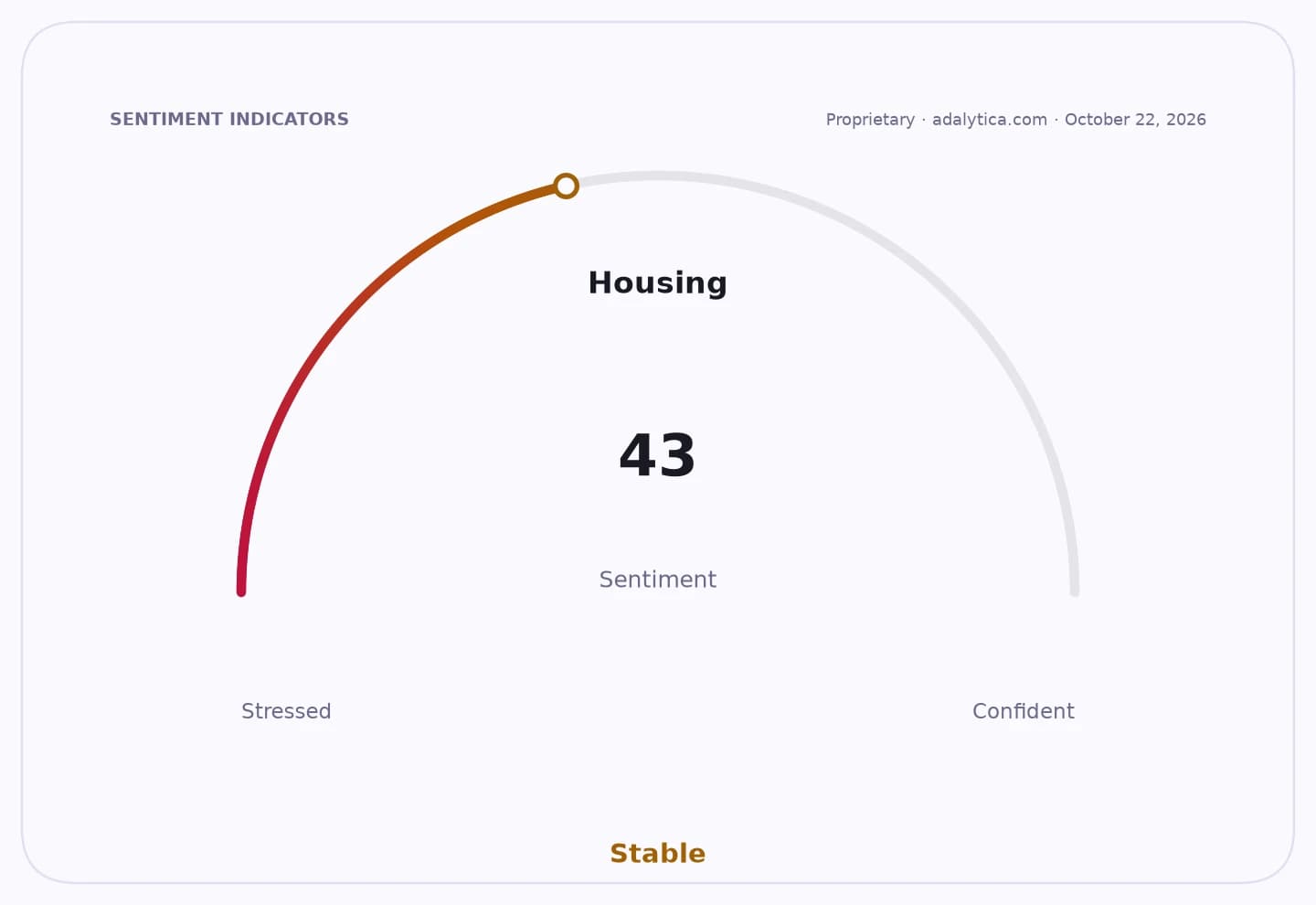
Sentiment IndicatorsⓘProprietary · adalytica.com · October 22, 2026
This is a snapshot — live sentiment, awareness and momentum for 130+ markets update continuously in the dashboard.Open AlphaPulse
The bank said average borrowers are around 38 years old, which means many have had time to accumulate savings or CPF balances. In practice, that is changing the shape of mortgage demand. OCBC financed more than one-third of private property transactions in the first half of 2025, but the loans behind those deals have not kept pace with prices.
For new private homes, sales prices rose 49% from 2021 through the first half of this year, while the average home loan rose 35%. For private resale homes, prices increased 36% and loans 32%. In the public resale market, prices and mortgages both climbed 32%, showing the pattern is strongest in the private segment, where buyers generally have more financial flexibility.
That gap matters economically because it points to a housing market that is still expensive, but not solely dependent on leverage. When buyers fund more of a purchase with equity, they cushion lenders from some credit risk and reduce the immediate sensitivity of households to interest-rate swings. It also helps explain why mortgage balances have not exploded in line with headline property prices.
Still, the scale of borrowing is getting larger in absolute terms. OCBC said eight in 10 borrowers taking loans for new private homes in the first half of the year carried mortgages of at least S$1 million, up from four in 10 in 2021. That tells investors the market is becoming more capital-intensive even if leverage ratios are not rising as fast as prices.
For banks, the mix is constructive. Bigger loans can support interest income, but stronger borrower equity typically means better credit quality. For property investors, the message is more nuanced: demand is holding up, yet affordability is increasingly being managed through accumulated wealth rather than cheaper financing.
The broader takeaway is that Singapore’s home market is being underwritten by balance-sheet strength, not just debt. As long as incomes, savings and CPF balances continue to outpace house prices, the market can absorb higher valuations better than many peers. But if that income advantage narrows, the affordability cushion could shrink quickly. For long-term investors, that makes Singapore housing and lenders worth watching, not chasing.
| Entity | Gains | Losses |
|---|---|---|
| OCBC | ▲Higher mortgage balances | ▼Affordability-sensitive buyers |
| Singapore banks | ▲Stronger loan books | ▼Debt-led housing demand |
| Homebuyers with savings | ▲Lower leverage risk | ▼First-time buyers without equity |
| Property sellers | ▲Higher price support | ▼Buyers reliant on borrowing |