Poland’s justice minister has upheld the dismissal of Michał Sopiński as head of the Academy of Justice, escalating a politically charged fight over who controls the state school that trains prison and court officers.
Poland Justice Minister Upholds Academy Dismissal
The decision matters because the academy sits at the intersection of law enforcement, judicial training and public-sector governance. By keeping Sopiński out, Waldemar Żurek is asserting direct supervisory authority over an institution his ministry says was marked by legal violations, political activity and irregularities in doctoral and curatorship procedures.
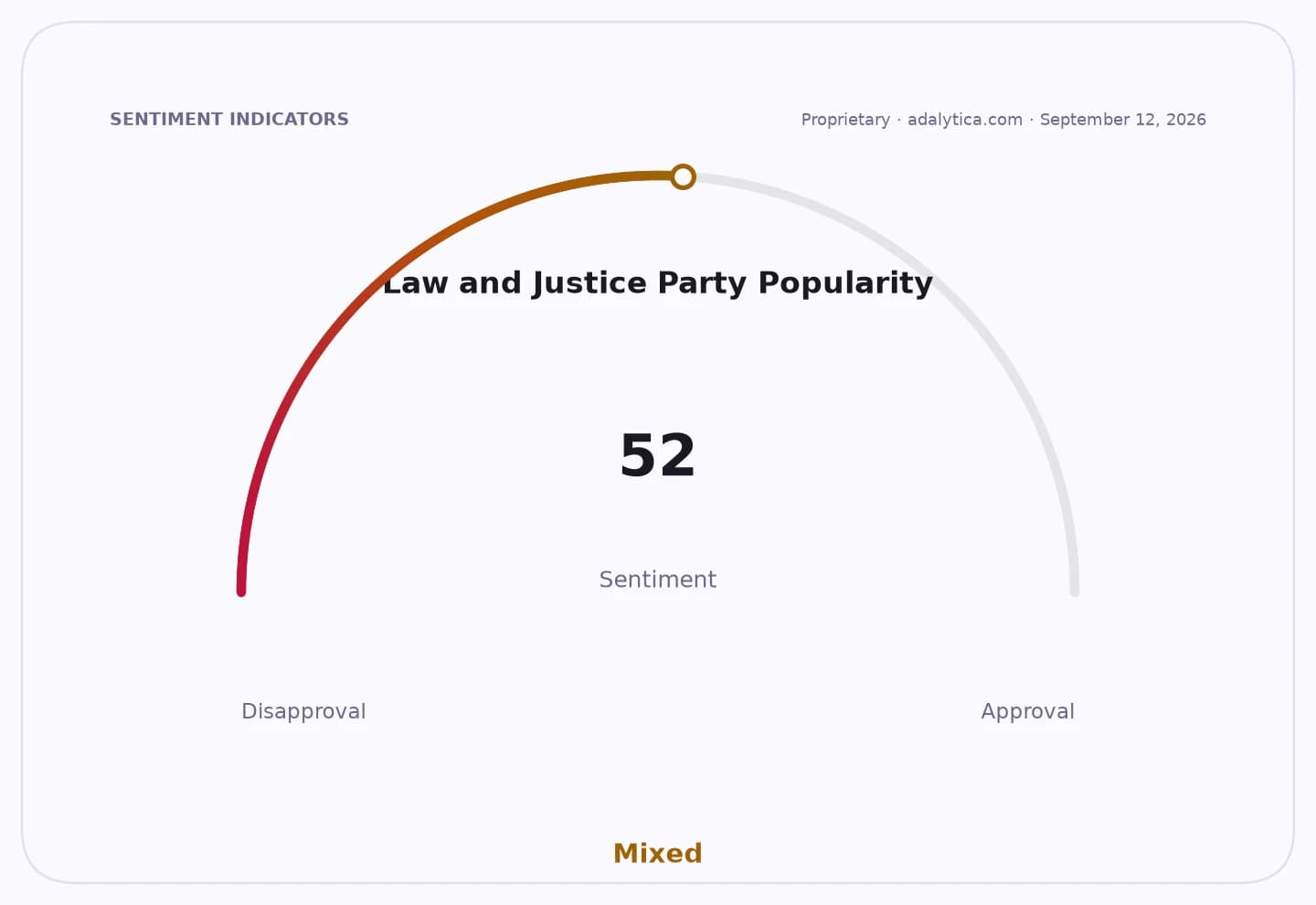
Sentiment IndicatorsⓘProprietary · adalytica.com · September 12, 2026
This is a snapshot — live sentiment, awareness and momentum for 130+ markets update continuously in the dashboard.Open AlphaPulse
The ministry said its renewed review confirmed statutory grounds for removal, citing three areas of concern: alleged irregularities in awarding doctoral degrees, breaches of the apolitical standards expected of the prison service, and problems in the handling of judicial probation training. Żurek said there would be no tolerance for “party agitation” at an institution responsible for educating prison service personnel.
For investors, the immediate market relevance is indirect but real. The dispute underscores how institutional reshuffling in Poland can affect the rule-of-law backdrop, public-sector oversight and the broader investment climate in a country where government credibility and administrative stability are closely watched. Extended political conflict over universities and state bodies can feed perceptions of governance risk, even when it does not immediately touch listed corporate earnings.
Law and Justice Party Popularity — 30-day sentimentadalytica.com
Explore this data interactively — full history, time series and cross-market comparisons.Open AlphaPulse
The case also shows the new administration is willing to use supervisory powers aggressively rather than let contentious appointments linger. That can reassure supporters who want cleaner institutional governance, but it also raises the chance of more legal challenges, internal resistance and media-driven confrontation before a replacement is permanently named.
Sopiński was initially moved out after the ministry launched proceedings in March, and the step had already been backed by advisory bodies for higher education and science. The latest ruling closes the loop for now, but the episode suggests the fight over Poland’s state institutions is not over.
If the ministry moves quickly to install a permanent rector-commander, the episode may fade into a personnel dispute. If it drags on, it could become another test of how far Warsaw is prepared to go in reordering public institutions tied to the justice system.
| Entity | Gains | Losses |
|---|---|---|
| Justice Ministry | ▲Stronger oversight | ▼More political friction |
| Waldemar Żurek | ▲Authority and control | ▼Exposure to legal challenge |
| Michał Sopiński | ▲None | ▼Job and institutional standing |
| Academy of Justice leadership | ▲Potential reset | ▼Stability and autonomy |