Poland is moving to rewrite one of the most awkward rules in local property taxation: co-owners, joint owners and perpetual users would pay tax only on their own stake instead of being jointly liable for the entire bill.
Poland property tax reform would end joint liability
That matters because property taxes may be small in dollar terms, but the legal structure behind them affects how smoothly homes, apartments and land change hands. A clearer, proportional system would reduce disputes, cut paperwork and make the rules easier for ordinary owners to understand — all of which lowers friction in a market that already runs on thin margins and heavy bureaucracy.
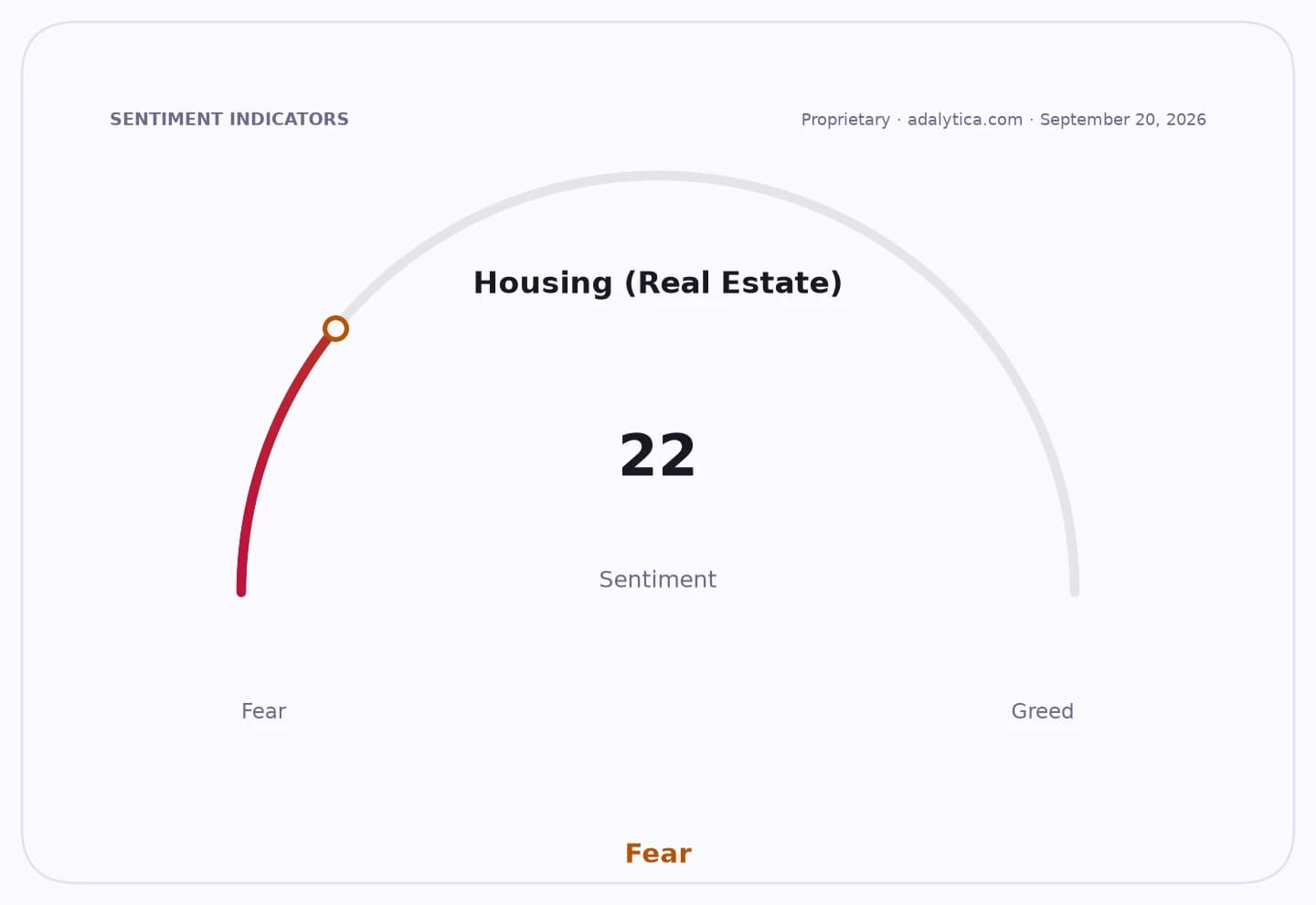
Sentiment IndicatorsⓘProprietary · adalytica.com · September 20, 2026
This is a snapshot — live sentiment, awareness and momentum for 130+ markets update continuously in the dashboard.Open AlphaPulse
The finance ministry is working on a bill that would end the current joint tax obligation for property held in co-ownership, co-possession or joint perpetual usufruct. Under the proposal, taxes on land, buildings and structures would be calculated according to each owner’s share. Where shares cannot be precisely identified, the law would presume equal shares.
For investors, the big takeaway is not a sudden jump in property values, but a gradual improvement in transaction efficiency. Simpler tax administration can help reduce delays and compliance costs for buyers, sellers and notaries. The ministry also wants notaries to transmit extract data from deeds directly to tax authorities on request, replacing some separate filings by individuals who are not using the property for business.
That is the kind of change that rarely makes headlines yet can still matter over time. Housing markets function better when ownership records, tax notices and transfer documents line up cleanly. Less red tape usually means fewer accidental penalties, fewer contested assessments and less time spent chasing paperwork — especially important in markets where multiple heirs, spouses or business partners own the same asset.
The reform would also ease burdens on municipalities. Gminas would no longer have to pay property tax to themselves on land held in perpetual usufruct, and they would be spared declarations for tax-exempt assets. That may sound technical, but for local governments it removes circular accounting and frees administrative capacity.
Broader housing sentiment remains weak. Adalytica’s Housing Fear & Greed Index sits in “Fear” territory, while its Housing and Rent Inflation measure points to “Extreme Fear,” underscoring how sensitive the sector is to policy and affordability pressures. In that setting, even a cleaner tax rule can be constructive because it reduces one more source of uncertainty for owners and developers.
For long-term investors, the lesson is simple: property markets usually reward predictability more than complexity. This proposal does not transform Poland’s real estate sector overnight, but it does point toward a more rational tax framework, and those reforms tend to compound over years, not days. Worth watching for anyone invested in housing, land or broader Polish real estate exposure.
| Entity | Gains | Losses |
|---|---|---|
| Co-owners | ▲tax tied to share | ▼joint liability burden |
| Buyers and sellers | ▲less paperwork | ▼extra filing friction |
| Notaries | ▲clearer data role | ▼manual reporting load |
| Municipalities | ▲simpler administration | ▼circular tax payments |