Cotonou’s cargo rebound is being driven less by bigger cranes than by a more important shift: West African ports that depend on one or two corridors are learning that geopolitical risk is now part of the business model.
Port of Cotonou traffic rebounds on corridor shifts
The Port of Cotonou in Benin has rebuilt traffic sharply even as its traditional Niger route has been strained by diplomatic tensions. Total throughput climbed from 9.6 million tonnes in 2024 to 14.7 million tonnes in 2025, and management says the first eight months of 2026 already topped 10 million tonnes, putting the port on track for 16 million to 16.5 million tonnes this year. For investors, that matters because it shows the real value in African port platforms is not just nominal capacity, but the resilience and optionality of the corridors behind them.
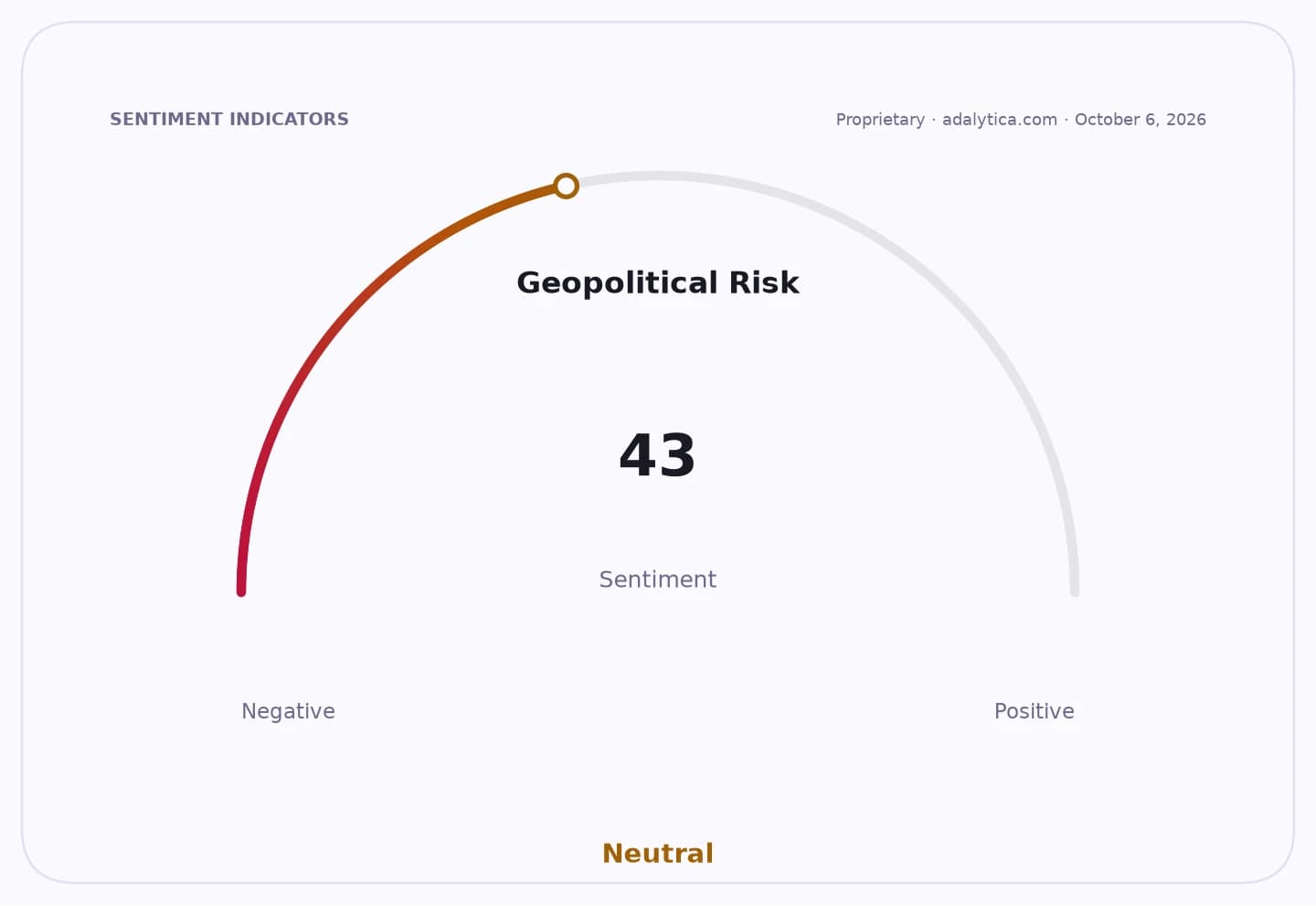
Sentiment IndicatorsⓘProprietary · adalytica.com · October 6, 2026
This is a snapshot — live sentiment, awareness and momentum for 130+ markets update continuously in the dashboard.Open AlphaPulse
The clearest sign of that shift is the rise of Burkina Faso as a key destination. Since 2025, nearly 1 million tonnes of cargo, largely hydrocarbons, have moved through Cotonou to Burkina Faso, while 16% of last year’s traffic was tied to that market. Nigeria has become the second major outlet, helped by congestion at Nigerian ports and Cotonou’s geographic advantage. Chad is emerging as another potential lane, with N’Djamena seeking alternatives to the constrained Douala corridor. In other words, Cotonou is no longer just a Niger-dependent transit hub; it is becoming a regional routing platform.
That transition is economically meaningful because transit traffic is usually stickier and more valuable than simple domestic import volumes when a port can lock in multiple inland markets. The port said 39.2% of traffic last year was transit cargo, and container throughput surpassed 500,000 TEU, while exports rose to 5.7 million tonnes in 2025 from 2024’s lower base. That mix suggests Cotonou is not merely recovering lost volumes, but broadening its revenue base through a more diversified trade profile.
The investment case is strengthened by Benin’s broader logistics buildout. The port is working through 12 major projects worth about 500 billion CFA francs, or roughly $859 million, aiming eventually for 25 million tonnes of traffic and more than 1 million TEU. That is the kind of capital program that can re-rate a gateway asset if management converts political geography into contractual flow. But the market should not confuse near-term volume gains with permanent moat-building. These corridors can shift quickly if border policy changes, costs rise, or rival ports improve their own inland access.
The risk is that Cotonou’s recent gains still rely on fragile external conditions. The Niger rerouting remains politically contingent, and competition in the Gulf of Guinea is intensifying as ports fight for the same landlocked markets. If Benin can keep Burkina Faso, Nigeria and Chad flowing through the same platform, the port becomes a toll road on regional trade rather than a hostage to one corridor. If not, the current boom will prove cyclical rather than structural.
For investors watching infrastructure, logistics and Africa’s trade arteries, the lesson is clear: the most valuable port platforms are those that turn geopolitical disruption into corridor diversification. The winners are the ports that can offer inland states multiple exits, faster customs and lower friction. The losers are single-corridor hubs exposed to border politics. Cotonou is trying to move from the second group to the first — and that is exactly the kind of strategic transition the market often underprices until volumes have already moved.
| Entity | Gains | Losses |
|---|---|---|
| Port of Cotonou | ▲Diversified transit revenues | ▼Niger corridor dependence |
| Burkina Faso shippers | ▲Shorter export route | ▼Reliance on fragile routes |
| Nigeria importers/exporters | ▲Alternative outlet | ▼Congested domestic ports |
| Niger | ▲Hydrocarbon export channel via Sèmè-Podji | ▼Leverage over Cotonou traffic |