Porto Alegre’s consumer prices swung sharply from a 0.27% decline in August to a 0.95% rise in September, pushing the southern Brazilian metro area above the national inflation rate and reinforcing the view that household costs are reaccelerating in places where energy and food carry outsized weight.
Porto Alegre Inflation Rises to 0.95% in September
That matters because local inflation is not just a statistical footnote. It hits consumption, wages and margins in a region where essentials are already biting harder, and it can force families to cut discretionary spending just as retailers and service businesses are trying to preserve demand. For investors, the move is a reminder that Brazil’s inflation battle is uneven, with regional shocks still capable of feeding broader pricing pressure.
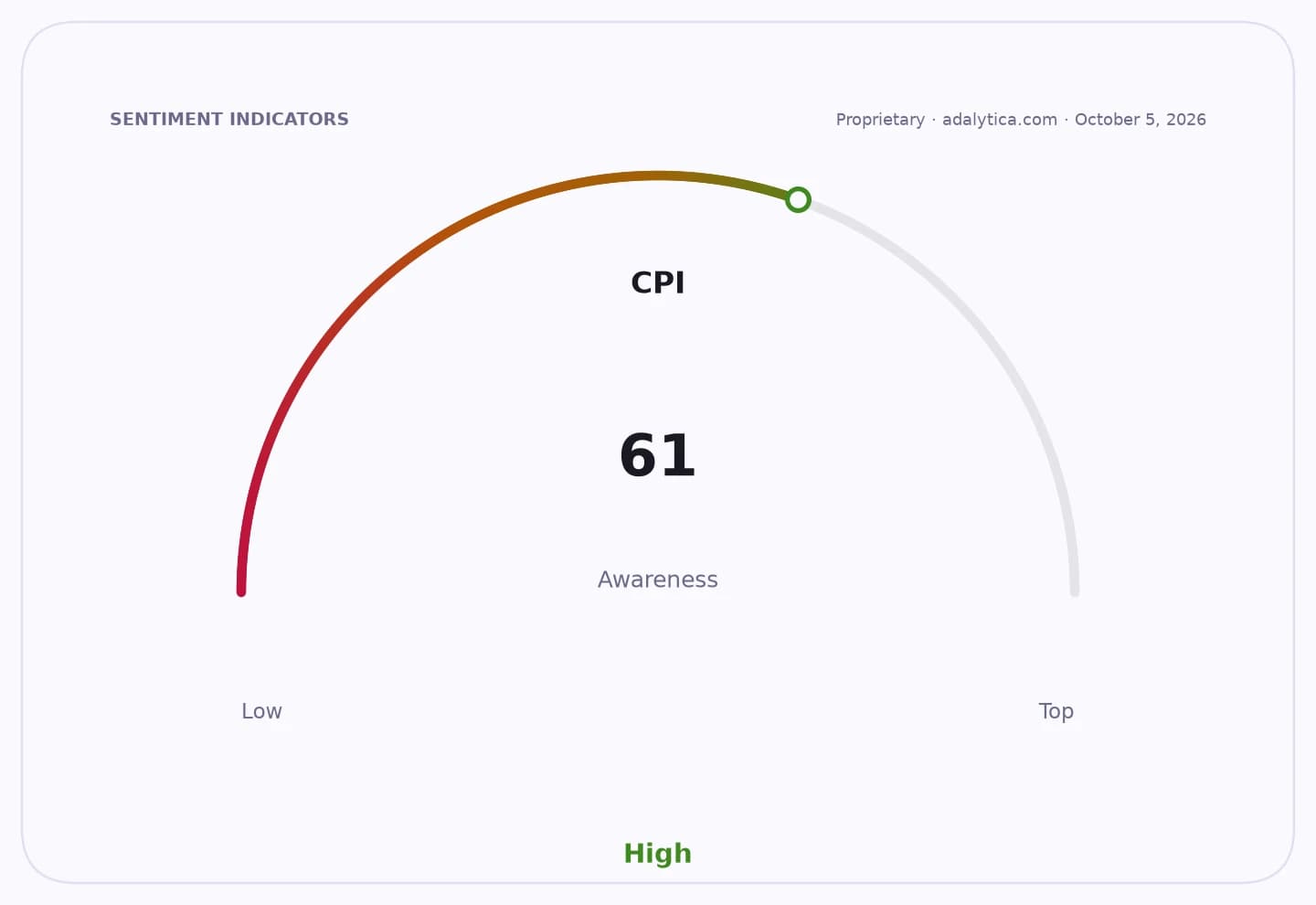
Sentiment IndicatorsⓘProprietary · adalytica.com · October 12, 2026
This is a snapshot — live sentiment, awareness and momentum for 130+ markets update continuously in the dashboard.Open AlphaPulse
The main driver was the end of the Itaipu bonus, a temporary credit that had lowered electricity bills. Once that support disappeared, power costs jumped and lifted condo fees as well, showing how a single utility adjustment can ripple through the monthly budget. Airfares also surged, with Porto Alegre posting the second-biggest increase in Brazil, while gasoline added another layer of pressure.
Food, which hits lower-income households hardest, turned higher again after two declines. Tomatoes, potatoes and onions became more expensive, while rice rose 6%, giving the inflation print a more politically sensitive edge. Even with the monthly jump, the 12-month rate reached 5.02%, above Brazil’s official 3% target and a reminder that disinflation is far from secure.
For markets, the message is broader than one city. When electricity, transport and staples are all moving higher at once, the consumer squeeze widens, and the beneficiaries are the same old defensive names that tend to hold up when spending weakens. The consumer-staples ETF XLP has already been resilient, while commodity-linked plays such as wheat tracker WEAT and copper fund CPER reflect how food and industrial input costs can keep rotating through the system.
Our thesis is that investors should not treat local Brazilian inflation as a parochial data point. It is a live signal that cost shocks are still working through Latin America’s largest economy and that policy makers cannot yet declare victory on prices. If food and utility inflation keep spreading, the next move is likely to favor defensive consumption, regulated utilities and exporters over domestic cyclicals that depend on household purchasing power.
| Entity | Gains | Losses |
|---|---|---|
| Utilities and power providers | ▲Higher realized tariffs | ▼Consumers facing bigger bills |
| Defensive consumer staples | ▲Sticky demand | ▼Discretionary retailers |
| Food producers and traders | ▲Better pricing power | ▼Low-income households |
| Brazilian households in Porto Alegre | ▲None | ▼Buying power erodes |