Portugal’s business shutdowns fell 7.9% in the 12 months through September, a sign the economy is becoming more resilient even as new company formation also slowed, leaving investors to focus on a narrower but healthier corporate base.
Portugal business closures fall 7.9% as startups slow

That is the key signal in the latest Informa D&B data: 14,519 companies closed over the period, 1,244 fewer than a year earlier, while new incorporations slipped 3.2% in the first nine months of the year to about 40,000. In other words, Portugal is not just losing fewer businesses — it is also producing fewer new ones. That points to a more cautious private sector, but one where the weakest firms are being cleared out at a slower pace and the survivors are operating in a steadier macro backdrop.
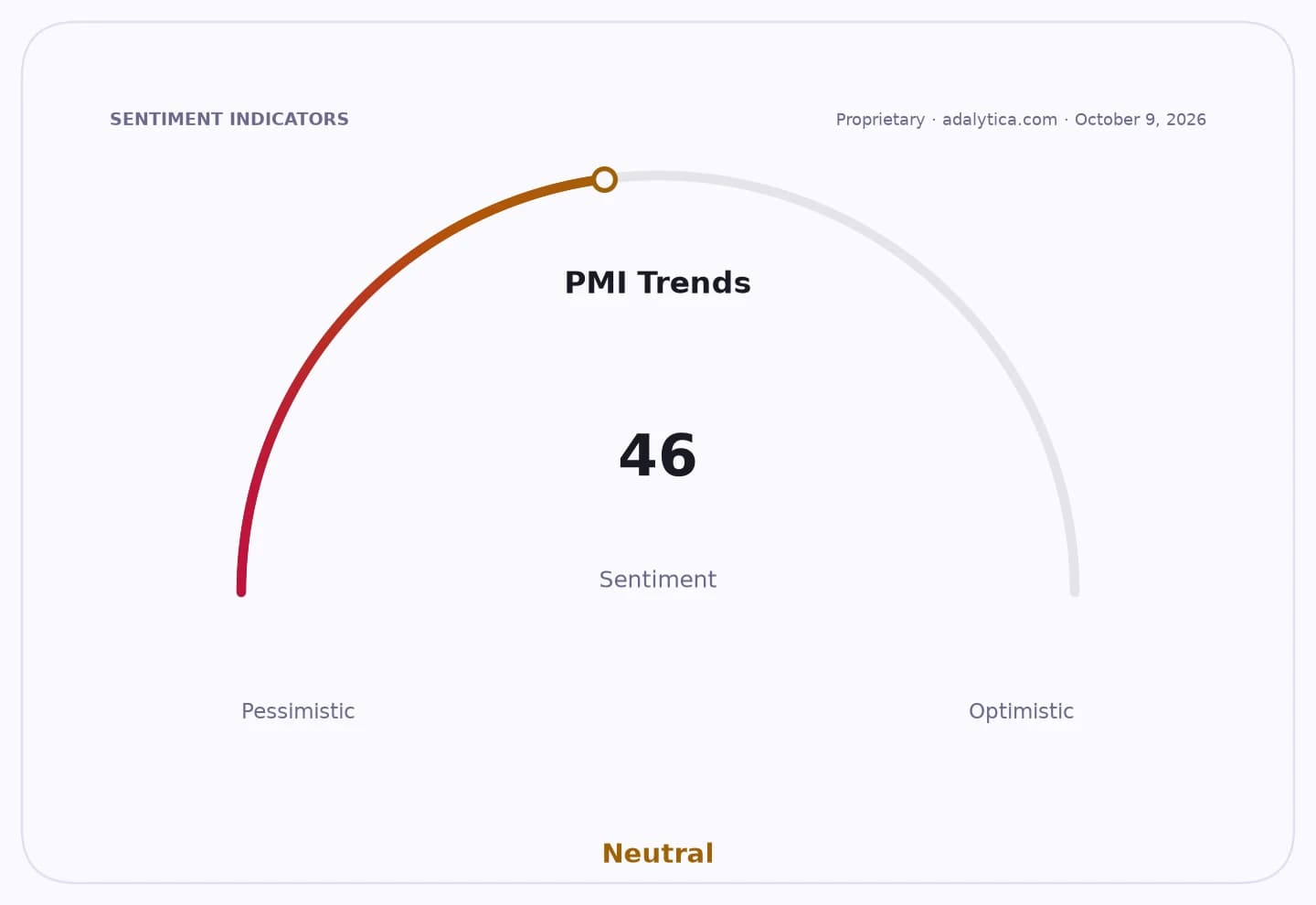
Sentiment IndicatorsⓘProprietary · adalytica.com · October 12, 2026
This is a snapshot — live sentiment, awareness and momentum for 130+ markets update continuously in the dashboard.Open AlphaPulse
The drop in closures was led by business services and accommodation and food service, which together accounted for about 39% of the improvement. Business services saw 2,152 closures, down 12.1%, while hotels and restaurants recorded 1,478 closures, down 11.5%. Retail and general services also improved, with closures falling 7.2% and 6.8%, respectively. For an economy built heavily on domestic demand, tourism and small enterprise activity, fewer shutdowns in those segments matter because they usually show up first in hiring, credit demand and tax receipts.
But the headline hides an important split: not every industry is stabilizing. Shoe manufacturing saw closures jump 39%, specialized construction activities rose 5.4% and short-term accommodation closures climbed 12%. That tells you this is not a broad, uniform recovery. It is a repricing of stress across sectors, with some pockets still under pressure from costs, competition and weaker margins while others are benefiting from a less punitive operating environment.
The slowdown in company creation is the other half of the story. Around 40,000 new businesses were formed through September, but growth was concentrated in construction, up 13%, and information and communications technology, up 5.6%. That is where the real investable signal sits. Construction and IT are the sectors where capital is still flowing, and where productivity-linked investment is more likely to scale. For investors, that means the market is still rewarding infrastructure, digitalization and service providers tied to business formation, while legacy retail, hospitality and lower-value manufacturing remain more vulnerable.
This is exactly the kind of data that supports a selective, not broad, bullish thesis on Portugal. Falling closures reduce immediate credit risk and ease pressure on banks, landlords and suppliers. Slower incorporation, however, keeps the economy from becoming overheated and suggests the winners will be concentrated in higher-value, more resilient niches rather than a wave of indiscriminate entrepreneurship. The implication is that investors should favor lenders, industrials and service companies exposed to construction and technology-enabled growth, while remaining cautious on consumer-discretionary and travel-linked names with thin margins.
The market lesson is simple: the best opportunities are not in chasing every startup cycle, but in owning the toll roads of a more disciplined Portuguese economy. The next catalyst will be whether the trend in closures keeps improving into year-end and whether construction and ICT continue to absorb capital. If they do, the payoff will be in the companies financing, enabling and digitizing that shift.
| Entity | Gains | Losses |
|---|---|---|
| Portuguese banks | ▲Lower default pressure | ▼Weak loan demand from startups |
| Construction and ICT firms | ▲More company creation | ▼Margin pressure in weaker sectors |
| Retail and hospitality operators | ▲Fewer closures overall | ▼Continued sector-specific stress |
| Shoe manufacturers | ▲— | ▼Higher closure rates |