Vietnam’s construction companies are still under heavy pressure from surging raw-material costs, tight financing and uneven supply, even as business conditions improved in the third quarter and the sector expects a relatively steady finish to 2026.
Vietnam Construction Firms Face Higher Costs, Tight Credit
That matters because construction is a key transmission channel for fixed-asset investment, infrastructure delivery and industrial expansion. When contractors cannot lock in materials, labor and working capital, project timelines slip, cash flow tightens and broader capital spending slows.
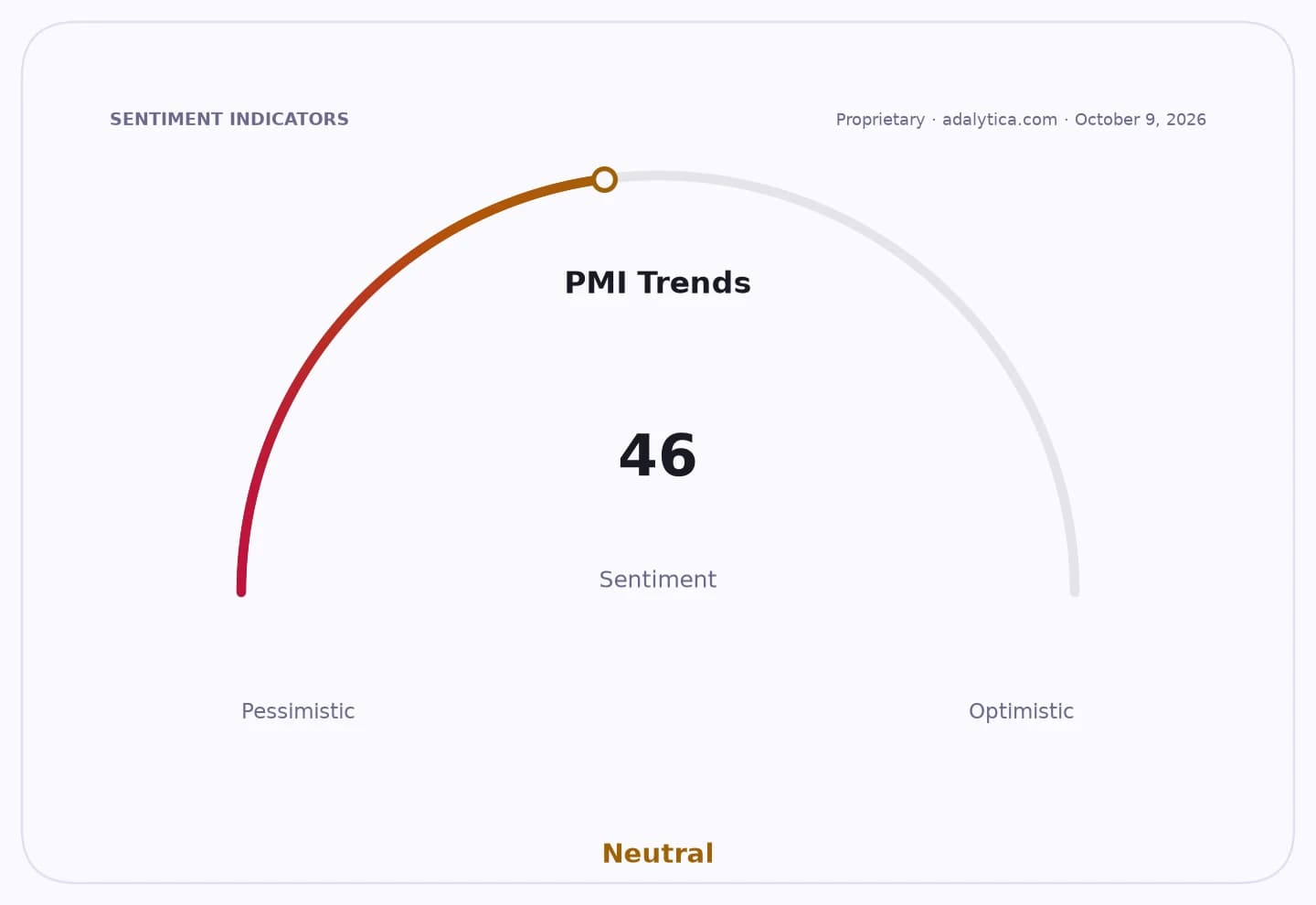
Sentiment IndicatorsⓘProprietary · adalytica.com · October 9, 2026
This is a snapshot — live sentiment, awareness and momentum for 130+ markets update continuously in the dashboard.Open AlphaPulse
A survey by Vietnam’s statistics agency covering 5,826 construction firms found 30.9% said operating conditions improved from the second quarter, while 41.4% saw no change and 27.7% said conditions worsened. New contract flow also improved, with 80.5% of firms saying new construction orders were either up or unchanged quarter on quarter.
But the relief is limited. Some 65% of companies said rising material prices remained the main drag on business, while 39.7% cited a lack of new contracts. Cash flow is also being squeezed: 25.5% pointed to delayed settlement of basic-construction debt and 22.2% said they lacked working capital.
Labor shortages remain another constraint, with 22.9% reporting difficulty hiring workers with the required skills. On the supply side, 24.1% said shortages of building materials were a problem, driven by price swings, permit delays, higher transport costs and logistics disruptions.
The strain is showing up at major projects as well. Vietnam’s industry ministry said average building-material prices have climbed 18% to 20%, while contingency budgets at many projects are around 10%, leaving little room for cost overruns. It also said actual daily supply capacity is running at only about 30% of theoretical reserves, hurting construction schedules.
Contractors are now pressing the government for cheaper financing, clearer tendering, faster permit processing and quicker settlement of unpaid construction debt. For investors, that points to continued margin pressure for builders and contractors, even if order books are holding up better than earlier in the year.
The outlook for the fourth quarter is for stability rather than a sharp rebound: 28.1% of firms expect conditions to improve, 44.7% see them unchanged and 27.2% still expect difficulty. The key near-term risk is that persistent cost inflation and funding stress continue to erode execution on public and private projects into year-end.
| Entity | Gains | Losses |
|---|---|---|
| Material suppliers | ▲Higher selling prices | ▼Contractors’ margins |
| Construction firms | ▲More stable Q4 demand | ▼Cash flow and profitability |
| Government/project owners | ▲Continued project pipeline | ▼Risk of delays and overruns |
| Investors in builders | ▲Better contract visibility | ▼Exposure to cost inflation |