Portugal’s mortgage market has undergone a sharp structural break, with mixed-rate loans now accounting for 87% of new housing credit as households increasingly lock in payment stability and brace for higher borrowing costs.
Portugal mortgage market shifts to mixed-rate loans
That matters because the shift is not just a consumer preference story — it changes the economics of the housing market, the banking business and family balance sheets. When borrowers move away from pure variable-rate loans, they trade some upside if rates fall for greater certainty on monthly payments, a crucial advantage after years of monetary tightening and elevated mortgage costs across Europe.
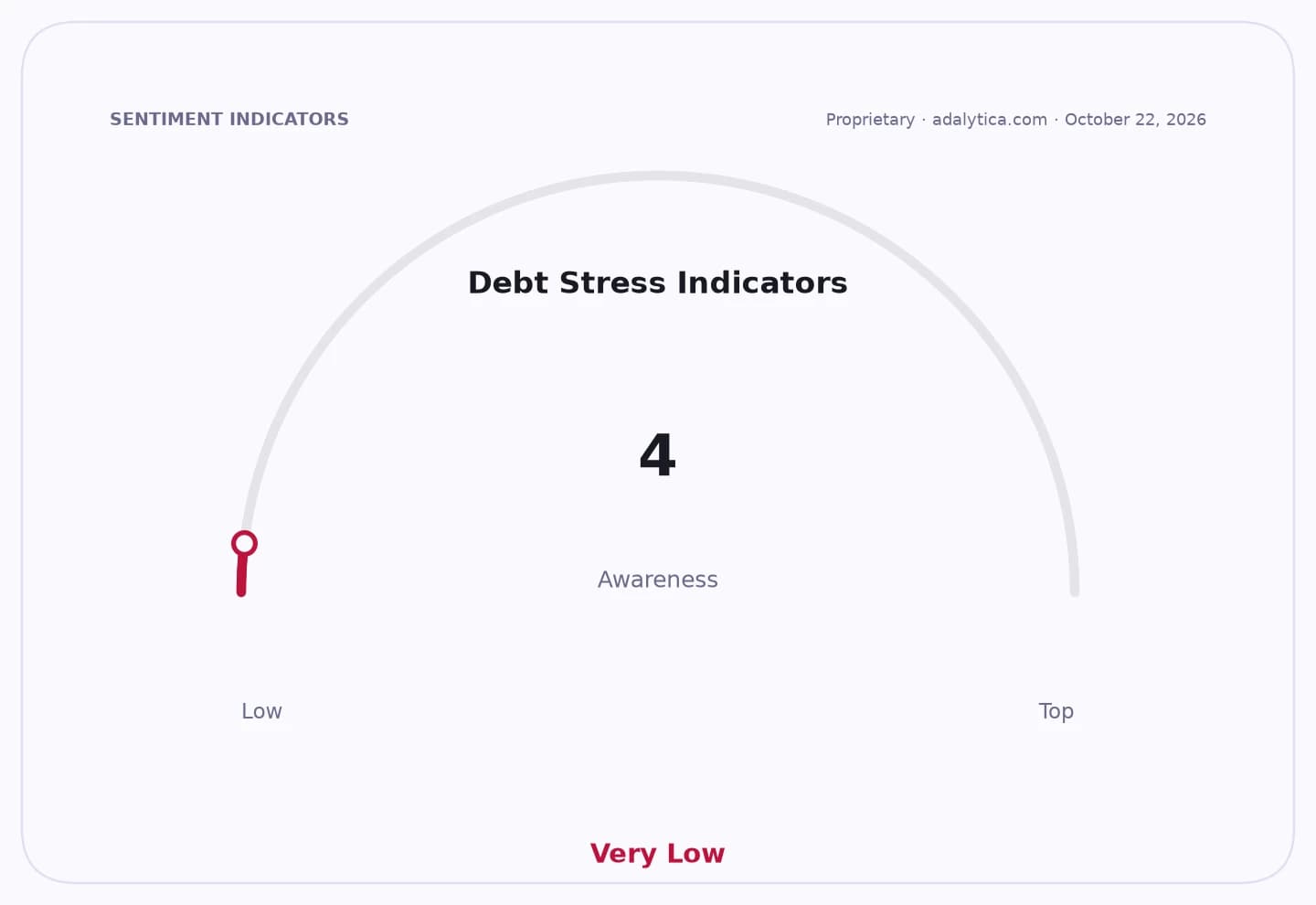
Sentiment IndicatorsⓘProprietary · adalytica.com · October 24, 2026
This is a snapshot — live sentiment, awareness and momentum for 130+ markets update continuously in the dashboard.Open AlphaPulse
The latest Banco de Portugal data, cited by DECO PROteste, shows mixed-rate loans also carry a lower average initial rate than variable borrowing, at 2.86% versus 3.23% on new contracts. That helps explain why the product has become dominant. At the start of the decade, more than 90% of mortgage contracts were variable-rate and only a little over 5% were mixed. Today, mixed loans make up 49% of outstanding mortgages, compared with 46% for variable-rate contracts.
For investors, the deeper issue is prepayment behavior. DECO PROteste wants penalties for early repayment scrapped, arguing that families should be able to reduce debt without being punished by banks. Under current rules, early amortization can cost 0.5% on variable loans and 2% on fixed-rate contracts, with the higher charge also applying to mixed loans during the initial fixed-rate period. That fee structure is now in the policy crosshairs, and any relaxation would directly pressure mortgage profitability for lenders while improving borrower flexibility.
The consumer group is also calling for a wider housing-cost overhaul, including permanent exemption from early-repayment fees on variable loans, a cut in fixed-rate penalties to 0.5%, the return of mortgage interest deductions in income tax and the right for borrowers making partial repayments to choose between lowering monthly installments or shortening the loan term. The common thread is clear: Portuguese households want lower debt burdens, more predictability and less friction in deleveraging.
This is the kind of shift markets often miss until it is already entrenched. A mortgage book dominated by mixed-rate loans is effectively a vote against volatility, and it suggests families expect rates to remain restrictive enough to justify paying for stability. That favors banks with strong balance sheets and pricing power, but it also increases political pressure to limit borrower penalties and redistribute some of the benefit back to households.
For investors watching European housing and financials, the message is straightforward: Portugal’s mortgage market is no longer built around floating-rate risk, and the next battleground is who captures the value of that transition — lenders, borrowers or policymakers.
| Entity | Gains | Losses |
|---|---|---|
| Portuguese borrowers | ▲Payment stability | ▼Variable-rate upside |
| Banks/lenders | ▲Sticky loan portfolios | ▼Early-repayment fees |
| DECO PROteste/consumers | ▲Policy momentum | ▼Bank fee income |
| Portugal housing market | ▲Greater affordability certainty | ▼Rate-sensitive demand |