Portugal has approved tax relief for sales of second homes, a move aimed at easing a housing market squeezed by high prices, thin supply and rising political pressure over affordability.
Portugal approves tax relief on second-home sales

The measure matters because it targets one of the few levers governments have to influence turnover in a market where owners have been reluctant to sell and buyers have been pushed out by elevated valuations. By lowering the tax burden on disposals, Lisbon is trying to bring more homes into circulation and ease a shortage that has helped fuel protests across the country.

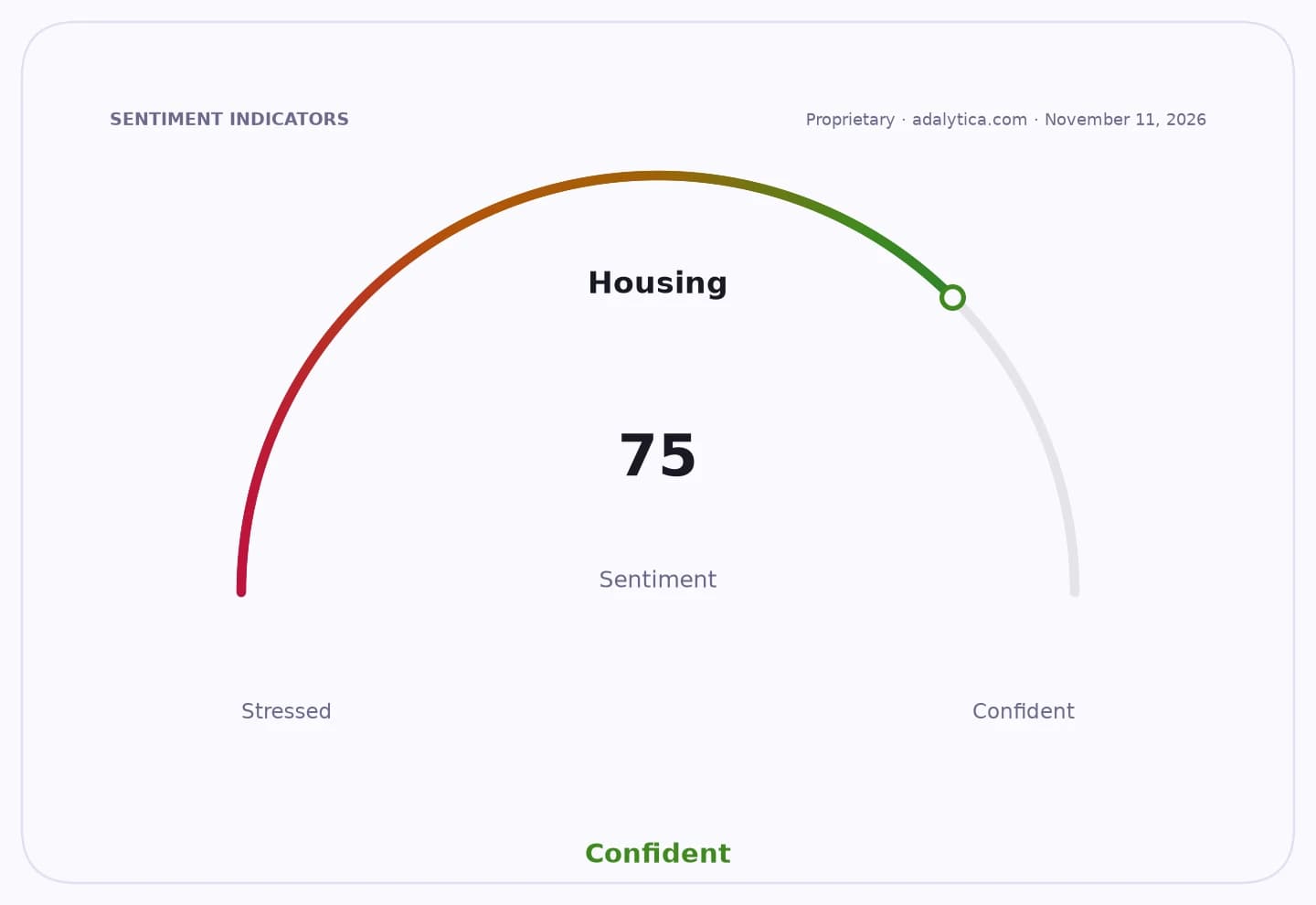
The policy comes against a backdrop of worsening housing sentiment. Public frustration has intensified as rents and property prices have climbed beyond the reach of many households, while policymakers face warnings that parts of the market remain overvalued. Adalytica’s Housing and Rent Inflation Sentiment gauge is in “Greed” territory at 79, with awareness at 71, underscoring how quickly the issue has moved back to the top of the policy agenda.
For investors, the immediate implication is less about a sudden demand shock than about a possible change in transaction dynamics. Tax relief can improve liquidity, reduce friction in secondary-home sales and support volumes for brokers, lenders and real-estate owners exposed to Portuguese residential property. It may also soften the incentive for owners to sit on underused assets, which could help release inventory in the most constrained urban markets.
The bull case is that the measure helps unlock supply without a broader clampdown on property ownership, supporting market activity while taking some heat out of political debate. The bear case is that, on its own, tax relief may do little to restore affordability if structural supply shortages, low incomes and strong foreign demand continue to dominate pricing.
The development is likely to be watched closely for signs that it is part of a wider policy shift rather than a one-off concession. If it is paired with faster planning, more construction and tighter targeting of speculative demand, it could matter for the trajectory of Portuguese housing prices and the outlook for real-estate-linked assets across the market.
| Entity | Gains | Losses |
|---|---|---|
| Second-home sellers | ▲Lower tax bill | ▼Less price friction |
| Homebuyers | ▲More listings | ▼Continued affordability squeeze |
| Portuguese government | ▲Political relief | ▼Budget tax revenue |
| Real-estate owners | ▲Better liquidity | ▼More policy scrutiny |