The pound sterling is gaining against both the dollar and the euro, with traders leaning into expectations that the Bank of England will stay tighter for longer than some of its peers.
Pound Gains Against Dollar and Euro

That matters because currency moves are now feeding directly into inflation, imported pricing and cross-border capital flows, while also reshaping returns for investors holding UK assets. A firmer pound can ease the cost of imports for British consumers and companies, but it can also pressure exporters and multinationals that earn overseas revenue.
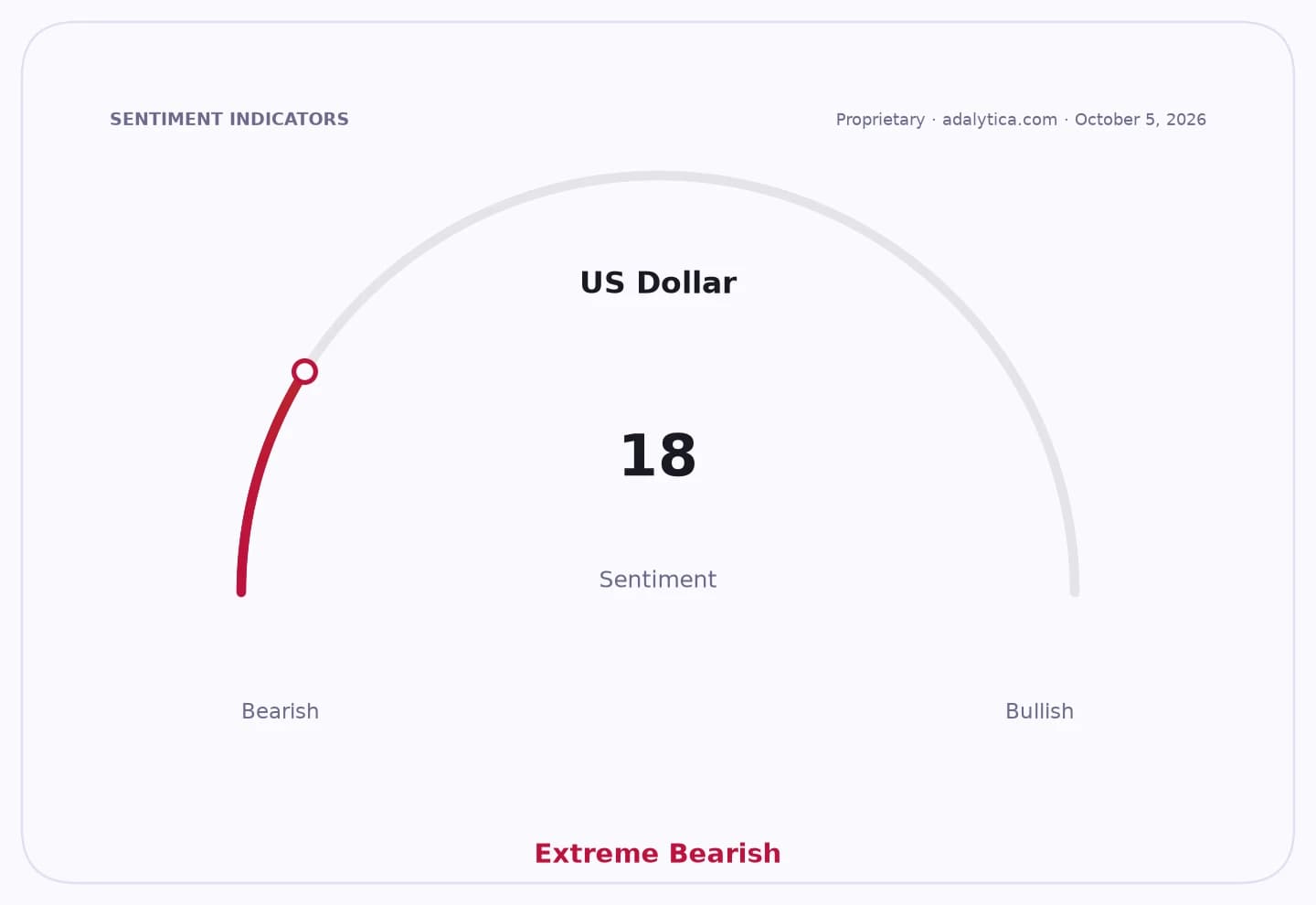
Sentiment IndicatorsⓘProprietary · adalytica.com · October 7, 2026
This is a snapshot — live sentiment, awareness and momentum for 130+ markets update continuously in the dashboard.Open AlphaPulse

The move comes as the dollar remains broadly firm but not dominant enough to prevent sterling from clawing back ground. Adalytica’s US Dollar Trade Signals show neutral sentiment at 58, while the euro is drawing stronger attention, with its awareness reading at 98 and sentiment at 64, suggesting positioning is crowded even as the single currency advances.
Sterling’s recent technical backdrop points to a market still recovering from earlier weakness. FXB, the sterling ETF proxy, closed at 127.02 on Oct. 7, below its 50-day moving average of 128.95 and 200-day moving average of 128.15, with RSI at 38.2, a level that still reflects subdued momentum rather than outright overextension.
The broader picture is one of currency trading driven less by growth optimism than by central-bank expectations. If the BoE continues to sound hawkish while the Federal Reserve holds back from a fresh tightening cycle, the pound could keep drawing support against both the greenback and the euro.
For investors, that keeps UK equities with large foreign earnings, import-sensitive sectors and rate-exposed assets in focus, while FX volatility remains a key risk heading into the next round of central-bank guidance and inflation data.
| Entity | Gains | Losses |
|---|---|---|
| UK importers | ▲Lower foreign-currency costs | ▼Export margin pressure |
| UK consumers | ▲Cheaper imported goods | ▼Less support for overseas firms |
| Sterling bulls | ▲GBP appreciation | ▼Momentum traders fading strength |
| UK exporters | ▲— | ▼Weaker translated revenues |