The pound is getting the kind of support traders have been waiting for: better-than-expected UK data that is forcing the market to reprice the outlook for growth, inflation and Bank of England policy.
Pound rises on stronger UK data and BoE bets

Sterling rose to $1.3329 on Friday, its strongest level against the dollar since Sept. 23, and was set for a third straight weekly gain versus the euro, which slipped to 84.41 pence. The move matters because it is not just a routine FX bounce. It reflects a shift in expectations that Britain may be holding up better than feared, giving policymakers more room to keep rates restrictive and investors more reason to own sterling assets.
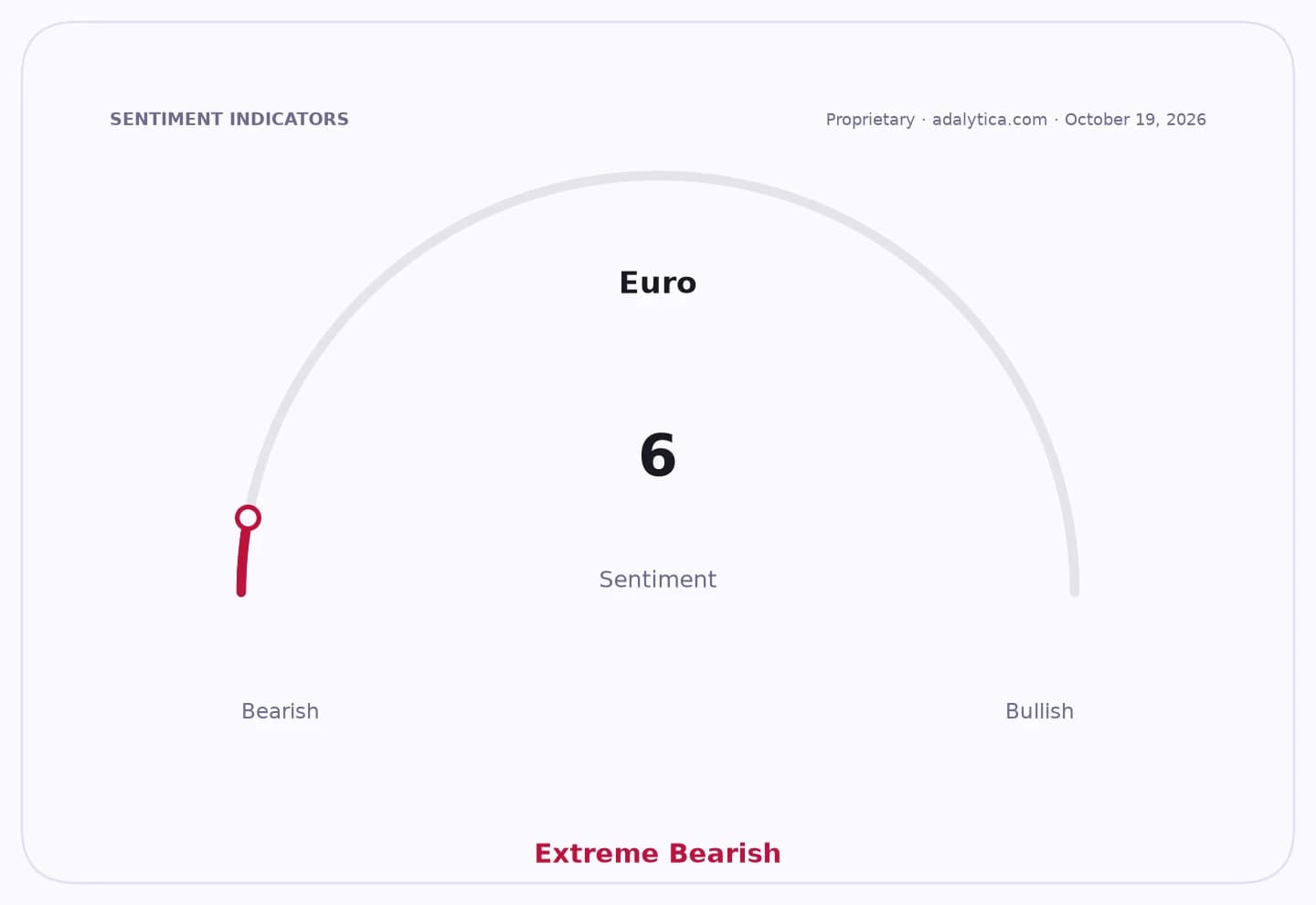
Sentiment IndicatorsⓘProprietary · adalytica.com · October 20, 2026
This is a snapshot — live sentiment, awareness and momentum for 130+ markets update continuously in the dashboard.Open AlphaPulse

The catalyst came from August economic data showing the UK economy expanded more strongly than expected, helped by another sharp rise in computer programming activity. That matters far beyond one data point. It suggests artificial intelligence investment is starting to feed through to real activity in the British economy, supporting growth at a time when Europe is still struggling for momentum. In FX terms, that is a meaningful relative-growth advantage, and currency markets tend to reward the stronger economy.
The euro’s weakness has amplified the move. Sterling’s gains against the common currency also reflect lingering pressure on European bonds after the recent selloff in French debt. When the euro is under pressure, the pound does not need heroic domestic news to outperform. But this time, the UK data provided a second tailwind.
The implications for investors are immediate. A firmer economy gives the Bank of England more flexibility to keep monetary policy tight, and traders are already leaning that way. LSEG data cited by Reuters showed markets pricing a 25-basis-point rate increase at the Nov. 5 meeting. That expectation can support the pound further if incoming data continues to show resilience.
At the same time, the fiscal backdrop remains a live issue. Finance Minister John Healey has said his first budget on Oct. 29 will include measures to give the country “a little breathing room,” but investors will want proof that the government can balance growth support with deficit restraint. For sterling, the best outcome is a combination of steadier growth, disciplined borrowing and a central bank that stays vigilant on inflation.
There is also a market psychology angle here that investors should not ignore. FX sentiment around the pound remains deeply subdued on Adalytica’s British Pound Trade Signals gauge, which shows fear and extreme fear readings even as the currency has started to recover. That kind of skepticism often creates room for upside if the data keeps surprising to the upside and the Bank of England stays hawkish relative to peers.
The trade from here is straightforward: sterling benefits if Britain remains the relative-growth winner and if rate expectations keep moving in its favor. The risk is that a heavier fiscal burden or a softer global backdrop quickly reverses the move. For now, though, the market is finally starting to price in a story investors have underappreciated for months — a UK economy that is proving sturdier than expected, and a pound that may still have room to run.
| Entity | Gains | Losses |
|---|---|---|
| Pound sterling | ▲Higher rates and stronger data | ▼Short sellers |
| Bank of England | ▲More policy flexibility | ▼Dovish bets |
| UK-focused assets | ▲Improved confidence and inflows | ▼Import-sensitive businesses |
| Euro | ▲— | ▼Weakness from bond-market stress |