A growing “max-three-hour mum” mindset is highlighting a bigger economic truth: affluent parents are now willing to spend heavily to buy back time, and that demand is creating a durable tailwind for private childcare operators and premium family-services businesses.
Premium childcare demand boosts flexible-care providers
What looks like a lifestyle fad is really a stress test for the modern family budget. In Australia, some households are paying as much as $800 just to cover holiday care during the long school breaks, even as both parents increasingly work full time and annual leave remains far shorter than the 12-week holiday calendar. At the top end, families are spending hundreds of thousands of dollars on teams of caregivers, nannies and support staff to keep their lives running — a sign that childcare is no longer just a consumer expense, but a time-arbitrage market for higher-income households.
That matters because childcare is one of the clearest pressure points in the cost of living. When schooling breaks outpace leave entitlements and public options stay scarce, parents are forced either to cut working hours or pay for private solutions. Economically, that supports a bifurcated market: stretched middle-income families absorb the pain, while affluent families keep spending to preserve labor-force participation and household productivity. The result is more demand for flexible care, holiday programs and wraparound services — and more pricing power for operators that can meet that need.
For investors, the opportunity is not in “luxury parenting” as a trend piece, but in the picks-and-shovels behind it. Private childcare providers, owner-operators of early-learning centers, and companies tied to school-holiday programming, family logistics and premium household services can all benefit if this willingness to pay for convenience keeps rising. That is especially true in markets where capacity is tight and regulation makes supply slow to expand, allowing the best-run operators to defend margins.
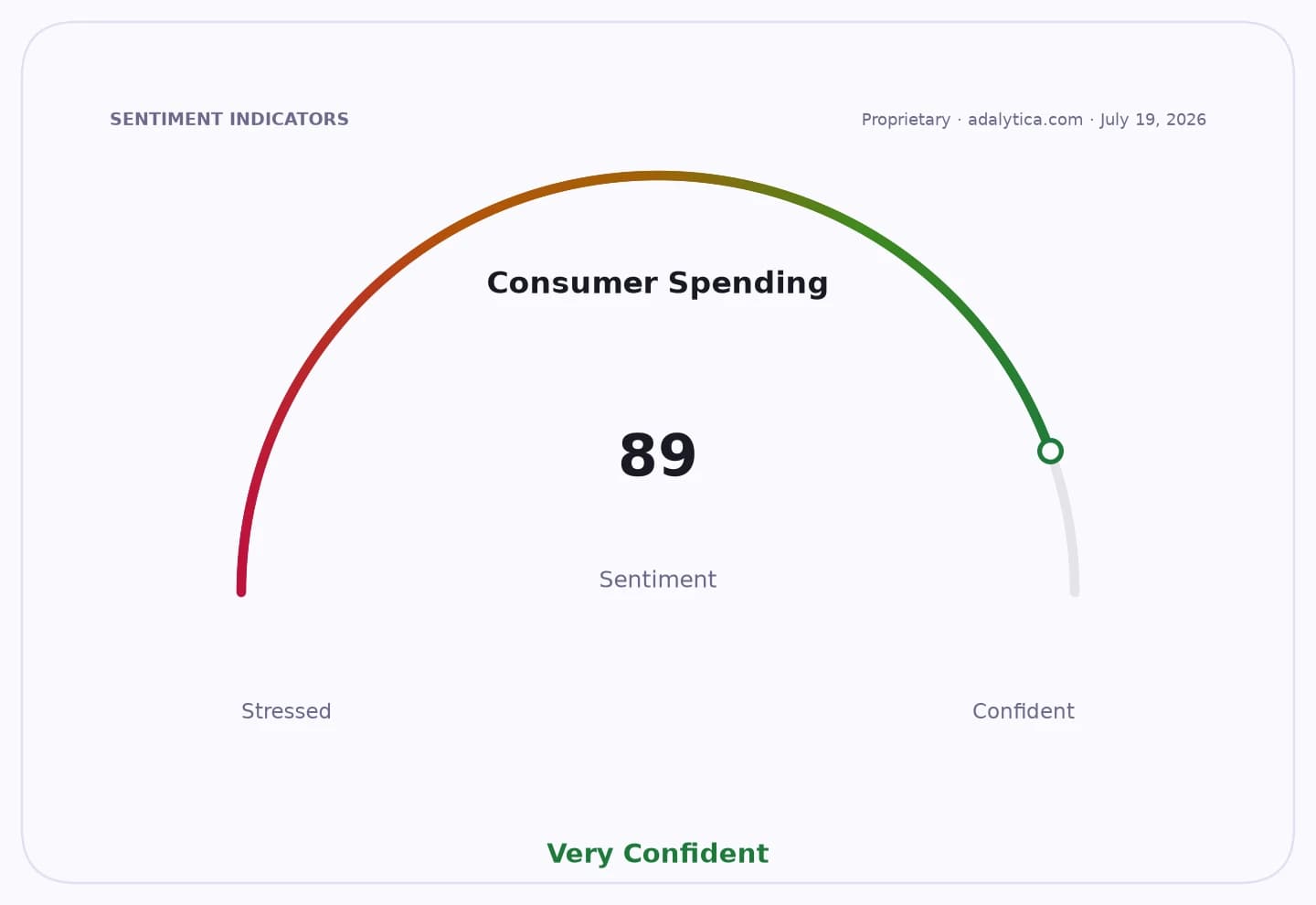
The stock tape is already hinting at where capital is leaning. Bright Horizons Family Solutions, traded under BFAM, has rebounded sharply from its spring lows, with the shares recently back above both the 50-day and 200-day moving averages and RSI readings in bullish territory. Educational services and property-linked childcare names are also holding up better than the broader consumer narrative would suggest, even as the S&P 500 remains near record levels and consumer sentiment stays elevated in Adalytica’s spending gauge. That combination points to a market that is still underestimating how sticky premium family spending can be when time becomes the scarce asset.
Bright Horizons is the cleanest public-market proxy for this theme because it sits at the intersection of employer-sponsored childcare, back-up care and premium family support. As more dual-income households look for reliable coverage during school holidays and work disruptions, the company’s model gains from the same structural shortage that is squeezing parents: not enough time, not enough flexible care and not enough affordable alternatives. EPR Properties, through its exposure to education and family-oriented real estate, is another way to play the buildout of capacity around this demand.
The bigger message is that the luxury parenting boom is less about indulgence than about labor economics. When parents pay up to reclaim hours, they are effectively monetizing scarcity — and that can persist even in a slowing economy. If workplace flexibility remains limited and childcare supply remains constrained, the winners will be the companies selling time, convenience and reliability. For investors, that is where the asymmetric opportunity sits now.
| Entity | Gains | Losses |
|---|---|---|
| Private childcare operators | ▲Higher pricing power | ▼Budget-conscious parents |
| Premium family-service firms | ▲More demand for convenience | ▼Low-cost providers |
| Dual-income households | ▲Preserve labor participation | ▼Spare cash flow |
| BFAM and peers | ▲Structural back-up-care tailwind | ▼Cyclical consumer sentiment |